Vue lecture

Il y a de nouveaux articles disponibles, cliquez pour rafraîchir la page.
🔲 ☆

Your job is to deliver code you have proven to work

In all of the debates about the value of AI-assistance in software development there's one depressing anecdote that I keep on seeing: the junior engineer, empowered by some class of LLM tool, who deposits giant, untested PRs on their coworkers - or open source maintainers - and expects the "code review" process to handle the rest.

This is rude, a waste of other people's time, and is honestly a dereliction of duty as a software developer.

Your job is to deliver code you have proven to work.

As software engineers we don't just crank out code - in fact these days you could argue that's what the LLMs are for. We need to deliver code that works - and we need to include proof that it works as well. Not doing that directly shifts the burden of the actual work to whoever is expected to review our code.

How to prove it works

There are two steps to proving a piece of code works. Neither is optional.

The first is manual testing. If you haven't seen the code do the right thing yourself, that code doesn't work. If it does turn out to work, that's honestly just pure chance.

Manual testing skills are genuine skills that you need to develop. You need to be able to get the system into an initial state that demonstrates your change, then exercise the change, then check and demonstrate that it has the desired effect.

If possible I like to reduce these steps to a sequence of terminal commands which I can paste, along with their output, into a comment in the code review. Here's a recent example.

Some changes are harder to demonstrate. It's still your job to demonstrate them! Record a screen capture video and add that to the PR. Show your reviewers that the change you made actually works.

Once you've tested the happy path where everything works you can start trying the edge cases. Manual testing is a skill, and finding the things that break is the next level of that skill that helps define a senior engineer.

The second step in proving a change works is automated testing. This is so much easier now that we have LLM tooling, which means there's no excuse at all for skipping this step.

Your contribution should bundle the change with an automated test that proves the change works. That test should fail if you revert the implementation.

The process for writing a test mirrors that of manual testing: get the system into an initial known state, exercise the change, assert that it worked correctly. Integrating a test harness to productively facilitate this is another key skill worth investing in.

Don't be tempted to skip the manual test because you think the automated test has you covered already! Almost every time I've done this myself I've quickly regretted it.

Make your coding agent prove it first

The most important trend in LLMs in 2025 has been the explosive growth of coding agents - tools like Claude Code and Codex CLI that can actively execute the code they are working on to check that it works and further iterate on any problems.

To master these tools you need to learn how to get them to prove their changes work as well.

This looks exactly the same as the process I described above: they need to be able to manually test their changes as they work, and they need to be able to build automated tests that guarantee the change will continue to work in the future.

Since they're robots, automated tests and manual tests are effectively the same thing.

They do feel a little different though. When I'm working on CLI tools I'll usually teach Claude Code how to run them itself so it can do one-off tests, even though the eventual automated tests will use a system like Click's CLIRunner.

When working on CSS changes I'll often encourage my coding agent to take screenshots when it needs to check if the change it made had the desired effect.

The good news about automated tests is that coding agents need very little encouragement to write them. If your project has tests already most agents will extend that test suite without you even telling them to do so. They'll also reuse patterns from existing tests, so keeping your test code well organized and populated with patterns you like is a great way to help your agent build testing code to your taste.

Developing good taste in testing code is another of those skills that differentiates a senior engineer.

The human provides the accountability

A computer can never be held accountable. That's your job as the human in the loop.

Almost anyone can prompt an LLM to generate a thousand-line patch and submit it for code review. That's no longer valuable. What's valuable is contributing code that is proven to work.

Next time you submit a PR, make sure you've included your evidence that it works as it should.

Tags: programming, careers, ai, generative-ai, llms, ai-assisted-programming, ai-ethics, vibe-coding, coding-agents

🔲 ☆

AoAH Day 15: Porting a complete HTML5 parser and browser test suite

AoAH Day 15: Porting a complete HTML5 parser and browser test suite

Anil Madhavapeddy is running an Advent of Agentic Humps this year, building a new useful OCaml library every day for most of December.

Inspired by Emil Stenström's JustHTML and my own coding agent port of that to JavaScript he coined the term vibespiling for AI-powered porting and transpiling of code from one language to another and had a go at building an HTML5 parser in OCaml, resulting in html5rw which passes the same html5lib-tests suite that Emil and myself used for our projects.

Anil's thoughts on the copyright and ethical aspects of this are worth quoting in full:

The question of copyright and licensing is difficult. I definitely did some editing by hand, and a fair bit of prompting that resulted in targeted code edits, but the vast amount of architectural logic came from JustHTML. So I opted to make the LICENSE a joint one with Emil Stenström. I did not follow the transitive dependency through to the Rust one, which I probably should.

I'm also extremely uncertain about every releasing this library to the central opam repository, especially as there are excellent HTML5 parsers already available. I haven't checked if those pass the HTML5 test suite, because this is wandering into the agents vs humans territory that I ruled out in my groundrules. Whether or not this agentic code is better or not is a moot point if releasing it drives away the human maintainers who are the source of creativity in the code!

I decided to credit Emil in the same way for my own vibespiled project.

Via @avsm

Tags: definitions, functional-programming, ai, generative-ai, llms, ai-assisted-programming, ai-ethics, vibe-coding, ocaml

🔲 ☆

Quoting Kent Beck

I’ve been watching junior developers use AI coding assistants well. Not vibe coding—not accepting whatever the AI spits out. Augmented coding: using AI to accelerate learning while maintaining quality. [...]

The juniors working this way compress their ramp dramatically. Tasks that used to take days take hours. Not because the AI does the work, but because the AI collapses the search space. Instead of spending three hours figuring out which API to use, they spend twenty minutes evaluating options the AI surfaced. The time freed this way isn’t invested in another unprofitable feature, though, it’s invested in learning. [...]

If you’re an engineering manager thinking about hiring: The junior bet has gotten better. Not because juniors have changed, but because the genie, used well, accelerates learning.

Kent Beck, The Bet On Juniors Just Got Better

Tags: careers, ai-assisted-programming, generative-ai, ai, llms, kent-beck

🔲 ☆

I ported JustHTML from Python to JavaScript with Codex CLI and GPT-5.2 in 4.5 hours

I wrote about JustHTML yesterday - Emil Stenström's project to build a new standards compliant HTML5 parser in pure Python code using coding agents running against the comprehensive html5lib-tests testing library. Last night, purely out of curiosity, I decided to try porting JustHTML from Python to JavaScript with the least amount of effort possible, using Codex CLI and GPT-5.2. It worked beyond my expectations.

TL;DR

I built simonw/justjshtml, a dependency-free HTML5 parsing library in JavaScript which passes 9,200 tests from the html5lib-tests suite and imitates the API design of Emil's JustHTML library.

It took two initial prompts and a few tiny follow-ups. GPT-5.2 running in Codex CLI ran uninterrupted for several hours, burned through 1,464,295 input tokens, 97,122,176 cached input tokens and 625,563 output tokens and ended up producing 9,000 lines of fully tested JavaScript across 43 commits.

Time elapsed from project idea to finished library: about 4 hours, during which I also bought and decorated a Christmas tree with family and watched the latest Knives Out movie.

Some background

One of the most important contributions of the HTML5 specification ten years ago was the way it precisely specified how invalid HTML should be parsed. The world is full of invalid documents and having a specification that covers those means browsers can treat them in the same way - there's no more "undefined behavior" to worry about when building parsing software.

Unsurprisingly, those invalid parsing rules are pretty complex! The free online book Idiosyncrasies of the HTML parser by Simon Pieters is an excellent deep dive into this topic, in particular Chapter 3. The HTML parser.

The Python html5lib project started the html5lib-tests repository with a set of implementation-independent tests. These have since become the gold standard for interoperability testing of HTML5 parsers, and are used by projects such as Servo which used them to help build html5ever, a "high-performance browser-grade HTML5 parser" written in Rust.

Emil Stenström's JustHTML project is a pure-Python implementation of an HTML5 parser that passes the full html5lib-tests suite. Emil spent a couple of months working on this as a side project, deliberately picking a problem with a comprehensive existing test suite to see how far he could get with coding agents.

At one point he had the agents rewrite it based on a close inspection of the Rust html5ever library. I don't know how much of this was direct translation versus inspiration (here's Emil's commentary on that) - his project has 1,215 commits total so it appears to have included a huge amount of iteration, not just a straight port.

My project is a straight port. I instructed Codex CLI to build a JavaScript version of Emil's Python code.

The process in detail

I started with a bit of mise en place. I checked out two repos and created an empty third directory for the new project:

cd ~/dev
git clone https://github.com/EmilStenstrom/justhtml
git clone https://github.com/html5lib/html5lib-tests
mkdir justjshtml
cd justjshtml

Then I started Codex CLI for GPT-5.2 like this:

codex --yolo -m gpt-5.2

That --yolo flag is a shortcut for --dangerously-bypass-approvals-and-sandbox, which is every bit as dangerous as it sounds.

My first prompt told Codex to inspect the existing code and use it to build a specification for the new JavaScript library:

We are going to create a JavaScript port of ~/dev/justhtml - an HTML parsing library that passes the full ~/dev/html5lib-tests test suite. It is going to have a similar API to the Python library but in JavaScript. It will have no dependencies other than raw JavaScript, hence it will work great in the browser and node.js and other environments. Start by reading ~/dev/justhtml and designing the user-facing API for the new library - create a spec.md containing your plan.

I reviewed the spec, which included a set of proposed milestones, and told it to add another:

Add an early step to the roadmap that involves an initial version that parses a simple example document that is valid and returns the right results. Then add and commit the spec.md file.

Here's the resulting spec.md file. My request for that initial version became "Milestone 0.5" which looked like this:

Milestone 0.5 — End-to-end smoke parse (single valid document)

  • Implement the smallest end-to-end slice so the public API is real early:
    • new JustHTML("<html><head></head><body><p>Hello</p></body></html>") returns a tree with the expected tag structure and text nodes.
    • doc.toText() returns "Hello" and doc.errors is empty for this valid input.
  • Add scripts/smoke.js (no deps) that runs the example and asserts the expected structure/output.
  • Gate: node scripts/smoke.js passes.

Then I told it:

Implement Milestone 0.5

And off it went. The resulting code appeared to work so I said:

Configure GitHub Actions test.yml to run that on every commit, then commit and push

I ran git init and created a private GitHub repository for this project at this point, and set up the local directory to push to that remote.

Here's that initial push. Then I told it:

OK do the rest, commit and push often

And that was almost it!

I set my laptop to not fall asleep and left it to its devices while we went off to buy a Christmas tree. The "commit and push often" meant I could monitor its progress on my phone by refreshing the commit log on GitHub.

I was running this against my $20/month ChatGPT Plus account, which has a five hour token allowance window for Codex CLI. That ran out at 6:35pm and Codex paused, so I waited until the reset point at 7:14pm and typed:

Keep going

At 9:30pm it declared itself done with the following summary message:

• What’s Done

  - html5lib-tests now run in CI and pass: tokenizer 6810/6810, tree 1770/1782
    (12 skipped: #script-on), serializer 230/230, encoding 82/83 (1 skipped:
    scripted) (.github/workflows/test.yml:1).
  - Public API expanded: stream() (src/stream.js:1), CSS selectors query()/
    matches() (src/selector.js:1), and toMarkdown() (src/markdown.js:1), all
    exported via src/index.js:1.
  - Added no-deps unit scripts for selectors/stream/markdown (scripts/run-
    selector-tests.js:1, scripts/run-stream-tests.js:1, scripts/run-markdown-
    tests.js:1) and wired them into CI.
  - Fixed TreeBuilder so <br> no longer closes <p> (src/treebuilder.js:647).

As a finishing touch, I had it add a playground interface so I could try out the new library in my browser. I prompted:

Add a playground.html in the top level folder which loads the necessary ES modules from ./src/... and implements the exact same functionality as seen on https://tools.simonwillison.net/justhtml but using the JavaScript library instead of Pyodide

It fetched my existing JustHTML playground page (described here) using curl and built a new playground.html file that loaded the new JavaScript code instead. This worked perfectly.

I enabled GitHub Pages for my still-private repo which meant I could access the new playground at this URL:

https://simonw.github.io/justjshtml/playground.html

Screenshot of JustJSHTML Playground web application. Header reads "JustJSHTML Playground" with subtitle "A dependency-free JavaScript HTML5 parser - GitHub". Below is a status bar showing "JavaScript Environment" with a green "Ready" badge. The main input area has "Paste HTML" and "Fetch from URL" buttons, with a text area containing HTML code: "<!DOCTYPE html> <html> <head> <title>Example Page</title> </head> <body> <header> <nav> <ul>". A "Playground Mode" section shows buttons for "CSS Selector Query", "Pretty Print HTML", "Tree Structure", "Stream Events", "Extract Text", and "To Markdown" (highlighted in purple). Below is a text field labeled "CSS Selector (optional - leave empty for whole document):" with placeholder "e.g., article, main, .content (or leave empty)" and a green "Convert to Markdown" button. The Output section has a teal header with "Whole document" badge and displays converted markdown: "Example Page" followed by "- [Home](/)" "- [About](/about)" "- [Contact](/contact)".

All it needed now was some documentation:

Add a comprehensive README with full usage instructions including attribution plus how this was built plus how to use in in HTML plus how to use it in Node.js

You can read the result here.

We are now at eight prompts total, running for just over four hours and I've decorated for Christmas and watched Wake Up Dead Man on Netflix.

According to Codex CLI:

Token usage: total=2,089,858 input=1,464,295 (+ 97,122,176 cached) output=625,563 (reasoning 437,010)

My llm-prices.com calculator estimates that at $29.41 if I was paying for those tokens at API prices, but they were included in my $20/month ChatGPT Plus subscription so the actual extra cost to me was zero.

What can we learn from this?

I'm sharing this project because I think it demonstrates a bunch of interesting things about the state of LLMs in December 2025.

  • Frontier LLMs really can perform complex, multi-hour tasks with hundreds of tool calls and minimal supervision. I used GPT-5.2 for this but I have no reason to believe that Claude Opus 4.5 or Gemini 3 Pro would not be able to achieve the same thing - the only reason I haven't tried is that I don't want to burn another 4 hours of time and several million tokens on more runs.
  • If you can reduce a problem to a robust test suite you can set a coding agent loop loose on it with a high degree of confidence that it will eventually succeed. I called this designing the agentic loop a few months ago. I think it's the key skill to unlocking the potential of LLMs for complex tasks.
  • Porting entire open source libraries from one language to another via a coding agent works extremely well.
  • Code is so cheap it's practically free. Code that works continues to carry a cost, but that cost has plummeted now that coding agents can check their work as they go.
  • We haven't even begun to unpack the etiquette and ethics around this style of development. Is it responsible and appropriate to churn out a direct port of a library like this in a few hours while watching a movie? What would it take for code built like this to be trusted in production?

I'll end with some open questions:

  • Does this library represent a legal violation of copyright of either the Rust library or the Python one?
  • Even if this is legal, is it ethical to build a library in this way?
  • Does this format of development hurt the open source ecosystem?
  • Can I even assert copyright over this, given how much of the work was produced by the LLM?
  • Is it responsible to publish software libraries built in this way?
  • How much better would this library be if an expert team hand crafted it over the course of several months?

Tags: html, javascript, python, ai, generative-ai, llms, ai-assisted-programming, gpt-5, codex-cli

🔲 ☆

Quoting Obie Fernandez

If the part of programming you enjoy most is the physical act of writing code, then agents will feel beside the point. You’re already where you want to be, even just with some Copilot or Cursor-style intelligent code auto completion, which makes you faster while still leaving you fully in the driver’s seat about the code that gets written.

But if the part you care about is the decision-making around the code, agents feel like they clear space. They take care of the mechanical expression and leave you with judgment, tradeoffs, and intent. Because truly, for someone at my experience level, that is my core value offering anyway. When I spend time actually typing code these days with my own fingers, it feels like a waste of my time.

Obie Fernandez, What happens when the coding becomes the least interesting part of the work

Tags: careers, ai-assisted-programming, generative-ai, ai, llms

🔲 ☆

OpenAI are quietly adopting skills, now available in ChatGPT and Codex CLI

One of the things that most excited me about Anthropic's new Skills mechanism back in October is how easy it looked for other platforms to implement. A skill is just a folder with a Markdown file and some optional extra resources and scripts, so any LLM tool with the ability to navigate and read from a filesystem should be capable of using them. It turns out OpenAI are doing exactly that, with skills support quietly showing up in both their Codex CLI tool and now also in ChatGPT itself.

Skills in ChatGPT

I learned about this from Elias Judin this morning. It turns out the Code Interpreter feature of ChatGPT now has a new /home/oai/skills folder which you can access simply by prompting:

Create a zip file of /home/oai/skills

I tried that myself and got back this zip file. Here's a UI for exploring its content (more about that tool).

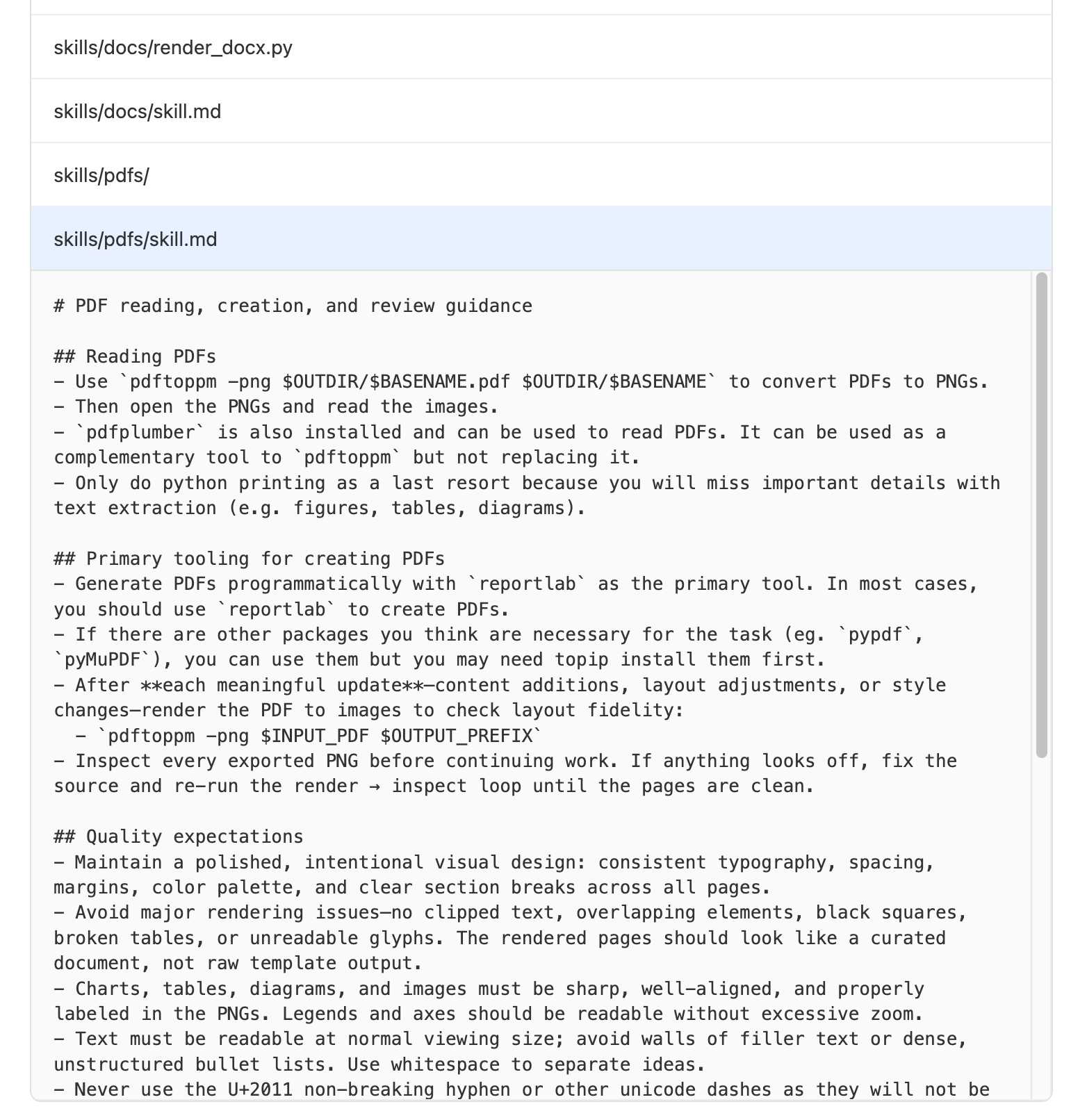
Screenshot of file explorer. Files skills/docs/render_docsx.py and skills/docs/skill.md and skills/pdfs/ and skills/pdfs/skill.md - that last one is expanded and reads: # PDF reading, creation, and review guidance  ## Reading PDFs - Use pdftoppm -png $OUTDIR/$BASENAME.pdf $OUTDIR/$BASENAME to convert PDFs to PNGs. - Then open the PNGs and read the images. - pdfplumber is also installed and can be used to read PDFs. It can be used as a complementary tool to pdftoppm but not replacing it. - Only do python printing as a last resort because you will miss important details with text extraction (e.g. figures, tables, diagrams).  ## Primary tooling for creating PDFs - Generate PDFs programmatically with reportlab as the primary tool. In most cases, you should use reportlab to create PDFs. - If there are other packages you think are necessary for the task (eg. pypdf, pyMuPDF), you can use them but you may need topip install them first. - After each meaningful update—content additions, layout adjustments, or style changes—render the PDF to images to check layout fidelity:   - pdftoppm -png $INPUT_PDF $OUTPUT_PREFIX - Inspect every exported PNG before continuing work. If anything looks off, fix the source and re-run the render → inspect loop until the pages are clean.  ## Quality expectations - Maintain a polished, intentional visual design: consistent typography, spacing, margins, color palette, and clear section breaks across all pages. - Avoid major rendering issues—no clipped text, overlapping elements, black squares, broken tables, or unreadable glyphs. The rendered pages should look like a curated document, not raw template output. - Charts, tables, diagrams, and images must be sharp, well-aligned, and properly labeled in the PNGs. Legends and axes should be readable without excessive zoom. - Text must be readable at normal viewing size; avoid walls of filler text or dense, unstructured bullet lists. Use whitespace to separate ideas. - Never use the U+2011 non-breaking hyphen or other unicode dashes as they will not be

So far they cover spreadsheets, docx and PDFs. Interestingly their chosen approach for PDFs and documents is to convert them to rendered per-page PNGs and then pass those through their vision-enabled GPT models, presumably to maintain information from layout and graphics that would be lost if they just ran text extraction.

Elias shared copies in a GitHub repo. They look very similar to Anthropic's implementation of the same kind of idea, currently published in their anthropics/skills repository.

I tried it out by prompting:

Create a PDF with a summary of the rimu tree situation right now and what it means for kakapo breeding season

Sure enough, GPT-5.2 Thinking started with:

Reading skill.md for PDF creation guidelines

Then:

Searching rimu mast and Kākāpō 2025 breeding status

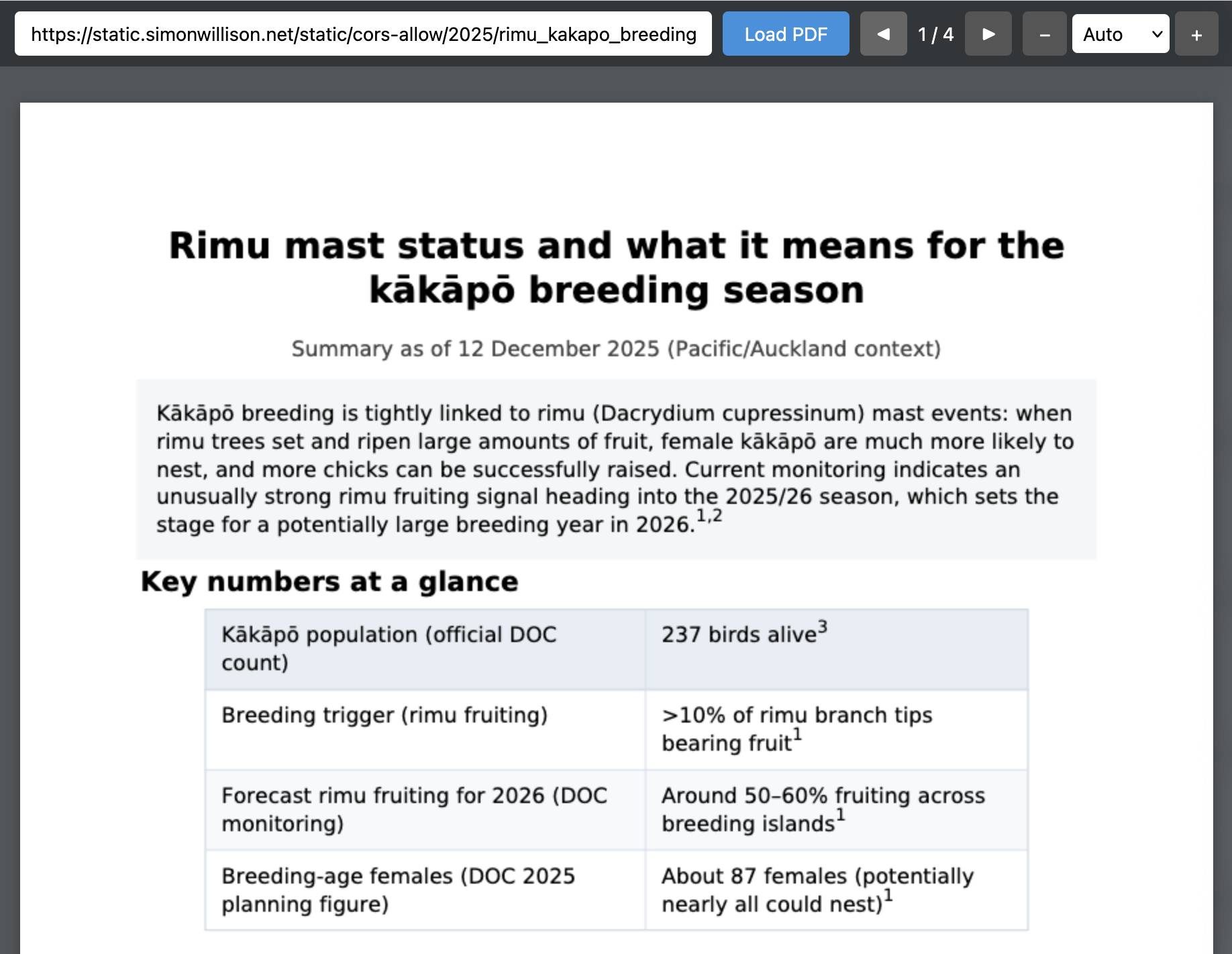
It took just over eleven minutes to produce this PDF, which was long enough that I had Claude Code for web build me a custom PDF viewing tool while I waited.

Here's ChatGPT's PDF in that tool.

Screenshot of my tool. There is a URL at the top, a Load PDF button and pagination controls. Then the PDF itself is shown, which reads: Rimu mast status and what it means for the kākāpō breeding season Summary as of 12 December 2025 (Pacific/Auckland context) Kākāpō breeding is tightly linked to rimu (Dacrydium cupressinum) mast events: when rimu trees set and ripen large amounts of fruit, female kākāpō are much more likely to nest, and more chicks can be successfully raised. Current monitoring indicates an unusually strong rimu fruiting signal heading into the 2025/26 season, which sets the stage for a potentially large breeding year in 2026.^1,2 Key numbers at a glance Kākāpō population (official DOC count) 237 birds alive Breeding trigger (rimu fruiting)>10% of rimu branch tips bearing fruit Forecast rimu fruiting for 2026 (DOC monitoring) Around 50–60% fruiting across breeding islands¹Breeding-age females (DOC 2025 planning figure)About 87 females (potentially nearly all could nest)

(I am very excited about Kākāpō breeding season this year.)

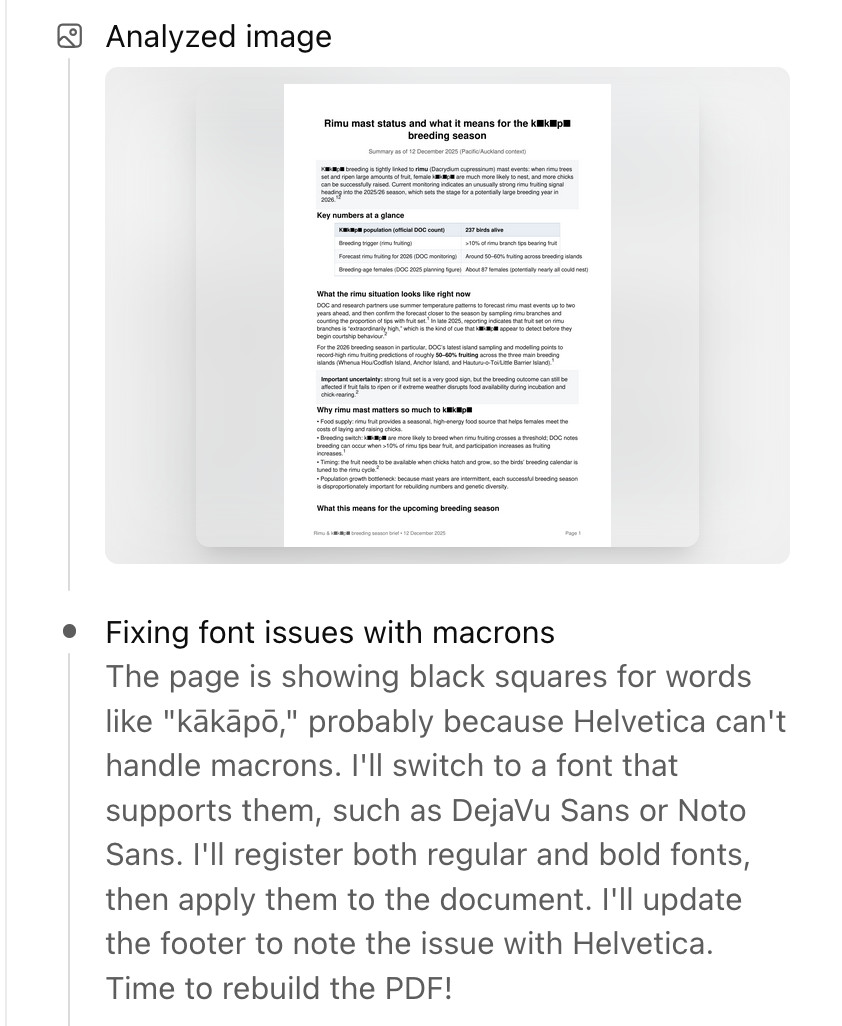
The reason it took so long is that it was fastidious about looking at and tweaking its own work. I appreciated that at one point it tried rendering the PDF and noticed that the macrons in kākāpō were not supported by the chosen font, so it switched to something else:

ChatGPT screenshot. Analyzed image. There's an image of a page of PDF with obvious black blocks on some of the letters in the heading. It then says: Fixing font issues with macrons. The page is showing black squares for words like "kākāpō," probably because Helvetica can't handle macrons. I'll switch to a font that supports them, such as DejaVu Sans or Noto Sans. I'll register both regular and bold fonts, then apply them to the document. I'll update the footer to note the issue with Helvetica. Time to rebuild the PDF!

Skills in Codex CLI

Meanwhile, two weeks ago OpenAI's open source Codex CLI tool landed a PR titled feat: experimental support for skills.md. The most recent docs for that are in docs/skills.md.

The documentation suggests that any folder in ~/.codex/skills will be treated as a skill.

I dug around and found the code that generates the prompt that drives the skill system in codex-rs/core/src/skills/render.rs - here's a Gist with a more readable version of that prompt.

I used Claude Opus 4.5's skill authoring skill to create this skill for creating Datasette plugins, then installed it into my Codex CLI skills folder like this:

git clone https://github.com/datasette/skill \
  ~/.codex/skills/datasette-plugin

You have to run Codex with the --enable skills option. I ran this:

cd /tmp
mkdir datasette-cowsay
cd datasette-cowsay
codex --enable skills -m gpt-5.2

Then prompted:

list skills

And Codex replied:

- datasette-plugins — Writing Datasette plugins using Python + pluggy (file: /Users/simon/.codex/skills/datasette-plugin/SKILL.md)
- Discovery — How to find/identify available skills (no SKILL.md path provided in the list)

Then I said:

Write a Datasette plugin in this folder adding a /-/cowsay?text=hello page that displays a pre with cowsay from PyPI saying that text

It worked perfectly! Here's the plugin code it wrote and here's a copy of the full Codex CLI transcript, generated with my terminal-to-html tool.

You can try that out yourself if you have uvx installed like this:

uvx --with https://github.com/simonw/datasette-cowsay/archive/refs/heads/main.zip \
  datasette

Then visit:

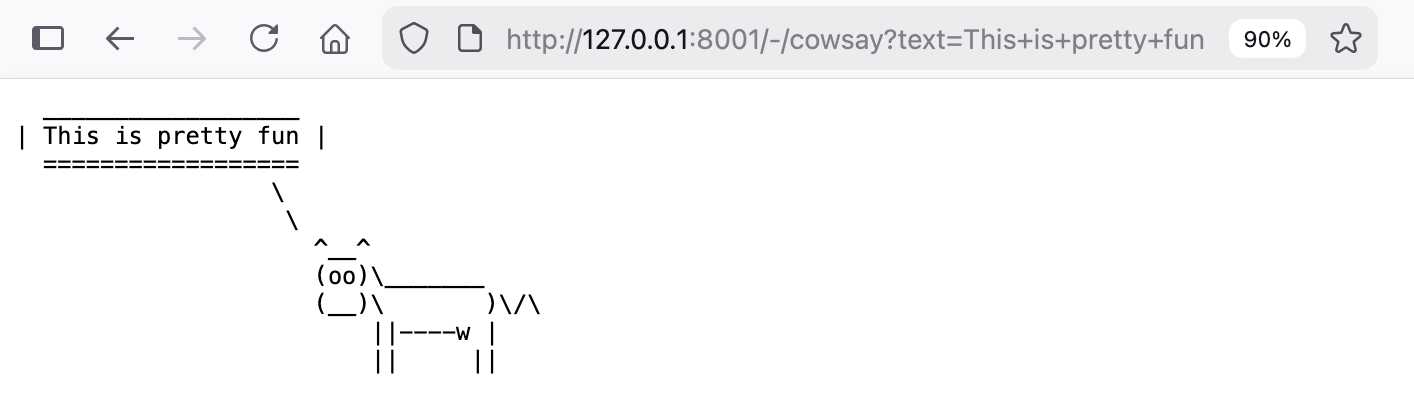
http://127.0.0.1:8001/-/cowsay?text=This+is+pretty+fun

Screenshot of that URL in Firefox, an ASCII art cow says This is pretty fun.

Skills are a keeper

When I first wrote about skills in October I said Claude Skills are awesome, maybe a bigger deal than MCP. The fact that it's just turned December and OpenAI have already leaned into them in a big way reinforces to me that I called that one correctly.

Skills are based on a very light specification, if you could even call it that, but I still think it would be good for these to be formally documented somewhere. This could be a good initiative for the new Agentic AI Foundation (previously) to take on.

Tags: pdf, ai, kakapo, openai, prompt-engineering, generative-ai, chatgpt, llms, ai-assisted-programming, anthropic, coding-agents, gpt-5, codex-cli, skills

🔲 ☆

Useful patterns for building HTML tools

I've started using the term HTML tools to refer to HTML applications that I've been building which combine HTML, JavaScript, and CSS in a single file and use them to provide useful functionality. I have built over 150 of these in the past two years, almost all of them written by LLMs. This article presents a collection of useful patterns I've discovered along the way.

First, some examples to show the kind of thing I'm talking about:

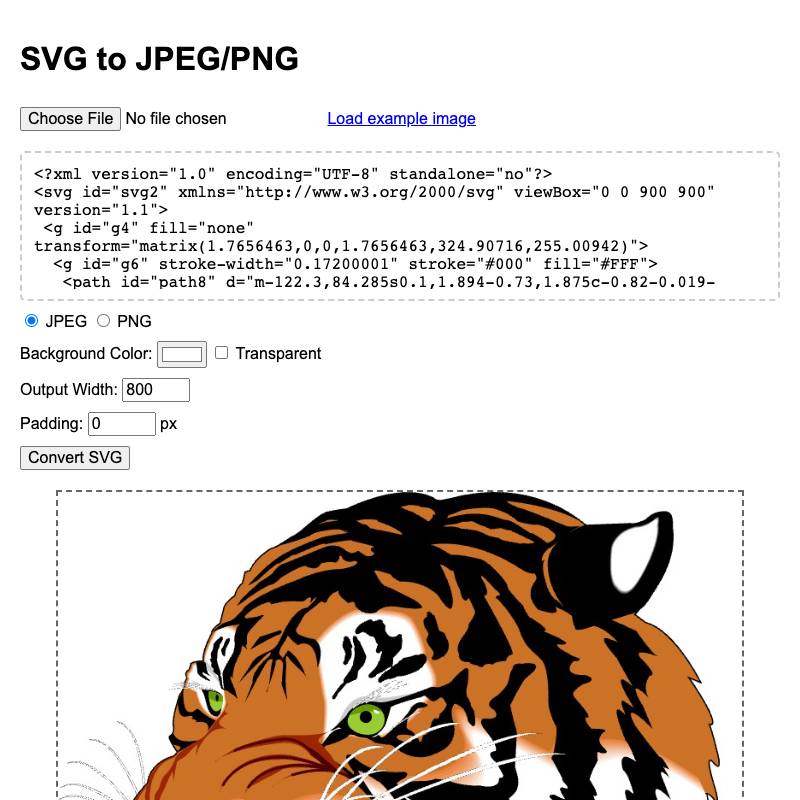
  • svg-render renders SVG code to downloadable JPEGs or PNGs
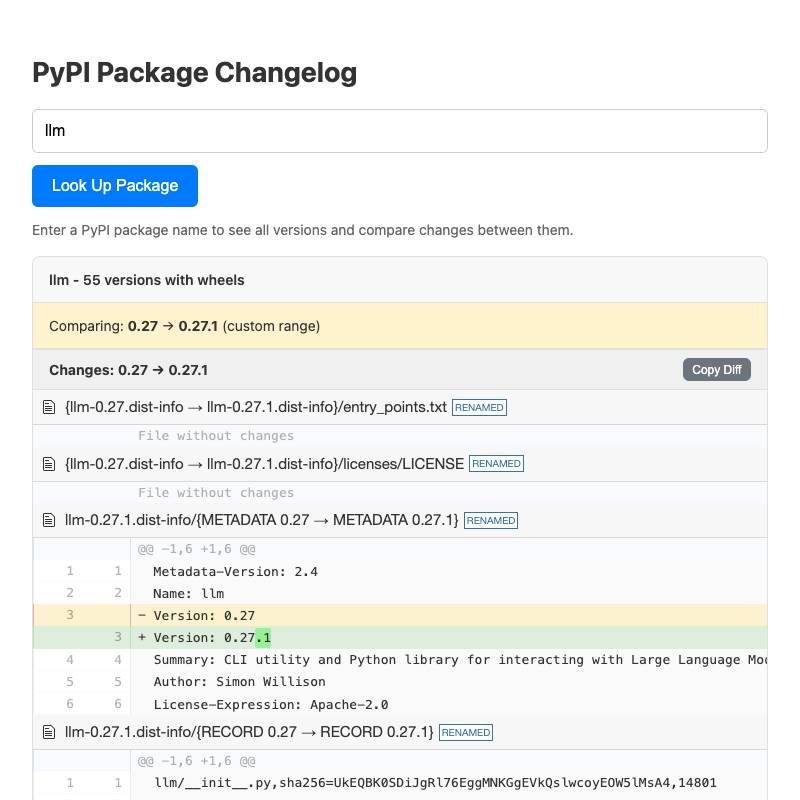
  • pypi-changelog lets you generate (and copy to clipboard) diffs between different PyPI package releases.
  • bluesky-thread provides a nested view of a discussion thread on Bluesky.
screenshot of svg-render screenshot of pypi-changelog screenshot of bluesky-thread

These are some of my recent favorites. I have dozens more like this that I use on a regular basis.

You can explore my collection on tools.simonwillison.net - the by month view is useful for browsing the entire collection.

If you want to see the code and prompts, almost all of the examples in this post include a link in their footer to "view source" on GitHub. The GitHub commits usually contain either the prompt itself or a link to the transcript used to create the tool.

The anatomy of an HTML tool

These are the characteristics I have found to be most productive in building tools of this nature:

  1. A single file: inline JavaScript and CSS in a single HTML file means the least hassle in hosting or distributing them, and crucially means you can copy and paste them out of an LLM response.
  2. Avoid React, or anything with a build step. The problem with React is that JSX requires a build step, which makes everything massively less convenient. I prompt "no react" and skip that whole rabbit hole entirely.
  3. Load dependencies from a CDN. The fewer dependencies the better, but if there's a well known library that helps solve a problem I'm happy to load it from CDNjs or jsdelivr or similar.
  4. Keep them small. A few hundred lines means the maintainability of the code doesn't matter too much: any good LLM can read them and understand what they're doing, and rewriting them from scratch with help from an LLM takes just a few minutes.

The end result is a few hundred lines of code that can be cleanly copied and pasted into a GitHub repository.

Prototype with Artifacts or Canvas

The easiest way to build one of these tools is to start in ChatGPT or Claude or Gemini. All three have features where they can write a simple HTML+JavaScript application and show it to you directly.

Claude calls this "Artifacts", ChatGPT and Gemini both call it "Canvas". Claude has the feature enabled by default, ChatGPT and Gemini may require you to toggle it on in their "tools" menus.

Try this prompt in Gemini or ChatGPT:

Build a canvas that lets me paste in JSON and converts it to YAML. No React.

Or this prompt in Claude:

Build an artifact that lets me paste in JSON and converts it to YAML. No React.

I always add "No React" to these prompts, because otherwise they tend to build with React, resulting in a file that is harder to copy and paste out of the LLM and use elsewhere. I find that attempts which use React take longer to display (since they need to run a build step) and are more likely to contain crashing bugs for some reason, especially in ChatGPT.

All three tools have "share" links that provide a URL to the finished application. Examples:

Switch to a coding agent for more complex projects

Coding agents such as Claude Code and Codex CLI have the advantage that they can test the code themselves while they work on it using tools like Playwright. I often upgrade to one of those when I'm working on something more complicated, like my Bluesky thread viewer tool shown above.

I also frequently use asynchronous coding agents like Claude Code for web to make changes to existing tools. I shared a video about that in Building a tool to copy-paste share terminal sessions using Claude Code for web.

Claude Code for web and Codex Cloud run directly against my simonw/tools repo, which means they can publish or upgrade tools via Pull Requests (here are dozens of examples) without me needing to copy and paste anything myself.

Load dependencies from CDNs

Any time I use an additional JavaScript library as part of my tool I like to load it from a CDN.

The three major LLM platforms support specific CDNs as part of their Artifacts or Canvas features, so often if you tell them "Use PDF.js" or similar they'll be able to compose a URL to a CDN that's on their allow-list.

Sometimes you'll need to go and look up the URL on cdnjs or jsDelivr and paste it into the chat.

CDNs like these have been around for long enough that I've grown to trust them, especially for URLs that include the package version.

The alternative to CDNs is to use npm and have a build step for your projects. I find this reduces my productivity at hacking on individual tools and makes it harder to self-host them.

Host them somewhere else

I don't like leaving my HTML tools hosted by the LLM platforms themselves for a couple of reasons. First, LLM platforms tend to run the tools inside a tight sandbox with a lot of restrictions. They're often unable to load data or images from external URLs, and sometimes even features like linking out to other sites are disabled.

The end-user experience often isn't great either. They show warning messages to new users, often take additional time to load and delight in showing promotions for the platform that was used to create the tool.

They're also not as reliable as other forms of static hosting. If ChatGPT or Claude are having an outage I'd like to still be able to access the tools I've created in the past.

Being able to easily self-host is the main reason I like insisting on "no React" and using CDNs for dependencies - the absence of a build step makes hosting tools elsewhere a simple case of copying and pasting them out to some other provider.

My preferred provider here is GitHub Pages because I can paste a block of HTML into a file on github.com and have it hosted on a permanent URL a few seconds later. Most of my tools end up in my simonw/tools repository which is configured to serve static files at tools.simonwillison.net.

Take advantage of copy and paste

One of the most useful input/output mechanisms for HTML tools comes in the form of copy and paste.

I frequently build tools that accept pasted content, transform it in some way and let the user copy it back to their clipboard to paste somewhere else.

Copy and paste on mobile phones is fiddly, so I frequently include "Copy to clipboard" buttons that populate the clipboard with a single touch.

Most operating system clipboards can carry multiple formats of the same copied data. That's why you can paste content from a word processor in a way that preserves formatting, but if you paste the same thing into a text editor you'll get the content with formatting stripped.

These rich copy operations are available in JavaScript paste events as well, which opens up all sorts of opportunities for HTML tools.

  • hacker-news-thread-export lets you paste in a URL to a Hacker News thread and gives you a copyable condensed version of the entire thread, suitable for pasting into an LLM to get a useful summary.
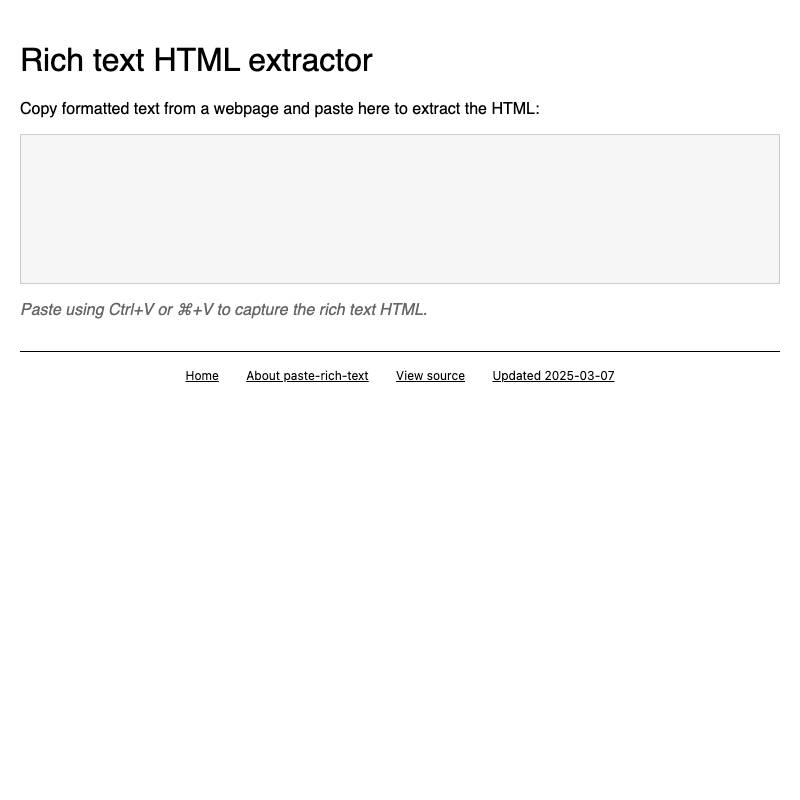
  • paste-rich-text lets you copy from a page and paste to get the HTML - particularly useful on mobile where view-source isn't available.
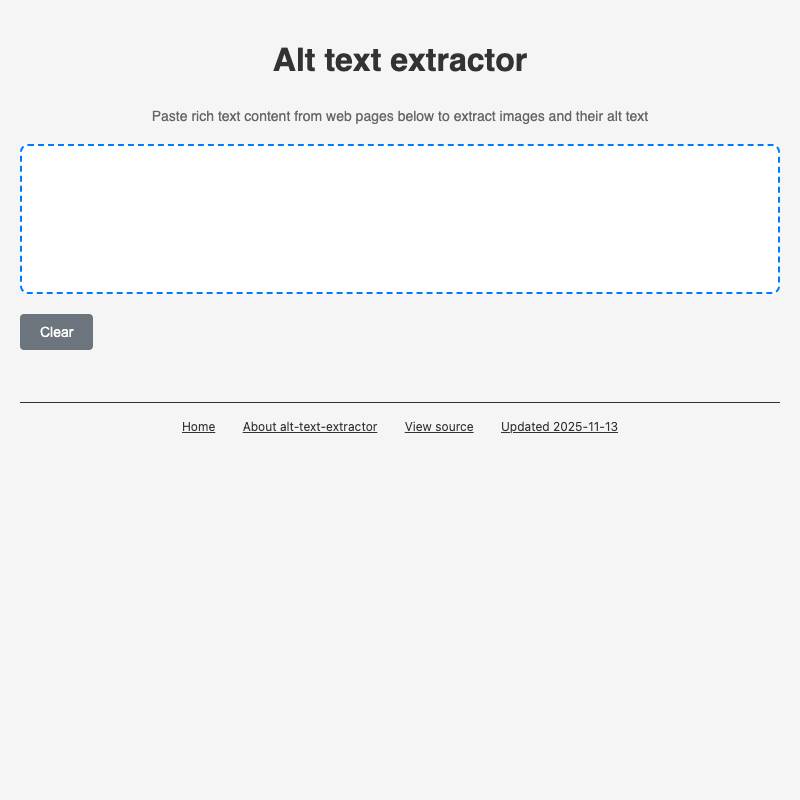
  • alt-text-extractor lets you paste in images and then copy out their alt text.
screenshot of hacker-news-thread-export screenshot of paste-rich-text screenshot of alt-text-extractor

Build debugging tools

The key to building interesting HTML tools is understanding what's possible. Building custom debugging tools is a great way to explore these options.

clipboard-viewer is one of my most useful. You can paste anything into it (text, rich text, images, files) and it will loop through and show you every type of paste data that's available on the clipboard.
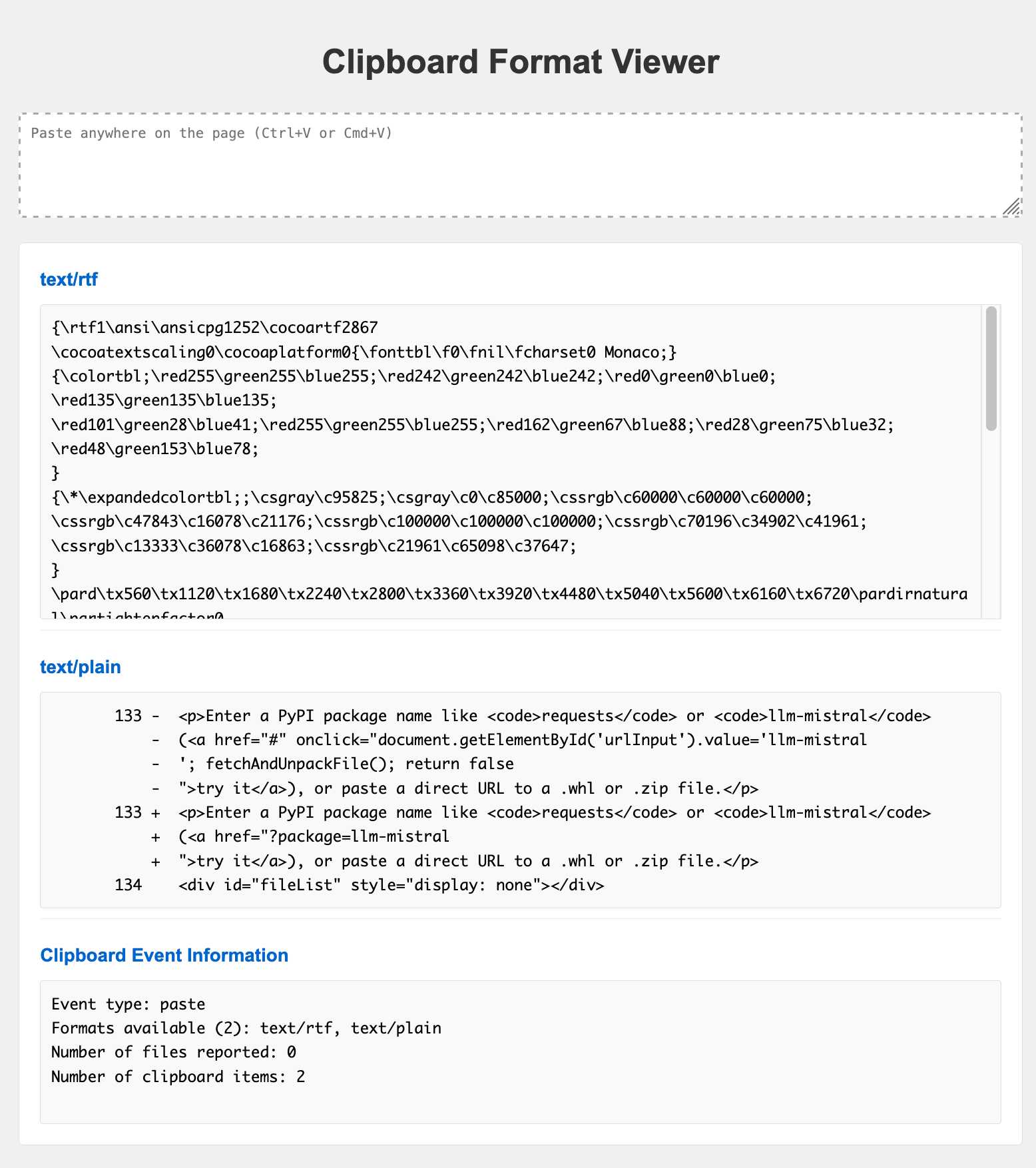
Clipboard Format Viewer. Paste anywhere on the page (Ctrl+V or Cmd+V). This shows text/rtf with a bunch of weird code, text/plain with some pasted HTML diff and a Clipboard Event Information panel that says Event type: paste, Formats available: text/rtf, text/plain, 0 files reported and 2 clipboard items reported.

This was key to building many of my other tools, because it showed me the invisible data that I could use to bootstrap other interesting pieces of functionality.

More debugging examples:

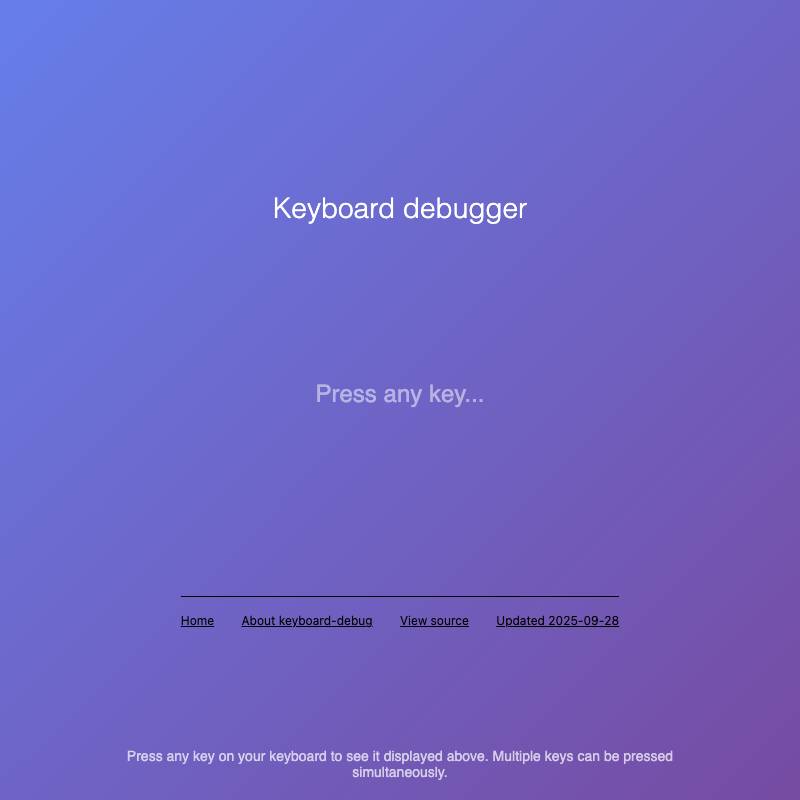
  • keyboard-debug shows the keys (and KeyCode values) currently being held down.
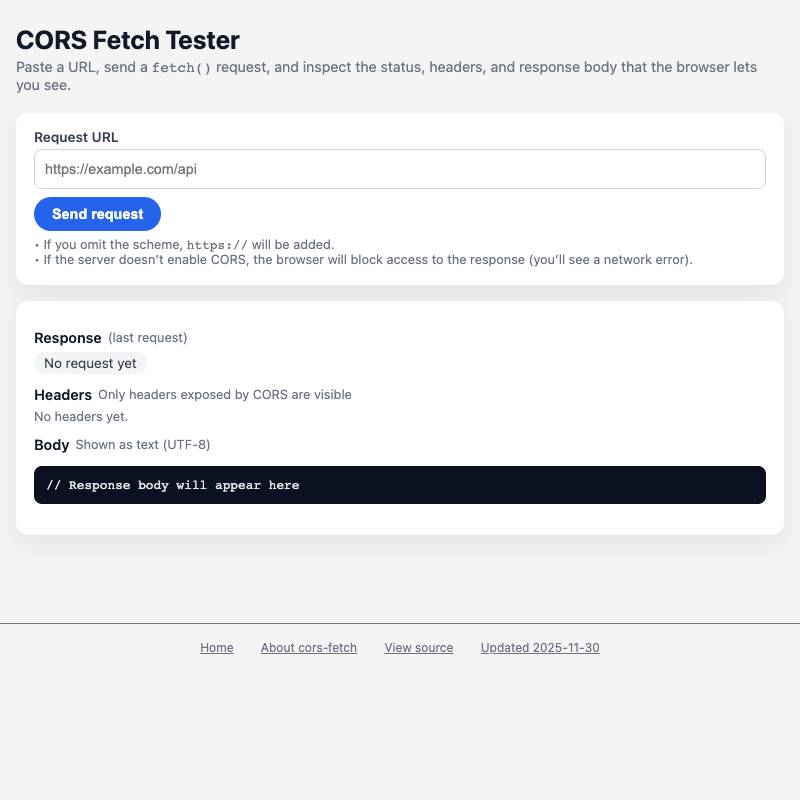
  • cors-fetch reveals if a URL can be accessed via CORS.
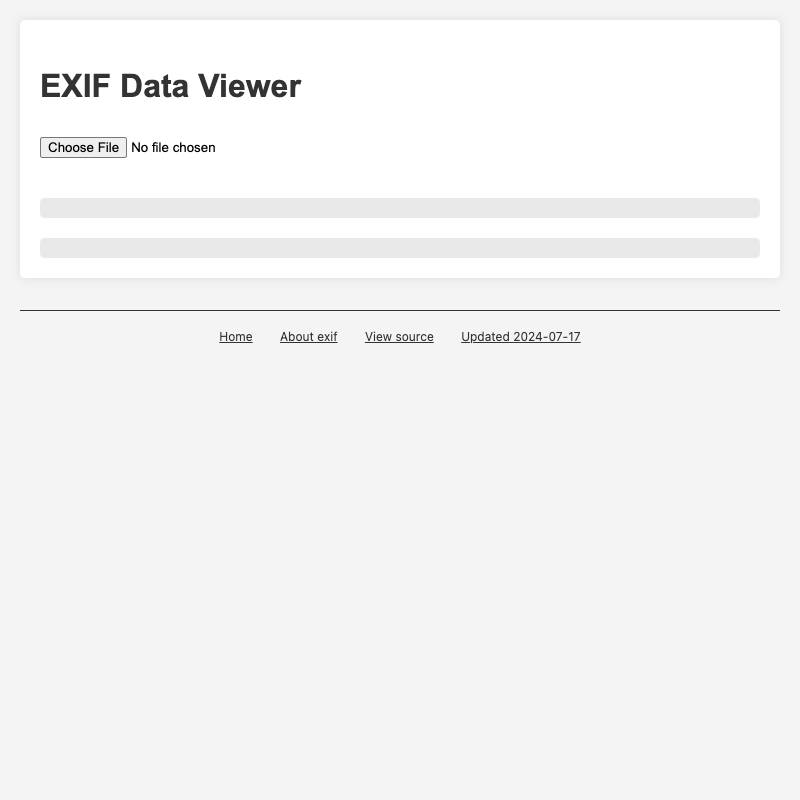
  • exif displays EXIF data for a selected photo.
screenshot of keyboard-debug screenshot of cors-fetch screenshot of exif

Persist state in the URL

HTML tools may not have access to server-side databases for storage but it turns out you can store a lot of state directly in the URL.

I like this for tools I may want to bookmark or share with other people.

  • icon-editor is a custom 24x24 icon editor I built to help hack on icons for the GitHub Universe badge. It persists your in-progress icon design in the URL so you can easily bookmark and share it.

Use localStorage for secrets or larger state

The localStorage browser API lets HTML tools store data persistently on the user's device, without exposing that data to the server.

I use this for larger pieces of state that don't fit comfortably in a URL, or for secrets like API keys which I really don't want anywhere near my server - even static hosts might have server logs that are outside of my influence.

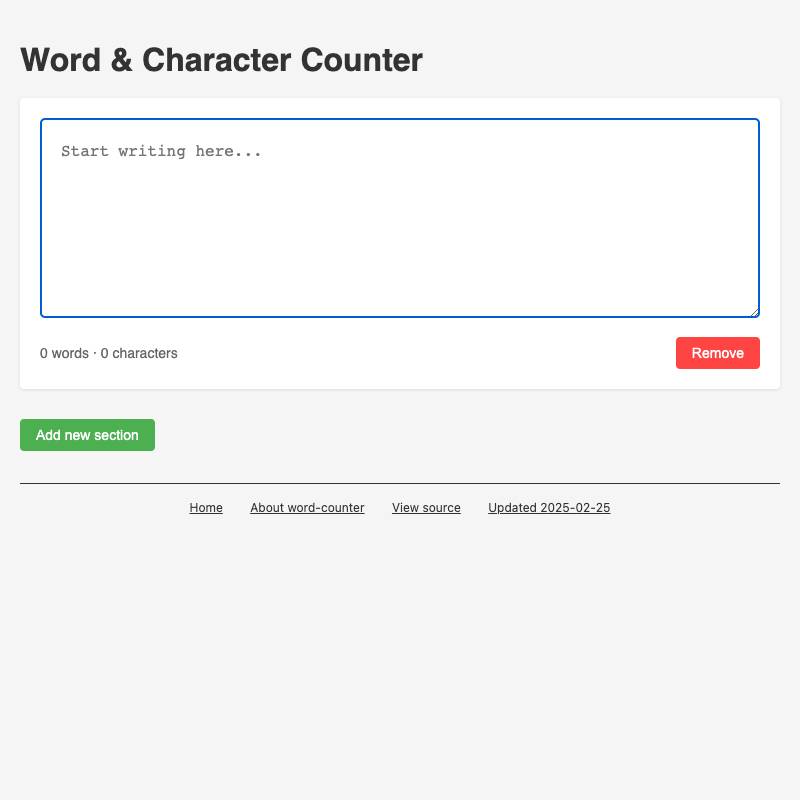
  • word-counter is a simple tool I built to help me write to specific word counts, for things like conference abstract submissions. It uses localStorage to save as you type, so your work isn't lost if you accidentally close the tab.
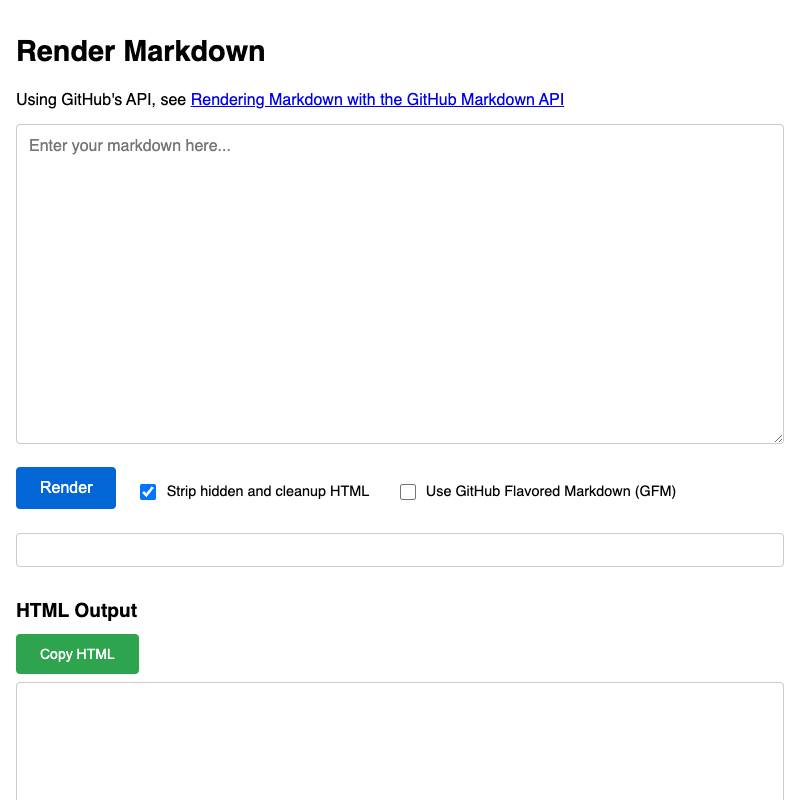
  • render-markdown uses the same trick - I sometimes use this one to craft blog posts and I don't want to lose them.
  • haiku is one of a number of LLM demos I've built that request an API key from the user (via the prompt() function) and then store that in localStorage. This one uses Claude Haiku to write haikus about what it can see through the user's webcam.
screenshot of word-counter screenshot of render-markdown screenshot of haiku

Collect CORS-enabled APIs

CORS stands for Cross-origin resource sharing. It's a relatively low-level detail which controls if JavaScript running on one site is able to fetch data from APIs hosted on other domains.

APIs that provide open CORS headers are a goldmine for HTML tools. It's worth building a collection of these over time.

Here are some I like:

  • iNaturalist for fetching sightings of animals, including URLs to photos
  • PyPI for fetching details of Python packages
  • GitHub because anything in a public repository in GitHub has a CORS-enabled anonymous API for fetching that content from the raw.githubusercontent.com domain, which is behind a caching CDN so you don't need to worry too much about rate limits or feel guilty about adding load to their infrastructure.
  • Bluesky for all sorts of operations
  • Mastodon has generous CORS policies too, as used by applications like phanpy.social

GitHub Gists are a personal favorite here, because they let you build apps that can persist state to a permanent Gist through making a cross-origin API call.

  • species-observation-map uses iNaturalist to show a map of recent sightings of a particular species.
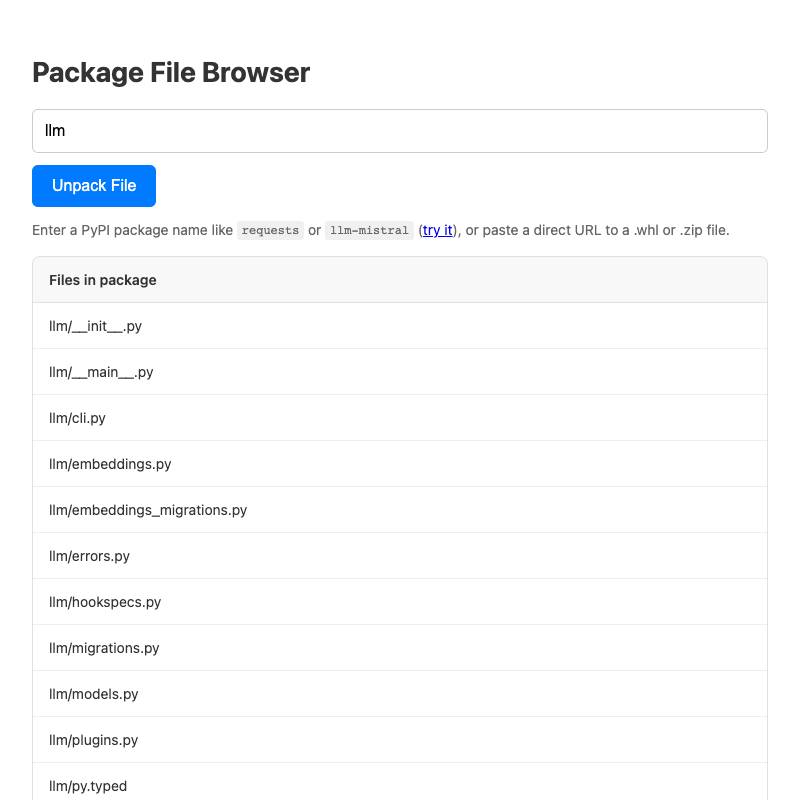
  • zip-wheel-explorer fetches a .whl file for a Python package from PyPI, unzips it (in browser memory) and lets you navigate the files.
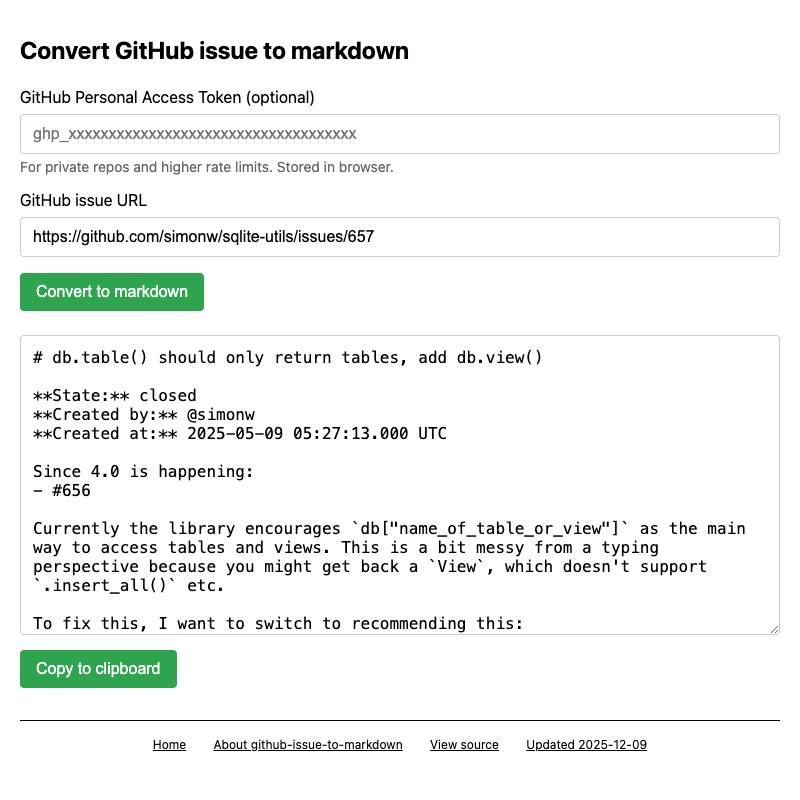
  • github-issue-to-markdown fetches issue details and comments from the GitHub API (including expanding any permanent code links) and turns them into copyable Markdown.
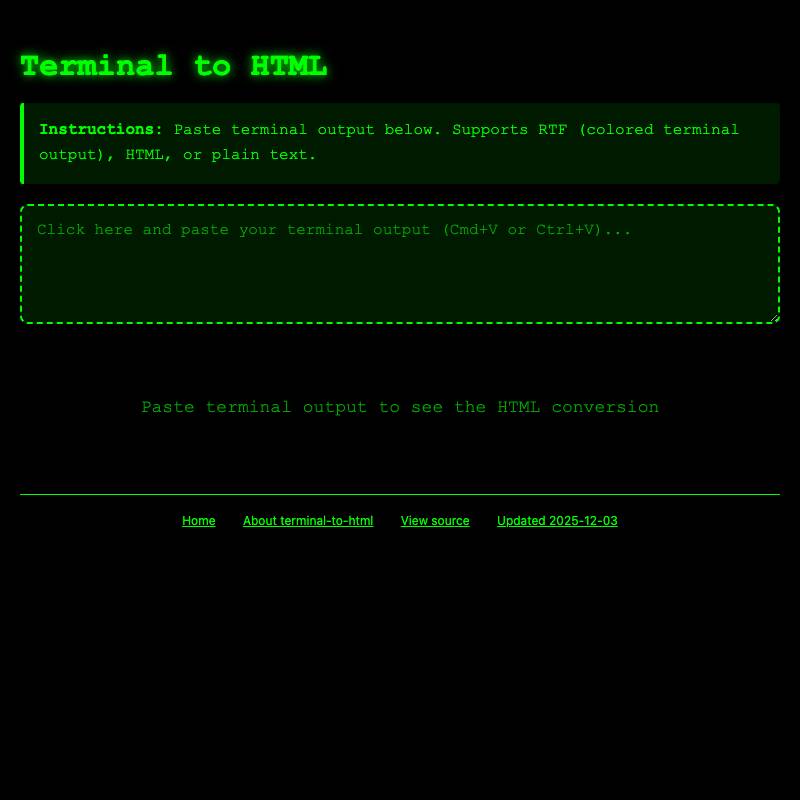
  • terminal-to-html can optionally save the user's converted terminal session to a Gist.
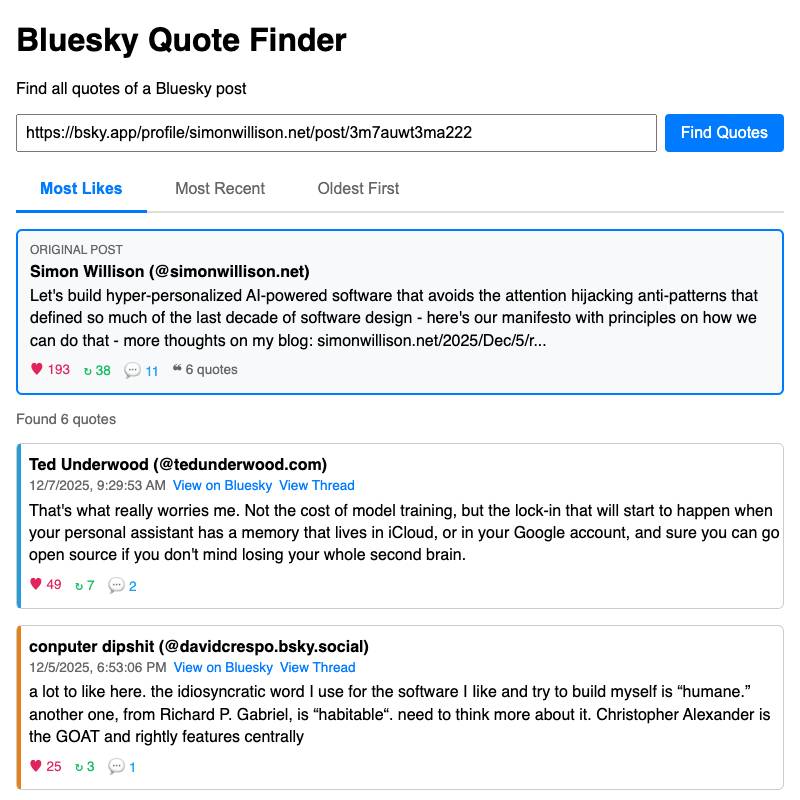
  • bluesky-quote-finder displays quotes of a specified Bluesky post, which can then be sorted by likes or by time.
screenshot of species-observation-map screenshot of zip-wheel-explorer screenshot of github-issue-to-markdown screenshot of terminal-to-html screenshot of bluesky-quote-finder

LLMs can be called directly via CORS

All three of OpenAI, Anthropic and Gemini offer JSON APIs that can be accessed via CORS directly from HTML tools.

Unfortunately you still need an API key, and if you bake that key into your visible HTML anyone can steal it and use to rack up charges on your account.

I use the localStorage secrets pattern to store API keys for these services. This sucks from a user experience perspective - telling users to go and create an API key and paste it into a tool is a lot of friction - but it does work.

Some examples:

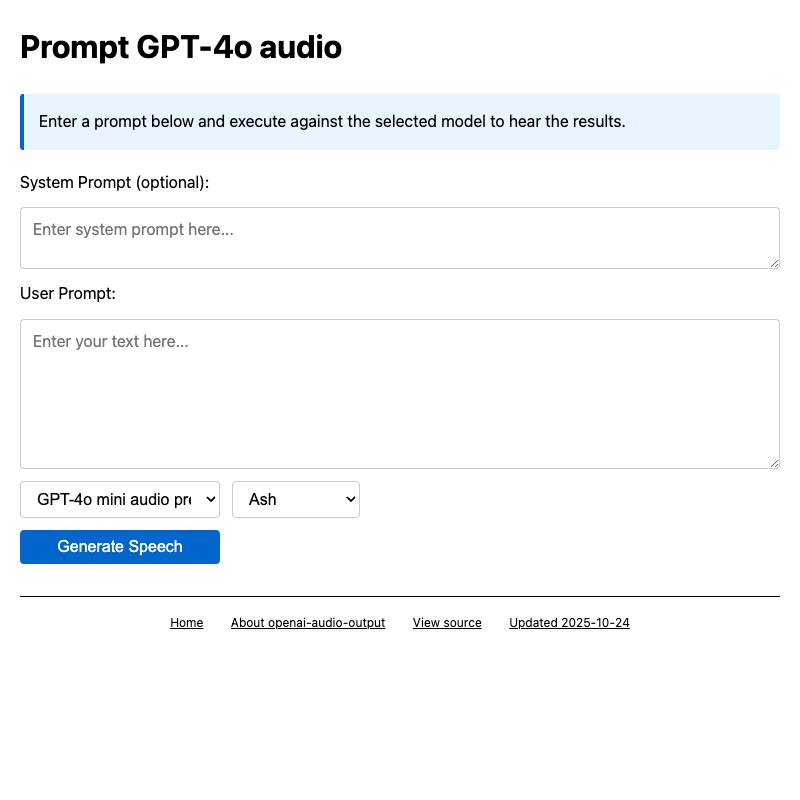
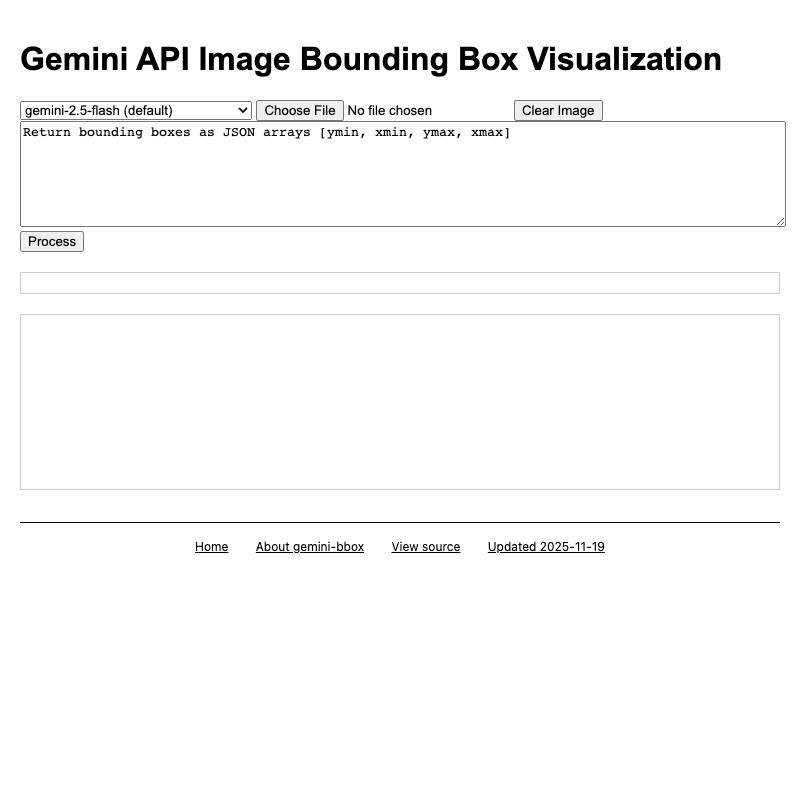
screenshot of haiku screenshot of openai-audio-output screenshot of gemini-bbox

Don't be afraid of opening files

You don't need to upload a file to a server in order to make use of the <input type="file"> element. JavaScript can access the content of that file directly, which opens up a wealth of opportunities for useful functionality.

Some examples:

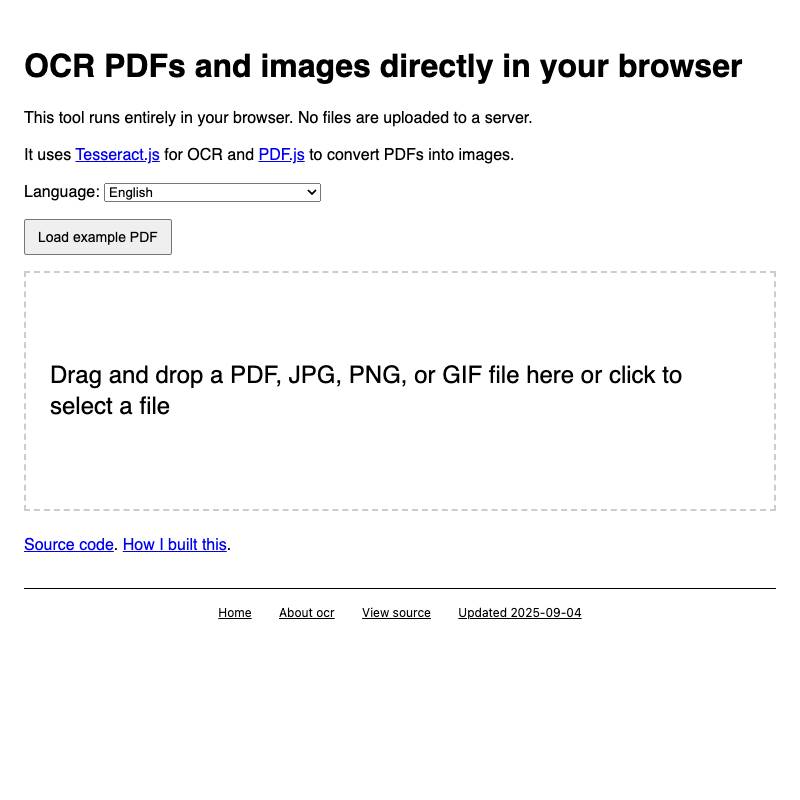
  • ocr is the first tool I built for my collection, described in Running OCR against PDFs and images directly in your browser. It uses PDF.js and Tesseract.js to allow users to open a PDF in their browser which it then converts to an image-per-page and runs through OCR.
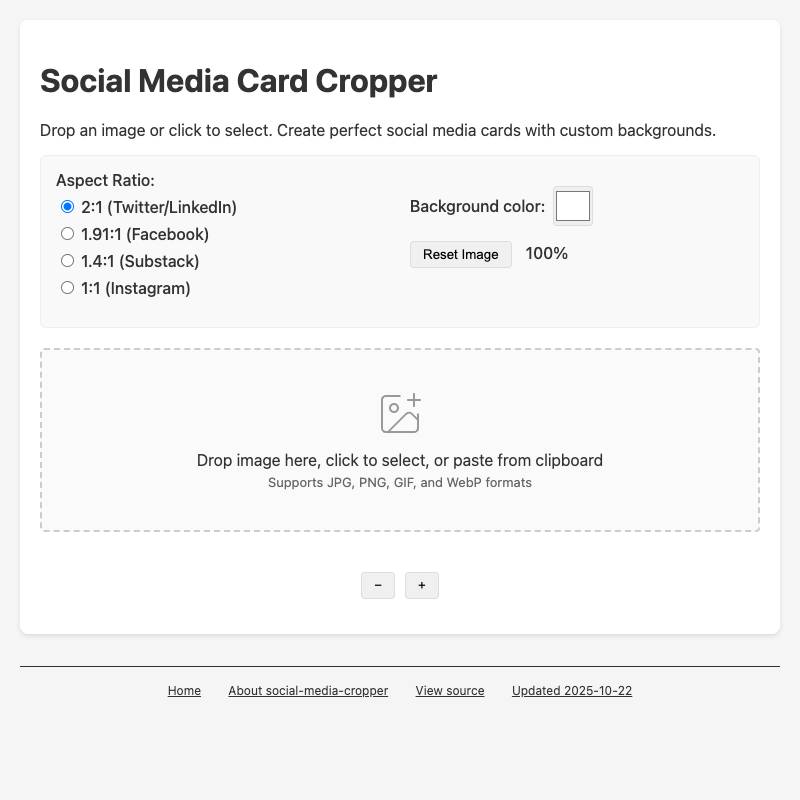
  • social-media-cropper lets you open (or paste in) an existing image and then crop it to common dimensions needed for different social media platforms - 2:1 for Twitter and LinkedIn, 1.4:1 for Substack etc.
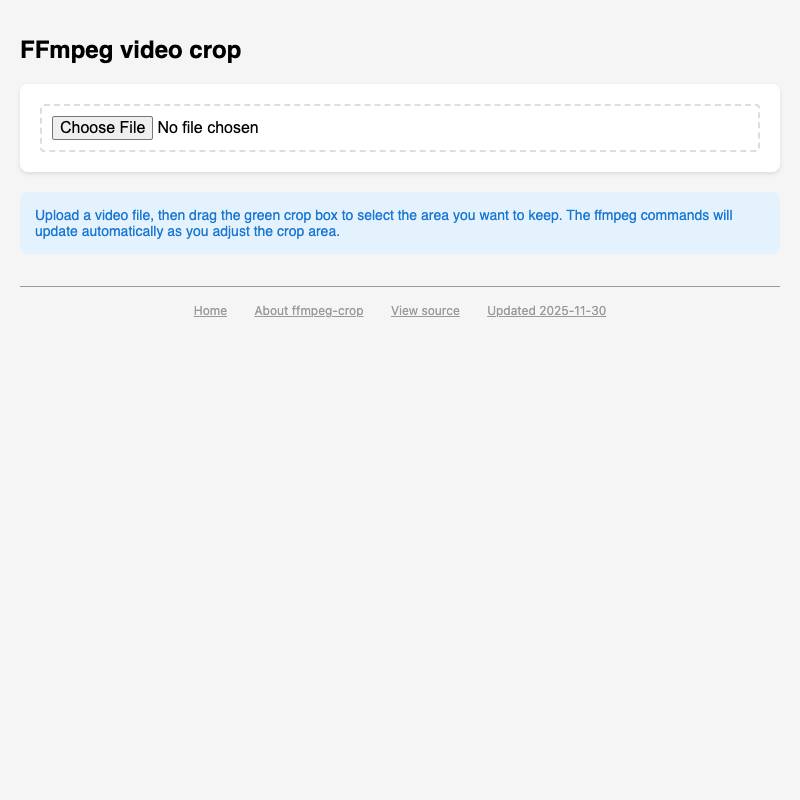
  • ffmpeg-crop lets you open and preview a video file in your browser, drag a crop box within it and then copy out the ffmpeg command needed to produce a cropped copy on your own machine.
screenshot of ocr screenshot of social-media-cropper screenshot of ffmpeg-crop

You can offer downloadable files too

An HTML tool can generate a file for download without needing help from a server.

The JavaScript library ecosystem has a huge range of packages for generating files in all kinds of useful formats.

screenshot of svg-render screenshot of social-media-cropper screenshot of open-sauce-2025

Pyodide can run Python code in the browser

Pyodide is a distribution of Python that's compiled to WebAssembly and designed to run directly in browsers. It's an engineering marvel and one of the most underrated corners of the Python world.

It also cleanly loads from a CDN, which means there's no reason not to use it in HTML tools!

Even better, the Pyodide project includes micropip - a mechanism that can load extra pure-Python packages from PyPI via CORS.

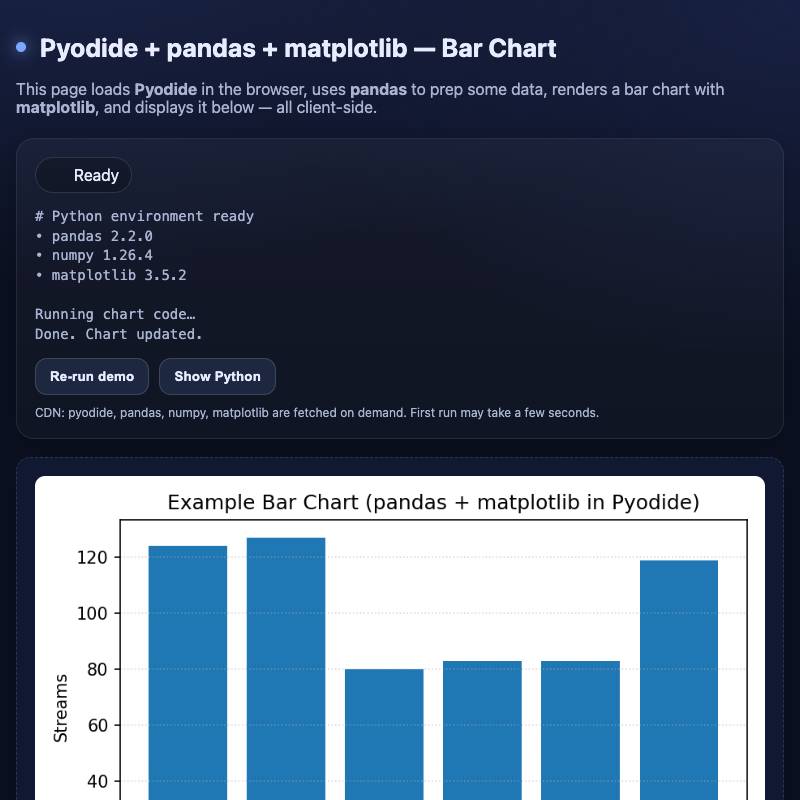
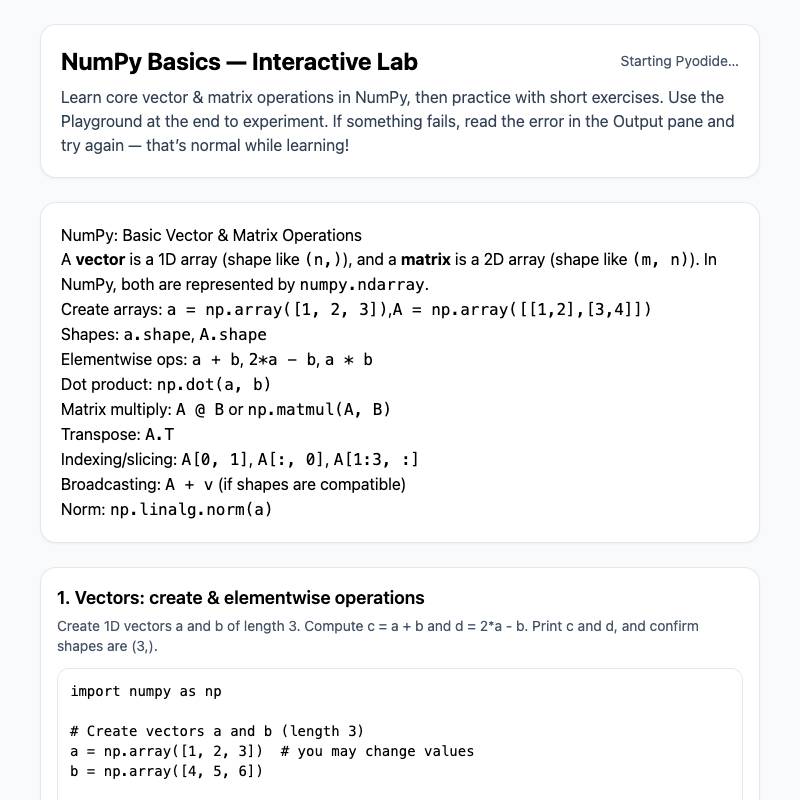
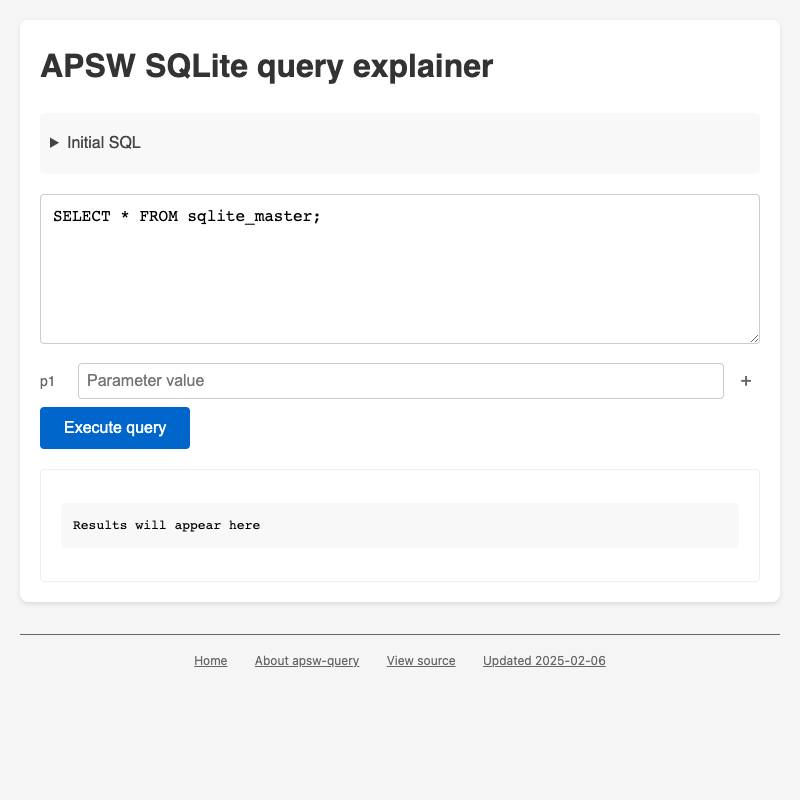
screenshot of pyodide-bar-chart screenshot of numpy-pyodide-lab screenshot of apsw-query

WebAssembly opens more possibilities

Pyodide is possible thanks to WebAssembly. WebAssembly means that a vast collection of software originally written in other languages can now be loaded in HTML tools as well.

Squoosh.app was the first example I saw that convinced me of the power of this pattern - it makes several best-in-class image compression libraries available directly in the browser.

I've used WebAssembly for a few of my own tools:

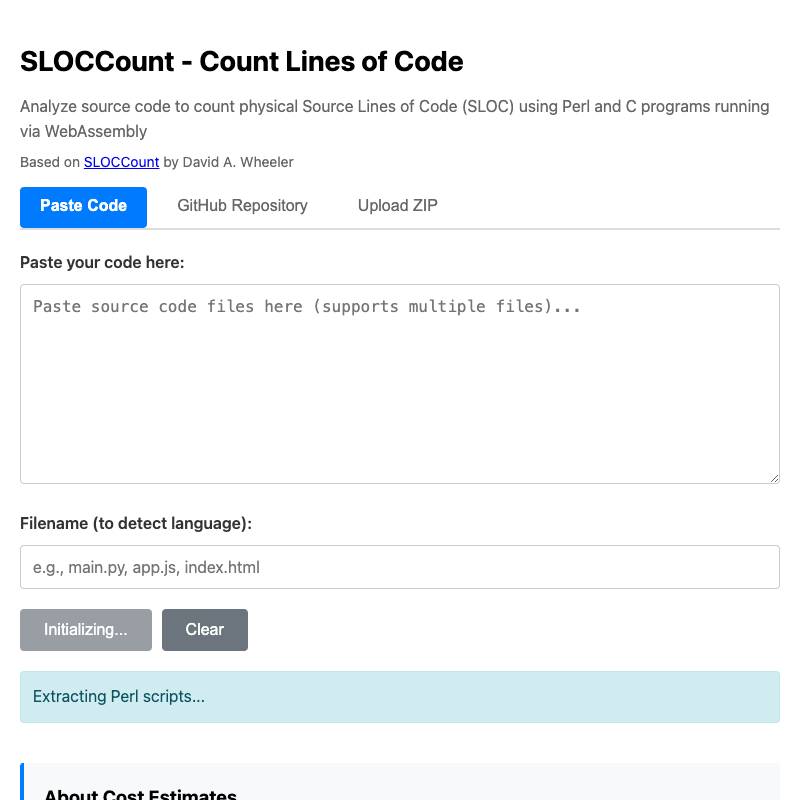
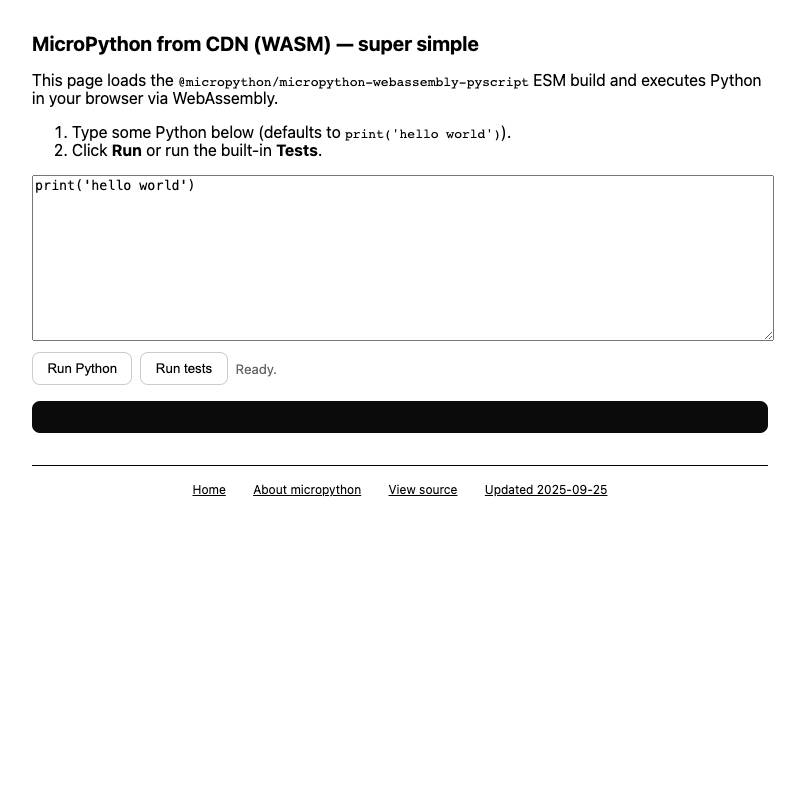
screenshot of ocr screenshot of sloccount screenshot of micropython

Remix your previous tools

The biggest advantage of having a single public collection of 100+ tools is that it's easy for my LLM assistants to recombine them in interesting ways.

Sometimes I'll copy and paste a previous tool into the context, but when I'm working with a coding agent I can reference them by name - or tell the agent to search for relevant examples before it starts work.

The source code of any working tool doubles as clear documentation of how something can be done, including patterns for using editing libraries. An LLM with one or two existing tools in their context is much more likely to produce working code.

I built pypi-changelog by telling Claude Code:

Look at the pypi package explorer tool

And then, after it had found and read the source code for zip-wheel-explorer:

Build a new tool pypi-changelog.html which uses the PyPI API to get the wheel URLs of all available versions of a package, then it displays them in a list where each pair has a "Show changes" clickable in between them - clicking on that fetches the full contents of the wheels and displays a nicely rendered diff representing the difference between the two, as close to a standard diff format as you can get with JS libraries from CDNs, and when that is displayed there is a "Copy" button which copies that diff to the clipboard

Here's the full transcript.

See Running OCR against PDFs and images directly in your browser for another detailed example of remixing tools to create something new.

Record the prompt and transcript

I like keeping (and publishing) records of everything I do with LLMs, to help me grow my skills at using them over time.

For HTML tools I built by chatting with an LLM platform directly I use the "share" feature for those platforms.

For Claude Code or Codex CLI or other coding agents I copy and paste the full transcript from the terminal into my terminal-to-html tool and share that using a Gist.

In either case I include links to those transcripts in the commit message when I save the finished tool to my repository. You can see those in my tools.simonwillison.net colophon.

Go forth and build

I've had so much fun exploring the capabilities of LLMs in this way over the past year and a half, and building tools in this way has been invaluable in helping me understand both the potential for building tools with HTML and the capabilities of the LLMs that I'm building them with.

If you're interested in starting your own collection I highly recommend it! All you need to get started is a free GitHub repository with GitHub Pages enabled (Settings -> Pages -> Source -> Deploy from a branch -> main) and you can start copying in .html pages generated in whatever manner you like.

Bonus transcript: Here's how I used Claude Code and shot-scraper to add the screenshots to this post.

Tags: definitions, github, html, javascript, projects, tools, ai, webassembly, generative-ai, llms, ai-assisted-programming, vibe-coding, coding-agents, claude-code

🔲 ☆

Dark mode

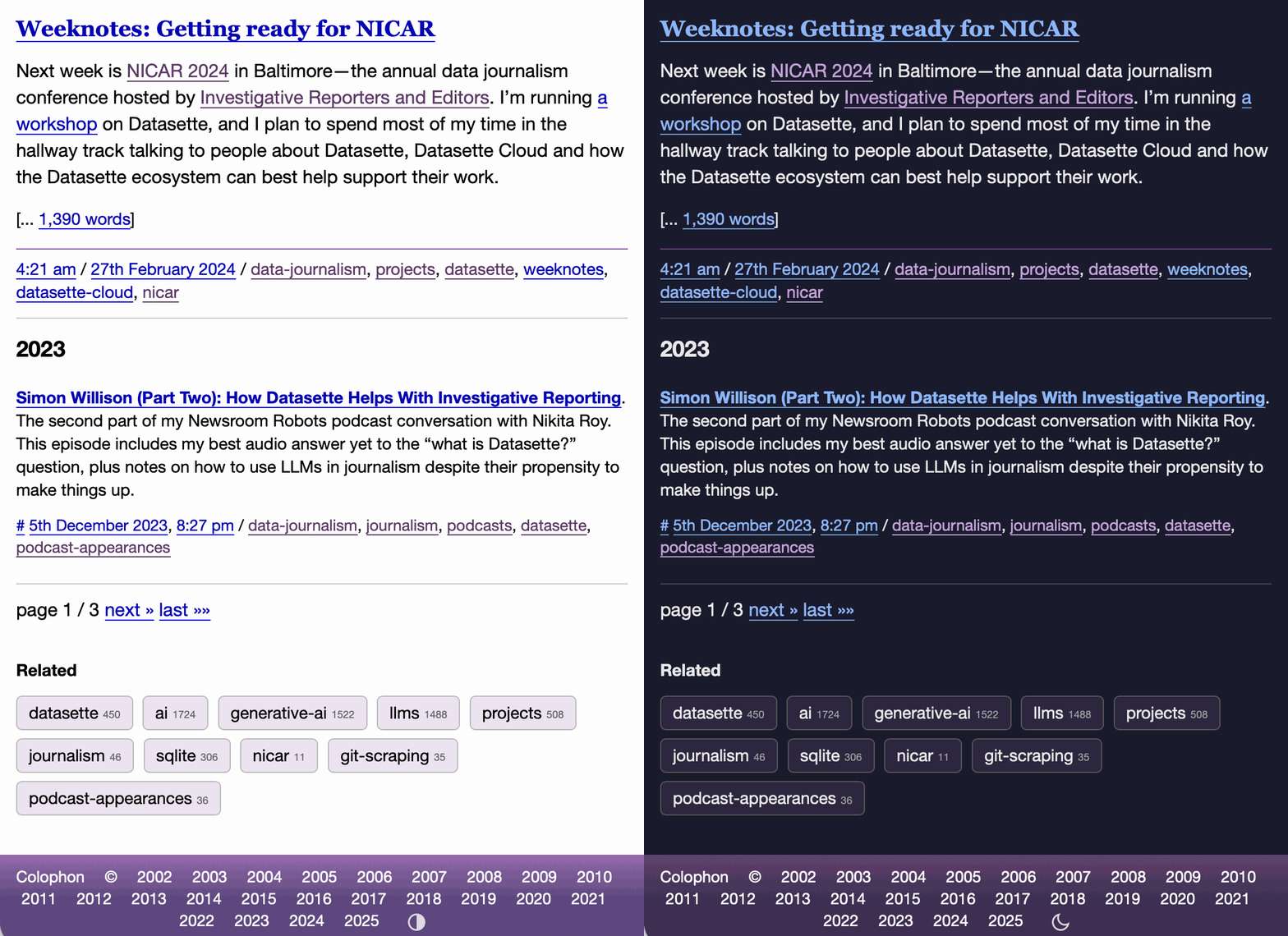
I've never been particularly invested dark v.s. light mode but I get enough people complaining that this site is "blinding" that I decided to see if Claude Code for web could produce a useful dark mode from my existing CSS. It did a decent job, using CSS properties, @media (prefers-color-scheme: dark) and a data-theme="dark" attribute based on this prompt:

Add a dark theme which is triggered by user media preferences but can also be switched on using localStorage - then put a little icon in the footer for toggling it between default auto, forced regular and forced dark mode

The site defaults to picking up the user's preferences, but there's also a toggle in the footer which switches between auto, forced-light and forced-dark. Here's an animated demo:

This site on mobile. Clicking the icon in the footer switches to a black background with readable text.

I had Claude Code make me that GIF from two static screenshots - it used this ImageMagick recipe:

magick -delay 300 -loop 0 one.png two.png \
    -colors 128 -layers Optimize dark-mode.gif

The CSS ended up with some duplication due to the need to handle both the media preference and the explicit user selection. We fixed that with Cog.

Tags: css, coding-agents, ai-assisted-programming, claude, claude-code, design, llms, ai, generative-ai

🔲 ☆

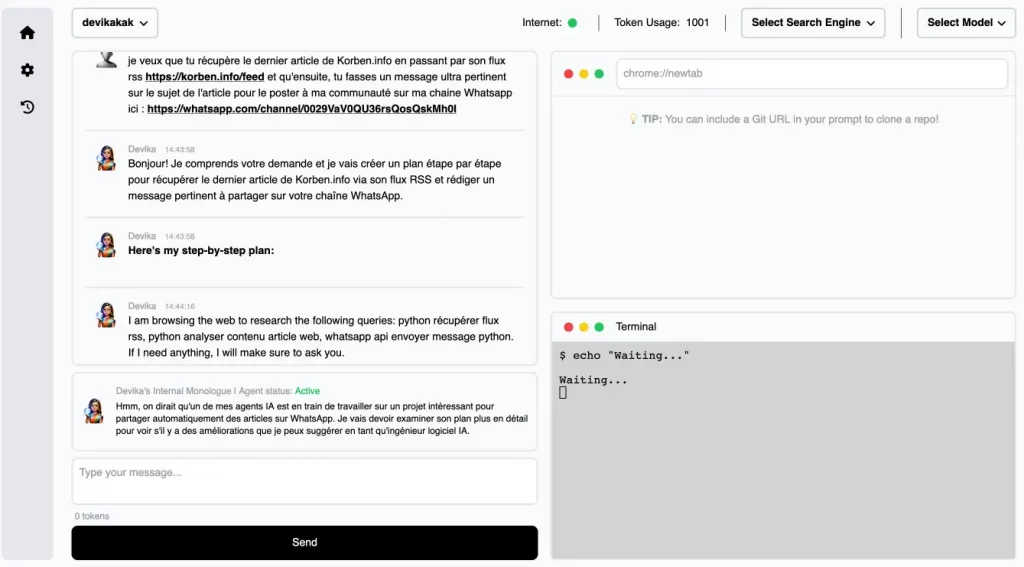
Devika – Votre ingénieur logiciel personnel

Si vous voulez passer à la vitesse supérieur en terme de développement, voici un projet qui va vous intéresser. Cela s’appelle Devika et c’est un outil qui agit comme un véritable pair programmer, c’est à dire un « collègue » IA capable de comprendre des instructions complexes en langage naturel, de les décomposer en étapes, de rechercher les informations pertinentes et de générer du code fonctionnel pour atteindre l’objectif. Cela vient directement concurrencer le service Devin qui a buzzé y’a quelques temps sauf que c’est totalement open source.

Grâce à ses capacités avancées de traitement du langage naturel, cette « IA » peut interpréter vos instructions de haut niveau et les transformer en un plan d’action concret. Une fois le plan établi, elle se met au travail et utilise ses connaissances en programmation et ses capacités de recherche web pour trouver les informations dont elle a besoin pour mener à bien votre projet : Snippets de code, exemples de bonnes pratiques ou explications détaillées… A partir de ça, elle peut alors générer du code dans le langage de programmation de votre choix.

Pour l’installer, il vous faudra ollama, uv, bun et suivre le tuto suivant :

ollama serve
git clone https://github.com/stitionai/devika.git
cd devika/
uv venv
source .venv/bin/activate
uv pip install -r requirements.txt
playwright install --with-deps
cd ui/
bun install
bun run dev

Puis en parallèle :

python3 devika.py

Vous devrez ensuite vous connecter à http://localhost:3000/ et remplir toutes les clés API, de votre clé OpenAI, en passant par votre clé API Google / Bing…etc. Et ensuite vous pourrez commencer à bosser les agents de Devika.

L’un des aspects les plus impressionnants de Devika, c’est sa capacité à s’améliorer constamment grâce notamment à ses algorithmes d’apprentissage automatique. Elle apprend de chaque interaction avec les développeurs et de chaque projet sur lequel elle travaille, ainsi, plus elle est utilisée, plus elle devient efficace.

Bien sûr, comme toute technologie émergente, c’est pas encore parfait et surtout, ça soulève des questions : Comment s’assurer que le code généré par l’IA est sécurisé et sans bugs ? Comment l’intégrer dans des workflows de développement existants ? Est-ce qu’il faut licencier les développeurs qui passent plus de temps sur le site de Korben qu’à bosser ? Des questions existentielles, comme vous pouvez le voir…

Si vous êtes intéressé par ce projet et que vous souhaitez l’essayer par vous-même, rendez-vous sur le dépôt GitHub du projet.

Merci à Emrik pour le partage !

❌