On a foundation of Symbiocene life law based on ghehds, we need to develop a replacement concept for economics, one immersed in symbiosis. As was argued in chapter 4, the term ‘economy’ is based on ‘oikos,’ or the Greek word for the household. The general meaning relates to the (male) management of the household. The new term, ‘sumbonomy’ (sum-bon-o-mee), in addition to the ‘sumbios’ (living together) and ‘nomia’ (to manage), has echoes of the ‘summum bonum,’ a Latin expression for the highest or ultimate good. The French word ‘bon’ also means good. The ‘economy’ of the Anthropocene is replaced by the sumbonomy of the Symbiocene.
As such a social structure does not yet exist, I can only offer speculative thoughts on what form it might take. The sumbonomy is the highest form of practical living humans can undertake for a good life. The sumbonomy is the material foundation for humans living in nature, and we can now create the new conceptual domain of sumbonomics. It has a transdisciplinary partner in sumbiology, or the study of humans living together with each other and other forms of life.
Contrary to the degrowth movement, this conceptual domain can align human enterprise with the symbiotically generated growth that can be found in life. To generate this type of growth, we will need new, creative forms of design and technology based on symbioactive production and benign symbiomimicry. It is from the microcosm—the fungi, algae, bacteria, and archaea, the building blocks of complex life—that the human sumbonomy can be created.
The sumbonomy will be the result of sumbiocentric thinking and, because of the potential for mersis in the Anthropocene, will require the most intense period of genuine growth since the Industrial Revolution. I wish to see the pro-parasitic or terraphthoric (earth destroying) ‘economy’ of the Anthropocene totally replaced by the terranascient (earth-creating) ‘sumbonomy’ of the Symbiocene.
Fossil fuels are finite reserves of energy that can be used only once and are not able to be regenerated in meaningful geological time frames, and similar considerations apply to an insane economy that becomes dependent on “rare” earth elements and compounds. Fossil fuels, because of their finitude, can be owned and traded for wealth maximization. Rare earths are like diamonds. While the current technologies we use to generate renewable energy can be privately owned, the source of that energy, the sun, cannot.[i]
In switching from private property ownership and extraction rights to symbiotically produced resources respectful of the ghehds (intersecting life interests) of free-living microorganisms, we metamorphose from the Anthropocene to the Symbiocene. In doing this, we give microorganisms the space and resources to do what they would want to do anyway, such as reproduce and grow. That is how we shift from the scarcity of fossil fuel energy and materials to the abundance of life forms powered by the sun, plants, and microorganisms, from morbid dead carbon to vital living carbon.
[i] Ralph Nader is supposed to have said “The use of solar energy has not been opened up because the oil industry does not own the sun.” The other way of putting this quote would be to argue that if the oil industry owned the sun, we would have had sun powered renewable energy for everything by now. The good news is that nobody can own the sun as it is an inviolable common with an inviolable ghehd that is more powerful by quantum leaps than all the corporations and despots of the world combined.
*Draft material from The Symbiocene: Our Only Future (2027), Cornell University Press.
AI generated image of a solar shrine where humans once again pay homage to our energy common, the Sun.
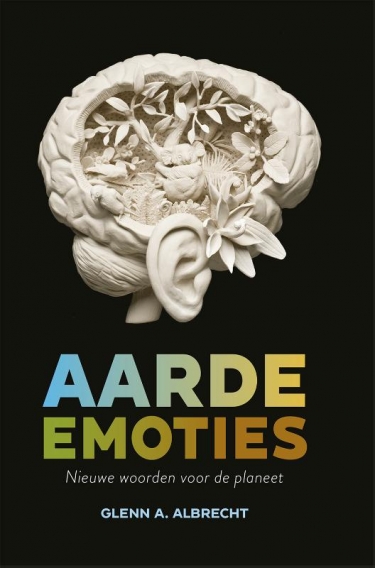
The book, Earth Emotions, is an account of the relationship between the state of the Earth and our mental and emotional states. It presents a now commonly accepted scenario that during the epoch known as the Anthropocene, our relationship to the total Earth has turned bad. Not only have we threatened the health of the planet with a toxic, cruel, parasitic, extractive and wasteful economy, we have also triggered an avalanche of mental and emotional distress on humans and non-humans all over the planet. The negative psychoterratic (psyche-Earth) mental and emotional health impacts of the Anthropocene, or age of attempted human dominance, have included my concepts of solastalgia, global dread and tierratrauma, and, from many others, eco-anxiety, eco-grief and ecoparalysis. In other words, the lack of intelligence as represented by the ecocidal Anthropocene and its tragically flawed anthropocentric thinking is leading us to sickness then extinction.
In order to confront our imminent collapse, we need the very opposite of the despotism of the Anthropocene. An actively created symbiotic relationship with the rest of life on this wonderful planet is one that emerges from positive psychoterratic mental and emotional states. These include my concepts of soliphilia, eutierria, endemophilia and, from many others, topophilia, biophilia and ecophilia. The combination of positive psychoterratic states and life-affirming science and technology will give point and purpose to those who undertake this transformational work. From a healthy mental and biophysical base, we humans can build the Symbiocene using bioscience and symbioactive technologies that are safe, renewable and non-polluting. As the Anthropocene collapses, the Symbiocene must be built. Bad growth (dysbiosis) is transformed by human intelligence into good growth (symbiosis). In other words, the anthropocentric thinking of the Anthropocene needs to be supplanted by symbiocentric thinking in the Symbiocene. We move from a death and disease economy into a living and healthy one.
Introduction
The book, Earth Emotions, is about the ‘psychoterratic’, that is, the relationship between the state of our psyche and the state of Terra or the Earth. In the twenty-first century, we are living in a time when the relationship between humans and the rest of what we call ‘nature’ is in deep trouble. There has been a concerted effort to describe the ‘trouble’ within the bounds of the biophysical sciences and to dwell on the potentially catastrophic consequences if humans (not all humans) do not mitigate or adapt to these changes.
However, while there has been a focus on documenting how we are exceeding the safe limits of various planetary boundaries such as the concentration of carbon dioxide in the atmosphere, the nitrogen cycle etc. etc., there has not been a corresponding focus on the consequences of exceeding the boundaries of the psychological limits of all species, sentient or otherwise. I think it fair to say that we have entered a biophysical crisis that has a corresponding psychological and emotional crisis. In 2014 I wrote about this issue of ‘safe spaces’ in the journal, Ecopsychology:
Within a period of earth history now known as the Anthropocene, the dominant role humans play at a planetary scale has enabled us to exceed many of the biophysical limits that would have us conduct our economies within what has been described as a “safe operating space.” The “unsafe” biophysical space that we are creating for ourselves will have its correlates in a self-generated unsafe psychoterratic (psyche-earth) space. Identifying and documenting the negative impacts of the Anthropocene on the psyche will be one of the important roles for ecopsychology. In order to avoid further transgression into unsafe spaces and to retreat from those already entered, we need to move out of the Anthropocene as soon as possible. (Albrecht 2014).
Not only have we threatened the health of the planet with a toxic, cruel, parasitic, extractive and wasteful economy, we have also triggered an avalanche of mental and emotional distress on humans and non-humans all over the planet.
Earth Emotions was written to explore this unfortunate space that has opened up in the period informally known as the Anthropocene, or period of human dominance. Since the start of the fossil-fuelled, steam powered industrial revolution in the 18th century we can observe a gradual, but increasing divide between human beings living within mass industrial cities and their urban satellites, and the rest of humanity and nature. Another critical aspect of the industrial revolution was the colonisation of the world outside of Europe and the importation of materials needed for industrial production. The role of racism manifest as slavery in gathering these materials (e.g., cotton) and then exporting them to industrial centres in Europe cannot be overestimated.
In my own lifetime (b. 1953), I have witnessed what is now understood as “the great acceleration” of the Anthropocene, to the point of asking a simple but profound question … “accelerating towards what”?
I leave it to biophysical and climate scientists to describe their observations of the trends and destination of the great acceleration. I wish to note that, despite their warnings so far about just how bad things could get, the captains of the SS Anthropocene have not changed the direction of their big ship. Every year, our global C02 emissions go up! In early April 2024, in my part of the world, the Great Barrier Reef is suffering a massive bleaching event and Antarctica is experiencing record warming and melting. The word everyone is using nowadays is “unprecedented”.
It seems that more empirical information about imminent collapse has not had an impact as yet on the human response. Given the lag effect or future consequences of many of our past and present action and inaction, this failure to motivate change is likely to be disastrous. As suggested above, perhaps acknowledging that we are exceeding our “safe” psychic and emotional boundaries will prove to be a greater motivational factor for change than straight facts? A starting point for such an analysis comes from the word ’emotion’.
‘Emotion’ has its origins in the Latin movēre, to move, and ēmovēre, to agitate, or disturb. Emotions are defined as ‘that which moves us’ or affects us. At all scales, from micro to macro, there are forces of creation and destruction that are primary determinants of our emotions with respect to the Earth. I have given the extremes of these e-motions new names; terraphthora (earth destroyer) derived from Terra, the Latin for “earth” and the Greek φθορά (phthorá) or “destruction” and terranascia, (earth creator) derived from Terra, and the Latin nātūra, “to be born”. I argue that the conflict between terraphthoran and terranascient emotions, as exemplified in personality, corporate and state mentalities is now global in scale. Terraphthorans are the humans who are destroying the earth within the Anthropocene. Terranascient humans will be those who will create its opposite. There is a spectrum of mentalities at play here but perhaps we are moving towards a binary?
A Sumbiography: A Summation of my Green Past
In Chapter One of Earth Emotions, I present a short history of my own upbringing and how I developed as a terranascient, nature loving boy in Western Australia. I was lucky to have grandparents and my mother as mentors. I called this limited biography a sumbiography, as it helps the reader understand why I wished to write about our emotional relationship to the Earth in particular places. The term is derived from the Greek sumbiosis (companionship), sumbion (to live together) sumbios (living together) and, of course, Greek bio (life) and graphy (from the Greek graphein, to write). The meaning and importance of the sum total of living together with ‘nature’, key people and other beings, is what a sumbiography attempts to describe and acknowledge. It is my hope that you can all assemble for own sumbiographies in order to see what kind of person you are with respect to nature. Where on the spectrum between strong terraphthora and strong terranascia do you reside? What were the main influences in your life that produced such a person?
Solastalgia
My sumbiography put me on a path that led me to develop the idea of the psychoterratic (see Albrecht 2011a). As a nature lover (birds in particular), I resonated strongly with life-affirming places and was repelled by those where the desolation of life was evident.
This tendency of mine to avoid places that the Anthropocene was destroying and polluting was put into crisis when I had to confront open cut (pit) coal mining in the state of New South Wales, not far from my home. Here, over 500 square kilometres of aggressively mined land was producing black coal for the domestic and international power stations and steel mills of the world.
The Hunter Valley was described by early European settlers as “The Tuscany of the South”, so beautiful was this landscape. And, of course, the traditional people of this area, the Wonnarua, had been there for tens of thousands of years before “invasion day” on the 26th of January 1778.
I had gone to this part of the Hunter Valley to engage in one of my favourite pursuits, birdwatching, but instead I had stumbled into the battlefield of the terraphthorans or the earth destroyers in the form of multinational coal miners and their “open-cuts”, large power stations and all the infrastructure needed for the ‘coal chain’. Their massive impact can be seen from space. So profound was my own reaction to the damage being done to place and its people, that I decided to study this location, where the physical landscape and the emotional landscape were in open confrontation. I was outraged at how this once beautiful valley was being ruined by a second wave of colonisation, this time, by those who profit from coal mining.
My first psychoterratic concept, solastalgia (Albrecht 2005), arose out of this personal experience. I define solastalgia as the pain or distress caused by the ongoing loss of solace and the sense of desolation connected to the present state of one’s home and territory. It is the existential and ‘lived experience’ of negative environmental change, manifest as an attack on one’s sense of place. It is the homesickness you have when you remain at home, but your home leaves you! It is the opposite of Hoferian (1688) nostalgia.
Solastalgia is derived from the words; solace, desolation, nostalgia and algia. The word “solace” is derived from the Latin verb, solari, with meanings connected to the alleviation or relief of distress, or to the provision of comfort or consolation in the face of distressing events. The word “desolation” has its origins in the Latin solus (noun desolare), with meanings connected to devastation, deprivation of comfort, abandonment and loneliness (to be solitary or alone). That this new concept was an ‘algia’ was abundantly clear to me right from the start and it is important to remember that from its Greek origins, ‘algia’ has connotations of pain, sorrow and grief. Solastalgia is not a biomedically defined psychological state: it is an existential response to an unwelcome structural change to the home. As such, it cannot be adequately addressed by ‘therapy’, as only personal or community led change to the causes of this particular form of Earth distress will once again deliver solace to the sufferer.
The Anthropocene and Negative Earth Emotions
After the creation of solastalgia, I realised that the domain of the psychoterratic must be very broad. Given the amount of distress being caused by Anthropocene ‘forcings’ such as climate chaos, it did not take me long to compile a list of emotions.
The negative psychoterratic emotions are ‘work in progress’ as we humans are still creating forms of emotional distress in the face of an increasingly desolated Earth.
I want the need to keep creating and naming ever worsening emotional feelings about the state and fate of humanity and the Earth to come to a halt.
Symbiosis
In order to confront our imminent collapse, we need the very opposite of the despotism of the Anthropocene. An actively created symbiotic relationship with the rest of life on this wonderful planet is one that emerges from positive psychoterratic mental and emotional states. Before I go into the details of the Symbiocene (Albrecht, 2014), it is necessary to briefly engage with the term ‘symbiosis’ as it is crucial to the authenticity of the Symbiocene as a meme or cultural replicator.
The term, symbiosis, is from the Ancient Greek, σῠμβῐ́ωσῐς, meaning to live together in a special form of companionship (from συμβιόω (sumbióō, “to live together” + -σις -sis). Symbiosis, as a concept, has had an interesting career. In ancient Greece, it was applied to two distinct but related contexts.
In biological observations the term was explicitly used by writers such as Plutarch (46 CE, died after 119 CE), Herodotus (died ca. 420 BC) and Aristotle (384–322 BCE) to describe mutually beneficial relationships between different kinds of organisms. Two such examples are the fan shell (Pinna) of the Mediterranean which has a special feeding relationship with a type of crab called the Pinna guard, and the Egyptian plover that reportedly removes rotting food, leeches and other parasites from the mouth of the Nile crocodile for its own food.
In the societal context the term was used to describe special relationships between people most commonly connected to co-habitation, social intercourse, fellowship, communion and commerce. However, there are also intimate relationships such as sexual intercourse (‘commerce’) and marriage (wedded life) where ‘symbiosis’ may have applied in ancient Greece.
There then appears a long gap in the global literature connected to the Greek origins of the word. ‘Symbiosis’ re-appears as transliteration in English, Spanish and German writings in the early 17th century mainly in connection to commerce and common interests.
The first recorded social use in English was by Edward Misselden in 1622. In a study of the principles of free trade Misselden compares the rights of private patent holders to the public good, or what he described as “the publique symbiosis”. However, in 1680, under the intriguing title of (‘Συμβίωσις), Symbiåosis, or, The intimate converse of Pope and Devil attended by a cardinal and buffoon to which is annexed the pourtrait of each, with a brief explication thereof, was written by James Salgado. Here, the Greek idea of an intimate coming together of unlike parties has continuity!
Scientific Symbiosis
As German scientists in the 1870s were trying to understand and describe newly discovered relationships between the identifiably different components of organisms such as lichens, the idea of symbiosis in scientific talks and papers was used to give expression about novel ‘ways of living together’ for mutual benefit.
Credit is given to the botanist, Albert Bernhard Frank, when in 1877, he used the term symbiotismus (symbiotism) to describe the mutualistic relation between fungi, cyanobacteria or algae seen in lichens. A lichen is a combination of two separate species producing a union of the two that has properties not possessed by either party. The scientific term, symbiosis, was first used in public by the mycologist, Anton de Bary in 1878. From a lecture given that year, de Bary stated:
When I was trying to find a subject for this conference, I was studying two plants that live in a special relationship. This gave me the idea to talk about observations regarding dissimilarly named organisms that live together, in symbiosis, as we can call these associations. The present preoccupation with the subject, but also the consideration that similar relationships have become well known in the course of the past 10 years, are factors in deeming them to be of general interest. Thus, this talk will be a consideration of such symbioses, namely, the living together of differently named organisms. (de Bary 1878)
Since that time, symbiosis as a bioscience has proliferated, so much so that modern research in plant biology and the human microbiome have placed this branch of biology at the centre of what might be called ‘the symbiotic revolution’. At the core of this revolution is an advance in knowledge about how different organisms cooperate in nature, how some ‘organs’ within species (e.g., mitochondria and chloroplasts) are products of symbiosis and that evolution itself is shaped by both Darwinian and what I call Margulisian evolution. Our latest findings in this process of discovery include the surprising fact that ancient retrovirus genetic material makes up 8-10% of the human genome and has been crucial for our survival, including the way the human embryo develops. There is no ‘junk’ in life.
The biologist, Lynn Margulis (1938 – 2011), perhaps more than any other person, established symbiosis as a hugely important factor in life and evolution. We all owe her a huge debt of gratitude.
The Symbiocene
I created the concept of the Symbiocene in 2011 (Albrecht 2011b) and developed it further in a public conference presentation under the theme of ‘Out of The Anthropocene and into The Symbiocene’ at the Landlines Colloquium at Edith Cowan University, Western Australia, in June 2013. From 2014 onward I wrote essays such as “Ecopsychology for the Symbiocene” for the peer reviewed journal Ecopsychology (Albrecht 2014) and “Exiting the Anthropocene and Entering the Symbiocene”, first on my Blog in 2015, then in the journal, Minding Nature, connected to the Centre for Humans and Nature in 2016 (Albrecht 2016). The ‘Exiting’ essay was reprinted by the Centre for Humans and Nature in 2021.
In Earth Emotions (2019a) I devoted half the book to developing the Symbiocene as a mega-meme for the future of humanity and this book was translated and published in 2020 into French, Spanish and now, in 2024, Dutch. Since the 2019 publication I have given many national and international talks and lectures devoted to the theme of the Symbiocene.
In summary, I put the case that the Symbiocene is the opposite of the Anthropocene. It is a period in human and Earth history when humans reintegrate with the rest of life. Core to this reintegration is the utilisation of our extant, relictual and novel positive psychoterratic emotions to motivate us to action. The Symbiocene must be an act of creation by emotionally and ethically motivated humans, in conjunction with other life forms. Emotion and motivation go together. I have radical anticipation for the Symbiocene and I see it as crucial for young people to engage in the project of life and to see and feel a healthy future for themselves and their communities.
The Symbiocene will be the result of a total life philosophy that I call ‘Sumbioism’. Sumbioism is the collective transdisciplinary art and science of ‘living together’ (sumbios) within the matrix of all life. A ‘sumbioist’ is a person who reflects on, writes about and lives by the discipline of sumbiology and the philosophy of sumbioism (See Albrecht 2017). I will be developing these themes in my forthcoming book on the philosophy and reasoning behind the Symbiocene.
Positive Earth Emotions
We once had positive Earth emotions for free; there were so many opportunities to experience them, perhaps we took them for granted because they satisfied the principle of plenitude. Now, because of the desolation of the Anthropocene, we need to actively create the circumstances where they can be freely had and enjoyed once again. If the Anthropocene is the source of our ascending negative Earth emotions, the Symbiocene will be the catalyst for the rediscovery of past positive Earth emotions and the stimulus for explicitly naming new emotional connections to the Earth. Below is my psychoterratic typology of positive Earth emotions.
TABLE 2. The Typology of Positive Psychoterratic States
Positive Earth Emotions
Origin
Biophilia
Fromm 1964
Ecoliteracy
Orr 1991
Sumbiophilia
Albrecht 2018
Eutierria
Albrecht 2010
Soliphilia
Albrecht 2009
Ecophilia
Sobel 1995
Meteorphilia
Albrecht 2023
Eutierria
Albrecht 2010
Endemophilia
Albrecht 2010
Topophilia
Tuan 1974
Terraliben
Albrecht 2018
Topowokia*
Albrecht 2024
Gaia and the Ghedeist: Secular Spirituality
Chapter 5 of Earth Emotions deals with the ethical and spiritual aspects of the entry into the Symbiocene. In many respects the form of secular spirituality that emerges from a biophilic understanding of life, is a reversal of many of our past sources in ‘the search for meaning’.
The discovery of the microcosmos, as Lynn Margulis called it, suggests to me that rather than seeking meaning in the big things in life … the big tree, the big church, the ‘big man’ … we should be focussed on the smallest units of life. It is the microcosmos after all, from which all complex life has come. Life is not only interconnected in ecological physical space: every being living today has a shared life heritage that goes back billions of years.
That we now use science to understand these micro symbiotic spatial and temporal connections does not invalidate older symbolic spiritual understandings held by humans in the past. It unites past animistic spirituality with the best in modern science. Bring-on neo-animism!
In order to give expression to this understanding, I have used an old root word in Indo-European languages, ghehd, which means ‘to unite’ as a way to generate this secular spirituality. Ghehd is the root for many words in Old English and old Germanic language such as ‘together’, to ‘gather’, and, importantly for me, the word ‘good’.
The connections between the sumbios (living together) and ghehd (united together) were too ‘ghoohd’ to miss. I then thought that a modern version of the word ghehd could be incorporated into a spiritual context in the form of the ‘ghedeist’, with a shortening of the German ‘geist’ with its meanings of spirit and mind, and affinities in other languages with a vital or life force. The neologism, ‘ghedeist’, was thus created by me to account for a secular feeling for the unity of life and the intuition that all things are interconnected. My definition of the ghedeist is:
The spirit or force which holds things together, a feeling of interconnectedness in life between the self and other beings (human and non-human) and their gathering together to live within shared Earth places and spaces. It is a feeling of intense affinity and sense of mutual empathy for other beings. It is a non-religious term for acknowledging the life-spirit kinship which all living beings share and a way of distinguishing the good (which associates and interconnects) from the bad (which disassociates and dis-integrates). (Albrecht 2016a).
As I say to my more spiritually inclined friends … “may the ghedeist be with you”.
Generation Symbiocene: Creating the New World
In Chapter 6, I present the case that a multigenerational ‘tribe’ of humans has the task of creating the Symbiocene. As I researched and wrote Earth Emotions in 2018, I had no feeling that such a generation was already rising from the maelstrom of the Anthropocene. However, I was delightfully wrong as both Greta Thunberg (School Strike 4 Climate.) and Extinction Rebellion (XR) came to prominence worldwide in late 2018-2019, after my book was committed for publication. I feel that the world-leading example of Greta and the open opposition of the Anthropocene by members of XR has vindicated my optimism that good humans would rise up in defence of life. Our Earth emotions have been stirred into action and Generation Symbiocene (Gen S) is now an emergent force (see Albrecht 2019b).
The psychoterratic typology has been used by Extinction Rebellion (Sydney) to train new volunteers to manage their emotional engagement with a society that sees them as radical and dissidents. They are definitely dissidents, but they are not radicals. Radical views are held by people who are anti-life. Conservative views and values are held by people who are biophilic. As I suggested in Earth Emotions, “As they build their own unique identity, Gen S has the task of building the Symbiocene. Given the dire state of the Anthropocene, their work will have to be fast and furious.”
It is also worth noting that I hold a very positive view of the role of technology in the building of the Symbiocene. Every toxic and polluting artefact or energy source must be replaced by a science-based symbiotically benign or life-affirming ‘sumbiofact’. Architecture (to rule over design) needs to be replaced by sumbiotecture (to design in collaboration with others, including non-humans).
Fortunately, some people are already in the Symbiocene and are working at top pace to create the very materials and sumbiofacts needed to live well in the twenty first century. We already have building blocks, bricks, leather, coffins and packaging material sourced and produced from fungi. Utensils are now being made from wood cellulose and household furniture is being made from algae.
The current forms of alternative energy are the transition technologies to the bioenergy and bioluminescence needed to run our economies. To create a sumbonomy (Albrecht 2024), a form of economy informed by the science of symbiosis, will require humans to move from a dumb, extractive, anthropocentric way of thinking, to an intelligent sumbiocentric way of thinking.
Symbiotechnologies will re-animate our connections to life in nature … our lights will shine like fireflies!
Conclusion
In Earth Emotions I present a new narrative for the future. There is radical anticipation that the ‘Great Separation’ from life and nature under the Anthropocene will come to an end. There are only two possible endings now: one is the complete collapse and catastrophe of the Anthropocene and the other is the rise and creation of the Symbiocene. I am proposing that as the Anthropocene collapses, the Symbiocene is built: bad growth (dysbiosis) is replaced by good growth (symbiosis).
The foundation for the Symbiocene is both emotional and scientific. Good science and good emotions work together to produce something symbiotically beautiful. The Symbiocene gives point and purpose to life. It gives to the holobiont known as Homo sapiens, the opportunity to finally live up to its scientific name.
I have warned that the ‘Great Reconnection’ with life could be extremely difficult as the ‘war’ of emotions is played out in the next decade or so. However, pointing out the past follies of terraphthorans could also be a lot of fun, as there is endless material for comedians in the spectacular failure and downfall of the stupid terraphthorans. We have been far too serious in taking their pathological view of unreality as truth and it has come at the cost of our own happiness. The Symbiocene not only offers a healthy material basis for life, it gifts the opportunity to experience “the joy of life” in all of its wonderful complexity and diversity.
References.
Albrecht, Glenn. A. 2005. “Solastalgia: A New Concept in Human Health and Identity.” PAN
(Philosophy, Activism, Nature). 3: 41-55.
Albrecht, Glenn A. 2011a. “Chronic Environmental Change: Emerging ‘Psychoterratic’ Syndromes. In Climate Change and Human Well-Being: Global Challenges and Opportunities, edited by Inka Weissbecker, 43-56. New York: Springer.
Albrecht, Glenn A. 2011b. “Symbiocene.” Healthearth, May 19 2011.
De Bary, Heinrich Anton (1878). English translation of Heinrich Anton de Bary’s 1878 speech, ‘Die Erscheinung der Symbiose’ (‘De la symbiose’). Symbiosis (2016) 69:131–139 DOI 10.1007/s13199-016-0409-8.
The book, Earth Emotions, is an account of the relationship between the state of the Earth and our mental and emotional states. It presents a now commonly accepted scenario that during the epoch known as the Anthropocene, our relationship to the total Earth has turned bad. Not only have we threatened the health of the planet with a toxic, cruel, parasitic, extractive and wasteful economy, we have also triggered an avalanche of mental and emotional distress on humans and non-humans all over the planet. The negative psychoterratic (psyche-Earth) mental and emotional health impacts of the Anthropocene, or age of attempted human dominance, have included my concepts of solastalgia, global dread and tierratrauma, and, from many others, eco-anxiety, eco-grief and ecoparalysis. In other words, the lack of intelligence as represented by the ecocidal Anthropocene and its tragically flawed anthropocentric thinking is leading us to sickness then extinction.
In order to confront our imminent collapse, we need the very opposite of the despotism of the Anthropocene. An actively created symbiotic relationship with the rest of life on this wonderful planet is one that emerges from positive psychoterratic mental and emotional states. These include my concepts of soliphilia, eutierria, endemophilia and, from many others, topophilia, biophilia and ecophilia. The combination of positive psychoterratic states and life-affirming science and technology will give point and purpose to those who undertake this transformational work. From a healthy mental and biophysical base, we humans can build the Symbiocene using bioscience and symbioactive technologies that are safe, renewable and non-polluting. As the Anthropocene collapses, the Symbiocene must be built. Bad growth (dysbiosis) is transformed by human intelligence into good growth (symbiosis). In other words, the anthropocentric thinking of the Anthropocene needs to be supplanted by symbiocentric thinking in the Symbiocene. We move from a death and disease economy into a living and healthy one.
Introduction
The book, Earth Emotions, is about the ‘psychoterratic’, that is, the relationship between the state of our psyche and the state of Terra or the Earth. In the twenty-first century, we are living in a time when the relationship between humans and the rest of what we call ‘nature’ is in deep trouble. There has been a concerted effort to describe the ‘trouble’ within the bounds of the biophysical sciences and to dwell on the potentially catastrophic consequences if humans (not all humans) do not mitigate or adapt to these changes.
However, while there has been a focus on documenting how we are exceeding the safe limits of various planetary boundaries such as the concentration of carbon dioxide in the atmosphere, the nitrogen cycle etc. etc., there has not been a corresponding focus on the consequences of exceeding the boundaries of the psychological limits of all species, sentient or otherwise. I think it fair to say that we have entered a biophysical crisis that has a corresponding psychological and emotional crisis. In 2014 I wrote about this issue of ‘safe spaces’ in the journal, Ecopsychology:
Within a period of earth history now known as the Anthropocene, the dominant role humans play at a planetary scale has enabled us to exceed many of the biophysical limits that would have us conduct our economies within what has been described as a “safe operating space.” The “unsafe” biophysical space that we are creating for ourselves will have its correlates in a self-generated unsafe psychoterratic (psyche-earth) space. Identifying and documenting the negative impacts of the Anthropocene on the psyche will be one of the important roles for ecopsychology. In order to avoid further transgression into unsafe spaces and to retreat from those already entered, we need to move out of the Anthropocene as soon as possible. (Albrecht 2014).
Not only have we threatened the health of the planet with a toxic, cruel, parasitic, extractive and wasteful economy, we have also triggered an avalanche of mental and emotional distress on humans and non-humans all over the planet.
Earth Emotions was written to explore this unfortunate space that has opened up in the period informally known as the Anthropocene, or period of human dominance. Since the start of the fossil-fuelled, steam powered industrial revolution in the 18th century we can observe a gradual, but increasing divide between human beings living within mass industrial cities and their urban satellites, and the rest of humanity and nature. Another critical aspect of the industrial revolution was the colonisation of the world outside of Europe and the importation of materials needed for industrial production. The role of racism manifest as slavery in gathering these materials (e.g., cotton) and then exporting them to industrial centres in Europe cannot be overestimated.
In my own lifetime (b. 1953), I have witnessed what is now understood as “the great acceleration” of the Anthropocene, to the point of asking a simple but profound question … “accelerating towards what”?
I leave it to biophysical and climate scientists to describe their observations of the trends and destination of the great acceleration. I wish to note that, despite their warnings so far about just how bad things could get, the captains of the SS Anthropocene have not changed the direction of their big ship. Every year, our global C02 emissions go up! In early April 2024, in my part of the world, the Great Barrier Reef is suffering a massive bleaching event and Antarctica is experiencing record warming and melting. The word everyone is using nowadays is “unprecedented”.
It seems that more empirical information about imminent collapse has not had an impact as yet on the human response. Given the lag effect or future consequences of many of our past and present action and inaction, this failure to motivate change is likely to be disastrous. As suggested above, perhaps acknowledging that we are exceeding our “safe” psychic and emotional boundaries will prove to be a greater motivational factor for change than straight facts? A starting point for such an analysis comes from the word ’emotion’.
‘Emotion’ has its origins in the Latin movēre, to move, and ēmovēre, to agitate, or disturb. Emotions are defined as ‘that which moves us’ or affects us. At all scales, from micro to macro, there are forces of creation and destruction that are primary determinants of our emotions with respect to the Earth. I have given the extremes of these e-motions new names; terraphthora (earth destroyer) derived from Terra, the Latin for “earth” and the Greek φθορά (phthorá) or “destruction” and terranascia, (earth creator) derived from Terra, and the Latin nātūra, “to be born”. I argue that the conflict between terraphthoran and terranascient emotions, as exemplified in personality, corporate and state mentalities is now global in scale. Terraphthorans are the humans who are destroying the earth within the Anthropocene. Terranascient humans will be those who will create its opposite. There is a spectrum of mentalities at play here but perhaps we are moving towards a binary?
A Sumbiography: A Summation of my Green Past
In Chapter One of Earth Emotions, I present a short history of my own upbringing and how I developed as a terranascient, nature loving boy in Western Australia. I was lucky to have grandparents and my mother as mentors. I called this limited biography a sumbiography, as it helps the reader understand why I wished to write about our emotional relationship to the Earth in particular places. The term is derived from the Greek sumbiosis (companionship), sumbion (to live together) sumbios (living together) and, of course, Greek bio (life) and graphy (from the Greek graphein, to write). The meaning and importance of the sum total of living together with ‘nature’, key people and other beings, is what a sumbiography attempts to describe and acknowledge. It is my hope that you can all assemble for own sumbiographies in order to see what kind of person you are with respect to nature. Where on the spectrum between strong terraphthora and strong terranascia do you reside? What were the main influences in your life that produced such a person?
Solastalgia
My sumbiography put me on a path that led me to develop the idea of the psychoterratic (see Albrecht 2011a). As a nature lover (birds in particular), I resonated strongly with life-affirming places and was repelled by those where the desolation of life was evident.
This tendency of mine to avoid places that the Anthropocene was destroying and polluting was put into crisis when I had to confront open cut (pit) coal mining in the state of New South Wales, not far from my home. Here, over 500 square kilometres of aggressively mined land was producing black coal for the domestic and international power stations and steel mills of the world.
The Hunter Valley was described by early European settlers as “The Tuscany of the South”, so beautiful was this landscape. And, of course, the traditional people of this area, the Wonnarua, had been there for tens of thousands of years before “invasion day” on the 26th of January 1778.
I had gone to this part of the Hunter Valley to engage in one of my favourite pursuits, birdwatching, but instead I had stumbled into the battlefield of the terraphthorans or the earth destroyers in the form of multinational coal miners and their “open-cuts”, large power stations and all the infrastructure needed for the ‘coal chain’. Their massive impact can be seen from space. So profound was my own reaction to the damage being done to place and its people, that I decided to study this location, where the physical landscape and the emotional landscape were in open confrontation. I was outraged at how this once beautiful valley was being ruined by a second wave of colonisation, this time, by those who profit from coal mining.
My first psychoterratic concept, solastalgia (Albrecht 2005), arose out of this personal experience. I define solastalgia as the pain or distress caused by the ongoing loss of solace and the sense of desolation connected to the present state of one’s home and territory. It is the existential and ‘lived experience’ of negative environmental change, manifest as an attack on one’s sense of place. It is the homesickness you have when you remain at home, but your home leaves you! It is the opposite of Hoferian (1688) nostalgia.
Solastalgia is derived from the words; solace, desolation, nostalgia and algia. The word “solace” is derived from the Latin verb, solari, with meanings connected to the alleviation or relief of distress, or to the provision of comfort or consolation in the face of distressing events. The word “desolation” has its origins in the Latin solus (noun desolare), with meanings connected to devastation, deprivation of comfort, abandonment and loneliness (to be solitary or alone). That this new concept was an ‘algia’ was abundantly clear to me right from the start and it is important to remember that from its Greek origins, ‘algia’ has connotations of pain, sorrow and grief. Solastalgia is not a biomedically defined psychological state: it is an existential response to an unwelcome structural change to the home. As such, it cannot be adequately addressed by ‘therapy’, as only personal or community led change to the causes of this particular form of Earth distress will once again deliver solace to the sufferer.
The Anthropocene and Negative Earth Emotions
After the creation of solastalgia, I realised that the domain of the psychoterratic must be very broad. Given the amount of distress being caused by Anthropocene ‘forcings’ such as climate chaos, it did not take me long to compile a list of emotions.
The negative psychoterratic emotions are ‘work in progress’ as we humans are still creating forms of emotional distress in the face of an increasingly desolated Earth.
I want the need to keep creating and naming ever worsening emotional feelings about the state and fate of humanity and the Earth to come to a halt.
Symbiosis
In order to confront our imminent collapse, we need the very opposite of the despotism of the Anthropocene. An actively created symbiotic relationship with the rest of life on this wonderful planet is one that emerges from positive psychoterratic mental and emotional states. Before I go into the details of the Symbiocene (Albrecht, 2014), it is necessary to briefly engage with the term ‘symbiosis’ as it is crucial to the authenticity of the Symbiocene as a meme or cultural replicator.
The term, symbiosis, is from the Ancient Greek, σῠμβῐ́ωσῐς, meaning to live together in a special form of companionship (from συμβιόω (sumbióō, “to live together” + -σις -sis). Symbiosis, as a concept, has had an interesting career. In ancient Greece, it was applied to two distinct but related contexts.
In biological observations the term was explicitly used by writers such as Plutarch (46 CE, died after 119 CE), Herodotus (died ca. 420 BC) and Aristotle (384–322 BCE) to describe mutually beneficial relationships between different kinds of organisms. Two such examples are the fan shell (Pinna) of the Mediterranean which has a special feeding relationship with a type of crab called the Pinna guard, and the Egyptian plover that reportedly removes rotting food, leeches and other parasites from the mouth of the Nile crocodile for its own food.
In the societal context the term was used to describe special relationships between people most commonly connected to co-habitation, social intercourse, fellowship, communion and commerce. However, there are also intimate relationships such as sexual intercourse (‘commerce’) and marriage (wedded life) where ‘symbiosis’ may have applied in ancient Greece.
There then appears a long gap in the global literature connected to the Greek origins of the word. ‘Symbiosis’ re-appears as transliteration in English, Spanish and German writings in the early 17th century mainly in connection to commerce and common interests.
The first recorded social use in English was by Edward Misselden in 1622. In a study of the principles of free trade Misselden compares the rights of private patent holders to the public good, or what he described as “the publique symbiosis”. However, in 1680, under the intriguing title of (‘Συμβίωσις), Symbiåosis, or, The intimate converse of Pope and Devil attended by a cardinal and buffoon to which is annexed the pourtrait of each, with a brief explication thereof, was written by James Salgado. Here, the Greek idea of an intimate coming together of unlike parties has continuity!
Scientific Symbiosis
As German scientists in the 1870s were trying to understand and describe newly discovered relationships between the identifiably different components of organisms such as lichens, the idea of symbiosis in scientific talks and papers was used to give expression about novel ‘ways of living together’ for mutual benefit.
Credit is given to the botanist, Albert Bernhard Frank, when in 1877, he used the term symbiotismus (symbiotism) to describe the mutualistic relation between fungi, cyanobacteria or algae seen in lichens. A lichen is a combination of two separate species producing a union of the two that has properties not possessed by either party. The scientific term, symbiosis, was first used in public by the mycologist, Anton de Bary in 1878. From a lecture given that year, de Bary stated:
When I was trying to find a subject for this conference, I was studying two plants that live in a special relationship. This gave me the idea to talk about observations regarding dissimilarly named organisms that live together, in symbiosis, as we can call these associations. The present preoccupation with the subject, but also the consideration that similar relationships have become well known in the course of the past 10 years, are factors in deeming them to be of general interest. Thus, this talk will be a consideration of such symbioses, namely, the living together of differently named organisms. (de Bary 1878)
Since that time, symbiosis as a bioscience has proliferated, so much so that modern research in plant biology and the human microbiome have placed this branch of biology at the centre of what might be called ‘the symbiotic revolution’. At the core of this revolution is an advance in knowledge about how different organisms cooperate in nature, how some ‘organs’ within species (e.g., mitochondria and chloroplasts) are products of symbiosis and that evolution itself is shaped by both Darwinian and what I call Margulisian evolution. Our latest findings in this process of discovery include the surprising fact that ancient retrovirus genetic material makes up 8-10% of the human genome and has been crucial for our survival, including the way the human embryo develops. There is no ‘junk’ in life.
The biologist, Lynn Margulis (1938 – 2011), perhaps more than any other person, established symbiosis as a hugely important factor in life and evolution. We all owe her a huge debt of gratitude.
The Symbiocene
I created the concept of the Symbiocene in 2011 (Albrecht 2011b) and developed it further in a public conference presentation under the theme of ‘Out of The Anthropocene and into The Symbiocene’ at the Landlines Colloquium at Edith Cowan University, Western Australia, in June 2013. From 2014 onward I wrote essays such as “Ecopsychology for the Symbiocene” for the peer reviewed journal Ecopsychology (Albrecht 2014) and “Exiting the Anthropocene and Entering the Symbiocene”, first on my Blog in 2015, then in the journal, Minding Nature, connected to the Centre for Humans and Nature in 2016 (Albrecht 2016). The ‘Exiting’ essay was reprinted by the Centre for Humans and Nature in 2021.
In Earth Emotions (2019a) I devoted half the book to developing the Symbiocene as a mega-meme for the future of humanity and this book was translated and published in 2020 into French, Spanish and now, in 2024, Dutch. Since the 2019 publication I have given many national and international talks and lectures devoted to the theme of the Symbiocene.
In summary, I put the case that the Symbiocene is the opposite of the Anthropocene. It is a period in human and Earth history when humans reintegrate with the rest of life. Core to this reintegration is the utilisation of our extant, relictual and novel positive psychoterratic emotions to motivate us to action. The Symbiocene must be an act of creation by emotionally and ethically motivated humans, in conjunction with other life forms. Emotion and motivation go together. I have radical anticipation for the Symbiocene and I see it as crucial for young people to engage in the project of life and to see and feel a healthy future for themselves and their communities.
The Symbiocene will be the result of a total life philosophy that I call ‘Sumbioism’. Sumbioism is the collective transdisciplinary art and science of ‘living together’ (sumbios) within the matrix of all life. A ‘sumbioist’ is a person who reflects on, writes about and lives by the discipline of sumbiology and the philosophy of sumbioism (See Albrecht 2017). I will be developing these themes in my forthcoming book on the philosophy and reasoning behind the Symbiocene.
Positive Earth Emotions
We once had positive Earth emotions for free; there were so many opportunities to experience them, perhaps we took them for granted because they satisfied the principle of plenitude. Now, because of the desolation of the Anthropocene, we need to actively create the circumstances where they can be freely had and enjoyed once again. If the Anthropocene is the source of our ascending negative Earth emotions, the Symbiocene will be the catalyst for the rediscovery of past positive Earth emotions and the stimulus for explicitly naming new emotional connections to the Earth. Below is my psychoterratic typology of positive Earth emotions.
TABLE 2. The Typology of Positive Psychoterratic States
Positive Earth Emotions
Origin
Biophilia
Fromm 1964
Ecoliteracy
Orr 1991
Sumbiophilia
Albrecht 2018
Eutierria
Albrecht 2010
Soliphilia
Albrecht 2009
Ecophilia
Sobel 1995
Meteorphilia
Albrecht 2023
Eutierria
Albrecht 2010
Endemophilia
Albrecht 2010
Topophilia
Tuan 1974
Terraliben
Albrecht 2018
Topowokia*
Albrecht 2024
Gaia and the Ghedeist: Secular Spirituality
Chapter 5 of Earth Emotions deals with the ethical and spiritual aspects of the entry into the Symbiocene. In many respects the form of secular spirituality that emerges from a biophilic understanding of life, is a reversal of many of our past sources in ‘the search for meaning’.
The discovery of the microcosmos, as Lynn Margulis called it, suggests to me that rather than seeking meaning in the big things in life … the big tree, the big church, the ‘big man’ … we should be focussed on the smallest units of life. It is the microcosmos after all, from which all complex life has come. Life is not only interconnected in ecological physical space: every being living today has a shared life heritage that goes back billions of years.
That we now use science to understand these micro symbiotic spatial and temporal connections does not invalidate older symbolic spiritual understandings held by humans in the past. It unites past animistic spirituality with the best in modern science. Bring-on neo-animism!
In order to give expression to this understanding, I have used an old root word in Indo-European languages, ghehd, which means ‘to unite’ as a way to generate this secular spirituality. Ghehd is the root for many words in Old English and old Germanic language such as ‘together’, to ‘gather’, and, importantly for me, the word ‘good’.
The connections between the sumbios (living together) and ghehd (united together) were too ‘ghoohd’ to miss. I then thought that a modern version of the word ghehd could be incorporated into a spiritual context in the form of the ‘ghedeist’, with a shortening of the German ‘geist’ with its meanings of spirit and mind, and affinities in other languages with a vital or life force. The neologism, ‘ghedeist’, was thus created by me to account for a secular feeling for the unity of life and the intuition that all things are interconnected. My definition of the ghedeist is:
The spirit or force which holds things together, a feeling of interconnectedness in life between the self and other beings (human and non-human) and their gathering together to live within shared Earth places and spaces. It is a feeling of intense affinity and sense of mutual empathy for other beings. It is a non-religious term for acknowledging the life-spirit kinship which all living beings share and a way of distinguishing the good (which associates and interconnects) from the bad (which disassociates and dis-integrates). (Albrecht 2016a).
As I say to my more spiritually inclined friends … “may the ghedeist be with you”.
Generation Symbiocene: Creating the New World
In Chapter 6, I present the case that a multigenerational ‘tribe’ of humans has the task of creating the Symbiocene. As I researched and wrote Earth Emotions in 2018, I had no feeling that such a generation was already rising from the maelstrom of the Anthropocene. However, I was delightfully wrong as both Greta Thunberg (School Strike 4 Climate.) and Extinction Rebellion (XR) came to prominence worldwide in late 2018-2019, after my book was committed for publication. I feel that the world-leading example of Greta and the open opposition of the Anthropocene by members of XR has vindicated my optimism that good humans would rise up in defence of life. Our Earth emotions have been stirred into action and Generation Symbiocene (Gen S) is now an emergent force (see Albrecht 2019b).
The psychoterratic typology has been used by Extinction Rebellion (Sydney) to train new volunteers to manage their emotional engagement with a society that sees them as radical and dissidents. They are definitely dissidents, but they are not radicals. Radical views are held by people who are anti-life. Conservative views and values are held by people who are biophilic. As I suggested in Earth Emotions, “As they build their own unique identity, Gen S has the task of building the Symbiocene. Given the dire state of the Anthropocene, their work will have to be fast and furious.”
It is also worth noting that I hold a very positive view of the role of technology in the building of the Symbiocene. Every toxic and polluting artefact or energy source must be replaced by a science-based symbiotically benign or life-affirming ‘sumbiofact’. Architecture (to rule over design) needs to be replaced by sumbiotecture (to design in collaboration with others, including non-humans).
Fortunately, some people are already in the Symbiocene and are working at top pace to create the very materials and sumbiofacts needed to live well in the twenty first century. We already have building blocks, bricks, leather, coffins and packaging material sourced and produced from fungi. Utensils are now being made from wood cellulose and household furniture is being made from algae.
The current forms of alternative energy are the transition technologies to the bioenergy and bioluminescence needed to run our economies. To create a sumbonomy (Albrecht 2024), a form of economy informed by the science of symbiosis, will require humans to move from a dumb, extractive, anthropocentric way of thinking, to an intelligent sumbiocentric way of thinking.
Symbiotechnologies will re-animate our connections to life in nature … our lights will shine like fireflies!
Conclusion
In Earth Emotions I present a new narrative for the future. There is radical anticipation that the ‘Great Separation’ from life and nature under the Anthropocene will come to an end. There are only two possible endings now: one is the complete collapse and catastrophe of the Anthropocene and the other is the rise and creation of the Symbiocene. I am proposing that as the Anthropocene collapses, the Symbiocene is built: bad growth (dysbiosis) is replaced by good growth (symbiosis).
The foundation for the Symbiocene is both emotional and scientific. Good science and good emotions work together to produce something symbiotically beautiful. The Symbiocene gives point and purpose to life. It gives to the holobiont known as Homo sapiens, the opportunity to finally live up to its scientific name.
I have warned that the ‘Great Reconnection’ with life could be extremely difficult as the ‘war’ of emotions is played out in the next decade or so. However, pointing out the past follies of terraphthorans could also be a lot of fun, as there is endless material for comedians in the spectacular failure and downfall of the stupid terraphthorans. We have been far too serious in taking their pathological view of unreality as truth and it has come at the cost of our own happiness. The Symbiocene not only offers a healthy material basis for life, it gifts the opportunity to experience “the joy of life” in all of its wonderful complexity and diversity.
References.
Albrecht, Glenn. A. 2005. “Solastalgia: A New Concept in Human Health and Identity.” PAN
(Philosophy, Activism, Nature). 3: 41-55.
Albrecht, Glenn A. 2011a. “Chronic Environmental Change: Emerging ‘Psychoterratic’ Syndromes. In Climate Change and Human Well-Being: Global Challenges and Opportunities, edited by Inka Weissbecker, 43-56. New York: Springer.
Albrecht, Glenn A. 2011b. “Symbiocene.” Healthearth, May 19 2011.
De Bary, Heinrich Anton (1878). English translation of Heinrich Anton de Bary’s 1878 speech, ‘Die Erscheinung der Symbiose’ (‘De la symbiose’). Symbiosis (2016) 69:131–139 DOI 10.1007/s13199-016-0409-8.
“The combined collapse of biophysical, cultural, and economic systems will have profound implications for the human psyche. Indeed, the pressure already put on our ecology and the climate has exerted stress on many people worldwide as climate chaos, extreme weather, radically altered landscapes, and various forms of pollution hit hard.
Within a period of earth history known as the Anthropocene, the dominant role humans play at a planetary scale has enabled us to exceed many of the biophysical boundaries that would have us conduct our economies within what has been described as a ‘‘safe operating space.’’ The ‘‘unsafe’’ biophysical space that we are creating for ourselves will have its correlates in a self-generated unsafe psychoterratic (psyche-earth) space. Identifying and documenting the negative impacts of the Anthropocene on the psyche will be one of the important roles for ecopsychology.
In order to avoid further transgression into unsafe spaces and to retreat from those already entered, we need to move out of the Anthropocene as soon as possible. Ecopsychology can help us do that by showing the way for a positive reintegration of the psyche and the ecology.
Such positive reintegration will only become possible if children and adults currently alienated from nature and natural processes can see the benefits of rapidly moving out of the Anthropocene and playing a constructive role in the creation of what I have called the Symbiocene. The Symbiocene will be that period in the earth’s history where humans symbiotically reintegrate themselves, psychologically and technologically, into nature and natural systems.”
Adapted from, Glenn A Albrecht (2014) Ecopsychology in the Symbiocene. ECOPSYCHOLOGY VOL. 6 NO. 1. MARCH 2014
Image: Fire fighting at Duns Creek, NSW, Summer 2019 by Glenn Albrecht
Si vous venez sur LIMIT ce n’est pas pour qu’on vous caresse dans le sens du poil et ça tombe bien car un nouveau rapport scientifique est sorti et va demander à ce que vous attachiez solidement vos ceintures. Pensez déjà à qui vous allez partager cet article pour qu’il passe aussi une bonne journée. […]
Après « agilité » ou « résilience » voici le mot « vivant » mis à toutes les sauces. Encore une notion reprise pour des raisons mercantiles et qui sera très vite saturée pour passer à autre chose et le vivant, lui, continuera d’être massacré, en silence.
Lorsqu’aux informations j’ai entendu que 32 millions de volailles avaient été tuées[1] à cause de la grippe aviaire ou 17,5 milliards d’arbres abattus chaque année[2] j’ai failli vomir, j’ai été aussi bouleversée que lorsque l’on a parlé de millions d’êtres humains tués ou exterminés dans les guerres, la Shoah ou toute forme de génocide de par le monde. Si nous ne sommes pas pris de spasmes et chavirés jusque dans nos tréfonds c’est que ces informations sont juste des données sur un papier ou sur Internet. Alors nous pouvons multiplier les citations, telle celle d’Elisée Reclus « l’homme est la nature prenant conscience d’elle-même », nous n’y sommes toujours pas. Il y a les militants écologistes qui font bouger les choses et même là, parfois, on reste dans le monde des idées.
Il nous est nécessaire de ressentir dans notre chair ces différents génocides comme Valérie Cabanés le rappelle en évoquant l’écocide[3]. Ce n’est pas intellectuel, cela fait appel à la sensibilité dont parle Baptise Morizot, c’est-à-dire une empathie avec TOUT ce qui est vivant au point de pleurer et de se sentir meurtri profondément pour chaque être massacré pour l’unique motivation de répondre à nos désirs et besoins d’êtres humains.
Et par sensibilité au vivant, je n’entends pas une espèce de sensiblerie ni rien de gentillet. La sensibilité dont je parle doit s’entendre en lien avec le « partage du sensible » : c’est ce qui occupe le champ de l’attention collective. Baptiste Morizot
Il a fallu aller chercher les représentants des peuples premiers pour comprendre, du bout de l’intellect, cette communion absolue que les mystiques nous avaient également indiquée.
L’urgence est à incarner cette communion avec le vivant, écouter ses vibrations et pas juste aller embrasser les arbres, les écouter murmurer… Alors oui les peuples premiers et certaines pratiques anciennes savaient aller écouter ce que disait la forêt, planter un arbre après l’avoir abattu, faire une cérémonie pour l’esprit de celui-ci. Ce n’est pas juste de l’animisme que nous avons sacrifié sur l’autel des religions monothéistes, c’est le non-sens de se sentir vibrants et unis, tous en un filin bruissant.
Avec 13,4 millions d’entrées pour Avatar et les milliers de vues sur toutes les plateformes combien parmi nous communient discrètement avec TOUT ce qui est vivant, visible ou non visible ?
L’humain mène une guerre contre le vivant. S’il gagne il est perdu. Hubert Reeves
Pour nous élever au rang d’être humain raisonnable et civilisé nous avons sacrifié notre biomanité et nous irons jusqu’au bout de sa destruction par appétit aveugle et déni dominant. Osons saisir le réel par l’entièreté de notre être, des tripes, au cœur en passant par la pensée, sentons-nous vibrer comme les feuilles dans le vent, alors si nous incarnons véritablement cette union, nos actions seront modifiées. Nous n’aurons plus envie de sacrifier autant de vies juste pour préserver notre espèce, nous comprendrons au sens étymologique de « cum-prendre », prendre ensemble, la chose et le sujet.
Rêvons d’être tous en symbiose avec les autres êtres vivants et que chaque mort nous entache de deuil, nous serons tellement submergés par les rituels de pardon et de commémoration, que peut-être nous pourrons mettre notre énergie au service du vivant, « pour de vrai ». Chiche !
On reconnaît le degré de civilisation d’un peuple à la manière dont il traite ses animaux. Mahtma Gandhi.
[3] Proposition de définition du crime d’écocide : Constitue un crime d’écocide, toute action ayant causé un dommage écologique grave en participant au dépassement manifeste et non négligeable des limites planétaires, commise en connaissance des conséquences qui allaient en résulter et qui ne pouvaient être ignorées. Et : « Crime d’écocide : actes illicites ou arbitraires commis en connaissance de la réelle probabilité que ces actes causent à l’environnement des dommages graves qui soient étendus ou durables.» Valérie Cabanés.
En 2017, l’auteur japonais Kohei Saito publiait La nature contre le capital : L’écologie de Marx dans sa critique inachevée du capital. Cet ouvrage est central pour comprendre les récents développements sur la pensée écologique de Marx. Il défend la nécessité de conserver les apports du marxisme – en les amendant au besoin – pour mieux penser et lutter la catastrophe climatique.
Le travail de Saito s’ancre dans une vaste littérature dédiée à la relation du marxisme à l’écologie. Pendant longtemps, Marx a été critiqué par des auteurs écologistes pour l’inspiration prométhéenne de ses textes et sa croyance dans un développement technologique et économique illimité – particulièrement prégnante à son époque. Cette interprétation semblait rendre le marxisme obsolète pour penser la crise climatique.
Depuis une vingtaine d’années cependant, une nébuleuse de chercheurs en propose une lecture alternative, à l’instar de Paul Burkett et de John Bellamy Foster (analysée dans les colonnes du Vent Se Lève). Ils ont cherché à mettre en évidence la dimension « écologique » de la critique marxiste du capitalisme. Leurs travaux ont cependant été accueillis avec une once de scepticisme dans les milieux écologistes, en raison du caractère périphérique et limité des intuitions de Marx en la matière.
Kohei Saito propose alors, dans la première partie de son ouvrage, une reconstruction systématique et complète de la critique écologique de Marx. Son examen philologique vise à démontrer que cet aspect n’est pas périphérique mais constitue au contraire un pilier essentiel de sa pensée. À cet égard, les théories de la valeur et de la réification (ou du fétichisme de la marchandise), centrales dans son œuvre, ne peuvent se comprendre pleinement sans prise en compte de leur dimension matérielle – c’est-à-dire écologique.
Dans la seconde partie de l’ouvrage, Kohei Saito utilise les récentes publications des carnets de notes de Marx. Longtemps négligés et n’ayant pas été publiés dans la première édition Marx-Engels-Gesamtausgabe (MEGA), qui a longtemps fait référence, ils font l’objet de redécouvertes depuis quelques années. Leur publication complète est assurée dans le deuxième projet MEGA dont l’achèvement est prévu pour 2025. Ces carnets, qui contiennent les études de Marx en sciences naturelles (biologie, chimie, géologie), sont essentiels pour comprendre les dimensions écologiques de sa pensée. Par leur étude, Saito montre comment Marx s’est éloigné d’une croyance naïve dans un progrès illimité et en est venu à considérer les crises écologiques comme des contradictions fondamentales du capitalisme.
L’aliénation, le métabolisme et le capital
Pour débuter sa démonstration, Kohei Saito revient sur les Manuscrits de 1844 et la notion d’aliénation. Dans ce texte, Marx s’inspire de la théorie de l’aliénation religieuse de Feuerbach pour l’appliquer au capitalisme. Dans la société religieuse, l’imagination des hommes les conduit à créer la figure d’un Dieu devenant une force étrangère, aliénée, qui s’impose à eux. Dans la société capitaliste, en raison de la propriété privée des moyens de production et de subsistance, l’homme est contraint de s’aliéner le produit de son travail pour obtenir un salaire. En retour, le travail ainsi aliéné donne de la valeur aux marchandises et à la propriété privée. Mais le raisonnement de Marx semble ici être circulaire : l’aliénation engendre la propriété privée qui engendre l’aliénation.
Toutefois, cette apparente circularité ne vaut que si l’on considère que les Manuscrits forment un travail achevé et indépendant. Or, selon Saito, ces manuscrits ne peuvent être séparées de l’ensemble que constitue les « carnets de Paris » de la même époque. Le premier de ces carnets ajoute une dimension économique à la critique philosophique de l’aliénation. Marx y compare les relations entre les hommes et la nature entre au sein des deux modes de production capitaliste et féodal.
À l’ère féodale, un lien personnel unit le seigneur, la terre et les humains qui y vivent. En effet, la terre est la possession du seigneur et les humains peuvent d’ailleurs être assimilés aux animaux ou aux plantes, l’ensemble constituant le domaine du seigneur. Toutefois, le lien personnel et intime du seigneur à son domaine autorise un lien tout aussi intime entre les serfs et la terre qu’ils habitent. La terre assure la domination personnelle et politique du seigneur mais les humains conservent leurs conditions objectives de production et de reproduction. Le seigneur impose un prélèvement mais ne recherche pas à maximiser son profit et les hommes restent libres d’organiser la production.
La transformation du métabolisme par la valeur est une réification : les relations sociales et naturelles entre les hommes et la nature se transforment en des rapports de valeur entre les marchandises.
À l’inverse, le capitalisme dissout ce lien personnel entre le seigneur et sa terre. Celle-ci devient une marchandise et le travail est mis au service de l’accumulation de capital plutôt que des besoins humains. Les serfs sont alors chassés des terres qu’ils habitent et contraints de trouver un salaire auprès des propriétaires des moyens de production et de subsistance. Les travailleurs vivent une situation de pauvreté absolue : ils s’aliènent le produit de leur travail, mais aussi l’acte de production lui-même et leur propre nature en tant qu’êtres créatifs. L’aliénation du travail de l’homme n’a alors d’autre origine que le développement capitaliste et la dissolution de la relation de l’homme à la terre qu’il entraine, dont le mouvement des enclosures est la manifestation historique.
Par ailleurs, les « carnets de Paris » contiennent les éléments philosophiques d’une critique écologique du capitalisme. Pour Marx, l’homme est une partie de la nature, il forme une unité avec celle-ci pensée comme totalité agissante. Dans son expression concrète, la nature constitue à la fois le corps organique de l’homme et son corps inorganique, celui qui lui est extérieur. L’homme entre alors dans un rapport (un ensemble de relations) avec la nature qui est médié par le travail et qui forme une unité. Comme unité au sein de laquelle se noue des rapports, la nature est alors sujette à des transformations historiques comme celle que constitue l’aliénation moderne – pour plus de détails sur l’ontologie de Marx, on se rapportera utilement à l’ouvrage de Frank Fischbach La production des hommes.
Toutefois, dans L’idéologie allemande (1846), Marx exprime le souhait de ne pas en rester à une critique strictement philosophique pour ancrer son travail dans une analyse scientifique du capitalisme. Marx ne reniera pas son ontologie mais cherchera à mettre en évidence les déterminants historiques et concrets de l’aliénation. En étudiant l’économie politique ou l’étude des sciences naturelles, Marx visera à éviter un discours philosophique abstrait et anhistorique, celui de Feuerbach, dont la seule portée stratégique serait de faire prendre conscience aux travailleurs de leur aliénation.
Le concept permettant son passage à une analyse scientifique et matérialiste sera celui de « métabolisme », que Marx emploie dès les Gründrisse de 1857. Le rapport de l’homme à la nature y est pensé comme une interaction métabolique, un processus constant d’absorption, de transformation et d’excrétion de matière dans le corps. Marx reprend un concept émanant de la chimie et de la physiologie du XIXe siècle pour l’étendre à sa compréhension de la société, parlant notamment de métabolisme social.
Dans son aspect transhistorique et universel, le métabolisme entre les hommes et la nature s’opère par le travail. Pris indépendamment de toute forme sociale spécifique, le travail est l’activité humaine spécifique de production volontaire et consciente de valeurs d’usage (répondant à des besoins), une transformation continue des conditions matérielles et sociales de l’existence humaine. La nature y joue un rôle central puisque le travail, en tant que médiation métabolique, dépend essentiellement de la nature et est conditionné par elle. Marx fait ainsi du travail et de la nature les matrices de toute richesse.
Toutefois, ni le travail ni le métabolisme ne doivent être compris uniquement de manière abstraite, comme un cycle anhistorique d’échange de matières. La définition abstraite, prise hors de toute détermination naturelle et socio-historique particulière, du métabolisme et du travail relève d’un constat banal et n’est que le point de départ de la théorie de Marx. S’arrêtant ici, on s’interdirait de comprendre comment le métabolisme de l’homme dans la nature peut varier dans ses déterminations particulières. Plutôt qu’une critique moraliste de séparation d’avec la nature, il est nécessaire de comprendre comment le mode de production capitaliste, en tant qu’étape historiquement spécifique de la production humaine, produit la destruction de l’environnement.
Il s’agit alors, pour Saito, de montrer comment la théorie de la rupture métabolique de Marx peut être déduite de sa théorie de la valeur, fondement de sa critique du capitalisme. L’enjeu est ici de contredire une lecture de Marx qui fait de la théorie du métabolisme un simple appendice, où il y aurait d’un côté la critique du capital et de l’autre une théorie naturaliste du métabolisme. Pour Saito, Marx analyse comment les catégories économiques formelles – celles de marchandises, de valeur, de capital –, dans leur interaction avec la réalité matérielle, produisent des ruptures métaboliques.
Réintroduire la nature dans la production
La théorie de la valeur – théorie centrale du Capital, l’œuvre majeure de Marx parue en 1867 – débute par une analyse de la marchandise, à la fois valeur d’usage et valeur d’échange. Une distinction similaire s’opère pour le travail, qui produit la marchandise, entre travail abstrait et travail concret. Les travaux concrets sont les infinités de travaux qu’entreprennent les hommes pour produire des valeurs d’usage (du pain, du tissu, des ordinateurs etc.). Le travail abstrait est le travail compris abstraitement, hors de ses déterminations particulières, et qui s’analyse traditionnellement comme la source de la valeur d’une marchandise.
Saito va mener une interprétation particulière de la théorie de la valeur de Marx en s’appuyant sur des commentateurs japonais de Marx, notamment Samezo Kuruma. Son interprétation s’inscrit dans le débat sur la nature du travail abstrait. Est-il une pure forme sociale, celle qui donne de la valeur aux marchandises uniquement dans le contexte du capitalisme, ou bien est-il une réalité matérielle transhistorique, une simple dépense d’énergie physiologique pour produire ?
Toute société humaine doit s’assurer de la production des conditions nécessaires à sa reproduction. Or le capitalisme est marqué par le caractère privé de la production qui ne permet pas de garantir que les conditions sociales de reproduction seront atteintes. Concrètement, chacun produit des objets sans savoir si la production agrégée permettra à chacun de vivre décemment. Il s’agit d’une des contradictions fondamentales du capitalisme qui le distinguent d’autres modes de production où l’allocation des travaux privés est prévue ex ante. Par exemple, dans la société féodale, les paysans travaillent ensemble pour assurer leurs besoins en tenant compte des prélèvements exercés par l’Eglise et le seigneur. Dans le capitalisme, le caractère nécessairement social de la production humaine se constate ex post, lorsque la production et l’échange de marchandises ont permis de satisfaire les besoins de la société.
Lorsque le processus de production et d’échange est réussi, les travaux privés ne se rapportent plus alors seulement entre eux comme autant de déterminations particulières d’un même travail abstrait, une même dépense physiologique d’efforts. Dans l’échange, les produits du travail acquièrent une reconnaissance de leur valeur sociale, car ils ont réussi à satisfaire les besoins d’autrui. Le travail abstrait, la dépense physiologique de chacun, a produit de la valeur pour la société et acquiert ainsi son caractère social. Le travail abstrait apparaît alors comme une réalité toute aussi matérielle que sociale. Plus précisément, le travail abstrait est d’abord une réalité physiologique qui acquiert un caractère social en s’objectivant comme valeur dans le cadre de la production capitaliste de marchandises. Le débat explicité ci-dessus est tranché : le travail abstrait est à la fois une réalité matérielle transhistorique et une forme sociale spécifique au capitalisme.
Finalement, le problème que pose le capitalisme pour le métabolisme entre l’homme et la nature commence à apparaitre. Dans le capitalisme, marqué par le caractère privé de la production, le métabolisme entre l’homme et la nature – médié par le travail d’un point de vue général, abstrait et transhistorique – devient médié par la valeur en tant que travail abstrait objectivé. Alors, la tension entre production privée et reproduction sociale se généralise dans une contradiction entre la valeur et le métabolisme. La manière capitaliste de gérer le métabolisme naturel et social passe par la valeur. Les hommes ne cherchent pas à régler rationnellement leurs relations aux autres et à la nature mais à acquérir de la valeur.
La transformation du métabolisme par la valeur est une réification : les relations sociales et naturelles entre les hommes et la nature se transforment en des rapports de valeur entre les marchandises. Les hommes en deviennent de simples porteurs et la valeur s’autonomise, se met à gouverner les relations sociales, à transformer les désirs, les normes, les représentations et la rationalité des hommes. On retrouve ici le thème de l’aliénation où la valeur, produit des relations sociales, devient la logique qui guide les rapports sociaux et naturels. La marchandise incarne la valeur et apparait ainsi comme un nouveau fétiche, selon l’expression de Marx, un nouveau Dieu.
Par quoi la contradiction entre valeur et métabolisme se caractérise-t-elle ? En premier lieu, la recherche du profit, de l’accroissement de la valeur en vient à modifier les propriétés matérielles des choses. Le sol est modifié par l’utilisation extensive de fertilisants chimiques pour augmenter la production, l’eau est polluée par son utilisation intensive pour l’irrigation. Ce constat montre qu’on ne peut séparer le social et le naturel, l’un étant modifié par l’autre constamment. En second lieu, l’augmentation indéfinie de la production épuise les ressources naturelles et notamment la force de travail des hommes, conduisant à des crises sociales et écologiques. Ces crises sont à la fois des crises du capitalisme, celui-ci ne pouvant plus garantir un même taux de profit lorsque l’exploitation ne peut se poursuivre au même rythme, et des crises écologiques, caractérisées par des ruptures métaboliques des milieux de vie.
Toutefois, il faut souligner que le maintien de contradictions dans le temps est permis par l’élasticité de l’homme et la nature. La disponibilité des ressources est une limite à l’accumulation mais ni la nature, ni le capital ne sont des agents passifs. La nature possède des mécanismes de compensation et le capital peut essayer de surmonter les obstacles matériels par l’innovation technologique ou l’exploitation de nouvelles ressources. Par les expressions de « nature » et « capital », il s’agit bien de résumer un ensemble de mécanismes naturels et sociaux permettant temporairement la poursuite l’accumulation.
Marx suit les nouvelles parutions de Liebig relatives à la fertilité des sols en vue de préparer la rédaction du Capital. Il reconnaît l’existence de limites naturelles et s’éloigne de la vision optimiste d’Engels.
On le voit, nous sommes désormais loin d’une critique moraliste d’une séparation de l’homme et de la nature, mais plutôt ancrés dans l’analyse des conditions matérielles de production. Dès lors, l’enjeu devient pour Marx de multiplier les régulations conscientes du métabolisme pour contrecarrer les tendances destructrices du capitalisme qui ira jusqu’à la rupture de l’élasticité évoquée. Ces régulations, par exemple la réduction de la journée de travail, doivent à terme viser le dépassement de la réification qui contraint le travail et la nature à être objectivés comme de simples choses permettant l’accumulation. En ce sens pour Saito, le combats contre l’exploitation du travail et celle de la nature constituent deux dimensions essentielles de la lutte contre le capital.
« Carnets de Londres » : Marx et les sciences naturelles
Dans la deuxième partie de sa démonstration, Saito s’appuie sur les publications récentes de l’édition MEGA. Elles portent sur les écrits les plus tardifs de Marx, qui ont souvent été négligés par ses interprètes. Depuis quelques années, ils ont permis de critiquer les interprétations classiques de Marx sur de nombreux sujets tels que les supposés productivisme et eurocentrisme de Marx – comme l’a mis en évidence Paul Guillibert, Terre et Capital.
La section sur la rente foncière au livre III du Capital, publié par Engels après la mort de Marx sur la base de ses manuscrits, semble constituer attester de la dimension prométhéenne de la pensée de Marx. En effet, elle comporte un passage faisant l’apologie du progrès technique permettant de dépasser les limites naturelles – notamment celle de la fertilité des sols.
Or, selon l’étude de Saito, les « carnets de Londres » établissent une évolution dans sa pensée au fil des années 1850 et 1860, qui le conduit à remettre en cause sa vision initiale. Cherchant à fonder scientifiquement sa critique de la théorie de la rente différentielle de Ricardo, il dut alors étudier les sciences naturelles et prendre en compte les débats qui l’agitaient, notamment sur la question de la fertilité des sols.
La théorie de la rente différentielle de Ricardo reposait sur une loi des rendements décroissants. À mesure que la population croît, des terres moins fertiles sont cultivées, conduisant à l’élévation des prix et des rentes sur les terres les plus fertiles. Marx étant en désaccord avec cette théorie anhistorique qui n’attribuait aucun rôle au mode de production capitaliste et faisait de la fertilité une donnée et une limite naturelle.
L’enjeu, pour Marx, était de prouver la possibilité de surmonter les limites posées par Malthus et Ricardo. Le progrès agricole était perçu comme une condition du succès de la révolution. Ainsi, dans les années 1850, Marx s’intéressa aux travaux qui affirmaient que la fertilité des sols pouvait être améliorée par des interventions scientifiques et technologiques. Il ne tenait pas alors compte des préoccupations relatives à l’épuisement des sols aux Etats-Unis qu’il attribuait à une gestion précapitaliste et primitive de l’agriculture.
Dans l’évolution successive de Marx, le « père de la chimie agricole », Justus von Liebig a eu un rôle central. Au cours des mêmes années, Liebig considérait aussi que la fertilité des sols et les rendements pouvaient être améliorés. Liebig s’inquiétait de l’épuisement des minéraux inorganiques dans le sol mais suggérait que le stock pouvait se reconstituer, par la mise en jachère, la rotation des cultures, ainsi que par l’apport direct de minéraux par le biais du fumier. Il anticipait même l’utilisation d’engrais synthétiques industriels pour améliorer les rendements agricoles.
Les années 1860 sont le théâtre d’une évolution majeure de Liebig et de Marx. Face aux critiques, Liebig se met à nuancer le rôle des minéraux dans la fertilité des sols et reconnaît les risques d’épuisement des nutriments présents dans le sol. Marx suivait alors les nouvelles parutions de Liebig en vue de préparer la rédaction du Capital. Il se mit à reconnaitre l’existence d’une limite naturelle et à s’éloigner de la vision par trop optimiste d’Engels.
Saito aura d’abord démontré que Marx ne fut pas un utopiste technocratique, mais plutôt un auteur dans un « bouillonnement intellectuel permanent »
L’évolution de Marx fut intégrée à sa compréhension du capitalisme. Contre ceux qui affirmaient que l’épuisement des sols était causé par l’ignorance des agriculteurs ou allait être corrigé naturellement par le marché, Marx affirma que le problème était inhérent au capitalisme. En effet, la réalisation d’un profit rapide et reproductible est en contradiction avec l’exigence du temps long qui permet au sol de reconstituer son stock de nutriments. Les rendements agricoles peuvent certes être améliorés par l’introduction de machines, d’engrais et de méthodes scientifiques, mais le problème de l’épuisement des sols n’est que repoussé.
L’évolution de Marx est parachevée par le concept de « rupture métabolique ». L’épuisement des ressources naturelles occasionne une dégradation durable des milieux de vie. L’impérialisme anglais et américain conduit à l’épuisement des ressources naturelles et perturbe les formes traditionnelles d’agriculture durable dans les pays périphériques et colonisés. L’exploitation appauvrit l’ensemble des travailleurs des pays du centre et de la périphérie. Les pratiques agricoles industrielles détériorent le bien-être des animaux. Dans ce contexte, les agricultures précapitalistes sont réévaluées car elles assurent un mode de production durable et qui satisfaisaient les besoins essentiels.
Marx plaide alors pour une transformation radicale des relations entre l’homme et la nature. Cette transformation doit permettre une agriculture rationnelle, en harmonie avec les limites naturelles. La régulation du métabolisme naturel et social devra être consciente et fondée sur les sciences naturelles. L’émancipation ne saurait abolir une nécessité évidente, celle des interactions constantes des hommes et de la nature qui leur permet d’assurer leurs besoins fondamentaux.
L’examen de Saito sur l’écologie de Marx se conclut par l’analyse des notes et extraits copiés par Marx dans ses carnets, après la publication du Capital en 1968. Les carnets témoignent d’une nouvelle évolution de Marx autour de son interprétation des limites naturelles et de son appréciation des écrits de Liebig, qui établit un scepticisme croissant à leur égard : Marx craignait que cette théorie nourrisse une analyse naturaliste, anhistorique et pessimiste d’inspiration malthusienne. L’idée de limite naturelle conduit à concevoir un effondrement prochain et n’offre pas de solution concrète.
Le scepticisme grandissant de Marx le conduisit à lire un auteur critique de Liebig, Carl Fraas, dont la théorie mettait plus en avant le rôle des facteurs climatiques dans la fertilité des sols. Pour Fraas, le problème de l’agriculture est d’abord la surproduction due à la concurrence internationale. Alors que les nutriments peuvent être reconstitués naturellement par les alluvions et l’irrigation, Fraas craint que la surproduction n’entraine un changement climatique dévastateur. La déforestation engendrée par la surproduction modifierait le niveau d’humidité, de pluie et de température, ce qui perturberait les processus d’alluvions et d’irrigation puis, en conséquence, la fertilité des sols et la végétation. Il plaide alors pour une agriculture raisonnée et basée sur des processus naturels et non le recours à des engrais chimique.
Marx intégra alors les idées de Fraas à sa théorie. Elles lui permirent d’élargir sa compréhension de la perturbation capitaliste du métabolisme et d’éloigner le spectre malthusien de la pénurie de ressources. En effet, le problème n’apparaît plus tant dans la « limite naturelle » comme donnée, mais plutôt dans le caractère perturbateur des activités capitalistes sur le métabolisme qui assure la reproduction de la société, notamment la stabilité du climat. L’objectif demeure d’établir une régulation consciente et collective des activités humaines mais doit s’élargir, au-delà de la question de l’épuisement des sols, à la question écologique dans son ensemble.
Penser conjointement écologie et critique du capitalisme
La destruction de l’environnement et l’expérience de l’aliénation créée par le capital commandent la nécessité de transformer radicalement le mode de production pour bâtir un développement soutenable de l’homme. L’écologie de Marx et sa théorie du métabolisme illustrent l’importance stratégique de lutter contre le pouvoir réifié du capital et de transformer la relation entre les humains et la nature pour assurer un métabolisme socio-écologique soutenable et émancipateur.
Que retenir de l’étude de Saito ? Il aura d’abord démontré que Marx ne fut pas un utopiste technocratique, mais plutôt un auteur dans un « bouillonnement intellectuel permanent » selon l’expression de Romaric Godin, qui affina tout au long de son existence sa compréhension de l’économie politique et du capitalisme. Il est possible, grâce à Saito, d’écarter de nombreux arguments qui invitaient à oublier Marx, rendu anachronique par une série de manques qui n’étaient pas les siens. Il ne s’agit en aucun cas d’en revenir à une certaine idolâtrie de Marx, qui tendait à interdire de nouvelles interprétations – bien plutôt de continuer à recueillir minutieusement et inlassablement les enseignements accumulés à la lueur de nouvelles théories critiques.
Plus précisément, l’ouvrage de Saito alerte sur les écueils auxquels se heurtent parfois les critique du capitalisme. Ainsi, la technologie ne saurait être une solution tant que les rapports sociaux existants, ceux du capitalisme, détériorent gravement le métabolisme de la nature. À l’inverse, la notion de « limites » doit être maniée avec précaution pour éviter de diffuser des raisonnements malthusiens inadéquats. Les limites sont à la fois sociales et écologiques, elles ne constituent des barrières que dans un état donné du métabolisme social et naturel. Des limites écologiques ont déjà été franchis car la société n’est pas encore parvenue à s’organiser différemment, à imposer une régulation consciente et rationnelle du métabolisme. À cet égard, le parti-pris sans nuances de Kohei Saito en faveur du concept concept stimulant et critiquable de « décroissance », dans un ouvrage ultérieur, n’est pas nécessairement éclairant.
À la lecture de l’ouvrage de Saito, une question demeure cependant ouverte. À l’instar de l’institutionnalisme monétaire français (André Orléan, L’empire de la valeur), Saito constate l’origine sociale de la valeur (instituée par la monnaie) dans la séparation marchande qui isole les producteurs. On a relevé que la particularité du capitalisme a été d’avoir radicalisé la logique de la valeur marchande. Comme l’indique Orléan (2023), « en faisant de la force de travail une marchandise, [les économies capitalistes] ont poussé la logique de la valeur jusqu’à sa plus extrême extension, de sorte que, dans le mode de production capitaliste, l’entièreté des fonctions économiques, production, circulation, distribution et consommation, se trouvent régies par la valeur. C’est tout l’édifice du capital qui repose sur elle, de sorte que la valeur constitue la substance même du capital, ce que le capital produit, échange, distribue ou transforme ».
La radicalité des transformations à imposer au système capitaliste, et les modalités pour y parvenir, demeurent des questions ouvertes auxquelles l’œuvre de Kohei Saito invite à réfléchir. Gageons que sa popularité contribuera à y apporter des pistes.
Many are now suggesting that we should rename this period on earth as the Anthropocene.
This era could be called the Obscene, not the Anthropocene.
I for one, a human, do not wish to be associated with a period in Earth’s history where the dominant people in one species, wipe out the foundations of life for all other humans and non-humans.
I wish to be part of the ‘Symbiocene’ where humans live in harmony with all other beings.
We can do this via eco- and biomimicry and ecoindustrial economies.
Its going to be hard, but it is at least thermodynamically possible. It may even be ethical and beautiful.
Many are now suggesting that we should rename this period on earth as the Anthropocene.
This era could be called the Obscene, not the Anthropocene.
I for one, a human, do not wish to be associated with a period in Earth’s history where the dominant people in one species, wipe out the foundations of life for all other humans and non-humans.
I wish to be part of the ‘Symbiocene’ where humans live in harmony with all other beings.
We can do this via eco- and biomimicry and ecoindustrial economies.
Its going to be hard, but it is at least thermodynamically possible. It may even be ethical and beautiful.
Peux-tu nous expliquer ta démarche artistique sur le projet Still on the map : learning from Mississipi Delta qui fait l’objet d’une expo à Nice jusqu’à la fin de l’année De manière générale, je m’intéresse à la manière dont la conscience de l’environnement va influencer la perception qu’on peut avoir des images, des récits, et des paysages en général.
Pour ce projet spécifiquement, j’ai été invité par une scientifique, Jennifer Buyck, urbaniste à l’origine du projet Still on the map. Elle avait créé un groupe de scientifiques qui souhaitaient avoir un artiste pour participer à la recherche de terrain en Louisiane. Eux y allaient pour étudier l’évolution du delta du Mississipi, où les changements climatiques se voient en quelque sorte à l’œil nu. Un territoire sur lequel il y a énormément d’impact. Pour donner une idée, la ligne de côte entre 1955 et aujourd’hui a reculé de 21 kilomètres. Ils m’ont invité et je suis parti, de mon côté, à la rencontre des habitants, notamment la nation Biloxi-Choctaw. Ils vivaient sur une île de plusieurs kilomètres qui était habitée par 700 personnes jusqu’aux années 70. Aujourd’hui, l’île se réduit à une rue de 400 mètres, tout est parti à la mer et il reste 12 habitants. Dans tous les discours des Louisianais que j’ai pu rencontrer, ce qui est revenu souvent, c’est qu’ils parlaient de l’ouragan passé, des dégâts qu’ils étaient en train de réparer, et de la manière qu’ils ont à se préparer à l’ouragan à venir. C’est comme s’ils vivaient perpétuellement entre deux tempêtes. Et c’est cette idée de vivre perpétuellement entre deux tempêtes qui m’a intéressé. Parce que ça exprime une ambivalence : c’est violent, et en même temps on est dans un temps calme. Je me suis plus particulièrement demandé quel pouvait être le rapport spécifique à l’air que pouvaient avoir les gens dans ces paysages. Car dans les discours, ils parlaient souvent du vent qui se lève, du vent dans les maisons, de la manière que le vent a touché les maisons. J’ai donc engagé une série de photos sur les manifestations de l’air dans les paysages de Louisiane. C’est parti comme ça.
Quand tu dis l’air, tu parles aussi de l’ambiance ? Oui, c’est ça : la perception de l’ambiance, de l’atmosphère entre deux tempêtes. Atmosphère au sens large. Un des laboratoires partenaires du projet, le CRESSON à Grenoble (Centre de Recherche sur l’Espace Sonore et l’Environnement Urbain) a comme objet d’étude les ambiances.
Des ambiances plutôt sur des paysages que sur les états d’être de ces gens qui vivent entre deux… Ce sont en effet des paysages, mais ce ne sont pas des images à regarder, bizarrement. Moi, je fais de la photographie pour les cinq sens. Ce sont des images qui sollicitent d’autres sens que la vue. Par exemple sur une image comme celle du fond de la rivière du Mississipi. On est au mois de mars et le niveau est historiquement bas. Il y a une sécheresse en fait : le Mississipi est 1,5m à 2m plus bas que son niveau normal. Le Mississipi fait 1,5km de large et 300m de profondeur. À l’embouchure, c’est gigantesque, il y passe des cargos, des barges etc, Donc 2m, sur cette surface-là, c’est énorme, en terme d’eau de volume d’eau manquante. Quand je prends une photo comme celle-là, j’essaie de me mettre dans l’ambiance sur le mode : qu’est-ce qu’on peut percevoir de ce qui s’est passé ici et qui a amené un tel paysage ? Et donc, on est sur la chaleur, la sécheresse, sur un ressenti qui est pour moi un ressenti corporel, de la peau. C’est pas pour l’esthétique visuelle. C’est à quel ressenti ça me renvoie. Et toutes les photos sont un peu prises de cette manière-là.
Tu écris sur ton site : « mon travail est d’amplifier la perception de notre environnement actuel. » C’est ça aujourd’hui l’enjeu pour un artiste du XXIème siècle : amplifier notre perception plutôt que dénoncer ? Non, ce n’est pas pour dénoncer quoi que ce soit. L’idée c’est plutôt de me faire le palais, d’affiner ma perception et ma sensibilité à travers ma pratique, témoigner de cela à travers mon travail esthétique et permettre à d’autres d’en faire l’expérience, et d’affiner. Quand on est face à mon travail de pochoir, on est vraiment dans des nuances.
Peux-tu expliquer en quelques mots ce travail de pochoir, au centre de ton autre projet en cours STRATES, une enquête scientifique menée en collaboration avec des recherches artistiques portant sur l’approche sensible de l’atmosphère ? Il s’agit au départ d’un travail de photographie numérique. Ces images, je les imprime sur des grands autocollants, en négatif noir et blanc. Il n’y a plus de nuances de gris. Elles sont poussées, contrastées à fond, en noir et blanc. Je crée donc le négatif de cette image et j’en découpe une partie que j’enlève : la partie qui va devenir la partie sombre. En découpant l’autocollant je libère une partie de la surface du pochoir, qui est collée sur des plaques de Fermacell (mélange de plâtre et de fibre de cellulose). Ces plaques de Fermacell sont déposées à l’extérieur. La zone protégée va rester claire, puisqu’elle n’est pas soumise aux éléments. La zone qui a été découpée à la forme de l’image va subir le passage de la pluie, de l’air et les dépôts de particules présentes dans l’air et dans l’eau.
Ces grandes images négatives que je dépose dans les paysages, je les laisse de 15 jours à 6 mois. Dès que les autocollants commencent à s’enlever, je récupère les images, je les fais sécher, j’enlève la partie d’autocollant qui a protégé une partie du support, et je révèle le contraste entre la zone qui a été soumise aux éléments et la zone qui a été protégée. Ça fait des grands tirages. Pour caricaturer, gris sur blanc. Je dis pour caricaturer parce que pour revenir à notre propos, ce n’est pas du tout un travail sur les nuances de gris. Si on regarde bien, on a du brun, on a du rose, on a du rouge. Et quand on rentre vraiment dans la nuance, on a les différents contexte de dépose. Ça peut être une fin d’automne dans une mangrove au nord de l’Isère, où c’est la décomposition des feuilles d’automne qui en transférant leur tanin dans le pochoir va créer du brun. Ça peut être les passages du vent chargé de sable du Sahara qui passent régulièrement dans la région Rhône-Alpes l’hiver maintenant depuis quelques années, et qui viennent faire un dépôt rouge-rosé.
Sur ton site web, tu cites cette phrase de l’anthropologue britannique Tim Ingold : « on ne perçoit pas le climat, on perçoit par le climat. » Peux-tu préciser ? En fait, ça vient d’une discussion que j’ai eu avec Nicolas Tixier, qui est aujourd’hui directeur du CRESSON. Pour lui, le gros virage dans l’étude des ambiances, c’est Tim Ingold, parce que avec sa citation « On ne perçoit pas le climat, on perçoit par le climat », ramenée à la question des ambiances, ce n’est plus percevoir les ambiances, c’est : qu’est-ce qu’on perçoit à travers les ambiances ? C’est comme s’il avait mis les mots sur des intuitions esthétiques que j’ai voulu exprimer par un travail plastique. Les déposes d’œuvre dans les paysages pour voir comment un paysage donné va matérialiser une image et révéler une facette donnée, c’est exactement la citation de Tim Ingold. Aujourd’hui, ça reste ouvert, mais c’est exactement ça : quelle connotation à l’expérience de vie qu’on fait au quotidien peut donner un environnement donné ? Et ça, ça change tout. Je m’avance peut-être beaucoup en disant ça mais, aujourd’hui, on fait l’histoire de l’art d’une certaine manière, on a conservé certaines œuvres par exemple, pour des questions de qualité esthétique, pour des questions de renouvellement de tradition, d’évolution dans quelque chose qui se veut assez linéaire, même si y a des sauts à certains endroits, mais qu’est-ce qui nous dit qu’en 2050 à 45° à l’ombre et avec un manque d’eau, ce sont ces œuvres-là qui vont parler aux gens ? Je pense qu’on sous-estime à quel point l’environnement dans lequel on baigne oriente nos choix culturels aussi.
Ton travail d’artiste fait globalement écho à cette « crise des sensibilités » évoquée par Baptiste Morizot. Il a pour vocation de stimuler, voire de réveiller nos sens endormis ? Je ne dirais pas ça. A mon avis, les gens sont extrêmement éveillés, mais il n’y a pas d’espace pour qu’ils témoignent de ce qu’ils voient. Je pense qu’il n’y a pas d’endroit où parler de sensibilité aujourd’hui. Il y a peu d’espaces de parole comme ce qu’on est en train de faire via cette interview. Quand je dépose un pochoir, et que j’organise un révélé en appelant les habitants du quartier, en faisant venir les écoles, j’ouvre un espace d’échange. Et je ne culpabilise personne. Je ne leur dis pas d’aller arrêter leur cheminée, d’éteindre leur voiture diesel, ou de changer de chauffage au fuel. Ce n’est pas la question. J’ouvre un espace sur lequel nous échangeons sur leur rapport à l’environnement local, et tout le monde a quelque chose à dire. Les gens sont sensibles, c’est juste qu’il n’y a pas de lieu pour en parler. J’avais déposé des pochoirs au 10ème étage d’un immeuble. Nous voilà sur le toit au 10ème et nous allons voir les voisins pour en parler. Nous faisons la révélation et les gens en sont venus à parler chacun de leur pratique de ménage, et du rapport à la poussière. Chacun avait sa sensibilité spécifique, et ça se recoupait. Effectivement, le fait qu’il y ait le boulevard, en fonction des saisons, on ne peut pas ouvrir telle fenêtre, on ne peut pas faire traverser l’air quand on aère parce que sinon ça fait rentrer la poussière. Donc ils ont chacun certaines manières d’aérer leur appartement pour éviter d’aspirer l’air du boulevard. En fait, ils avaient une pratique de l’air qui était hyper élaborée, sensible, mais à part ce soir-là où nous en avons parlé parce qu’on était autour d’une œuvre, à aucun moment ils avaient témoigné de ça les uns envers les autres. C’est là où je peux dire que nous avions ouvert un espace.
Still on the Map : learning from Mississipi Exposition photo au studio de yoga GäYoga 1, avenue Cyrille Besset, Nice Jusqu’au 31 décembre 2022 Sur réservation 06 03 79 76 86