Vue lecture

Il y a de nouveaux articles disponibles, cliquez pour rafraîchir la page.
☑️ ⭐

GPT-5.2

OpenAI reportedly declared a "code red" on the 1st of December in response to increasingly credible competition from the likes of Google's Gemini 3. It's less than two weeks later and they just announced GPT-5.2, calling it "the most capable model series yet for professional knowledge work".

Key characteristics of GPT-5.2

The new model comes in two variants: GPT-5.2 and GPT-5.2 Pro. There's no Mini variant yet.

GPT-5.2 is available via their UI in both "instant" and "thinking" modes, presumably still corresponding to the API concept of different reasoning effort levels.

The knowledge cut-off date for both variants is now August 31st 2025. This is significant - GPT 5.1 and 5 were both Sep 30, 2024 and GPT-5 mini was May 31, 2024.

Both of the 5.2 models have a 400,000 token context window and 128,000 max output tokens - no different from 5.1 or 5.

Pricing wise 5.2 is a rare increase - it's 1.4x the cost of GPT 5.1, at $1.75/million input and $14/million output. GPT-5.2 Pro is $21.00/million input and a hefty $168.00/million output, putting it up there with their previous most expensive models o1 Pro and GPT-4.5.

So far the main benchmark results we have are self-reported by OpenAI. The most interesting ones are a 70.9% score on their GDPval "Knowledge work tasks" benchmark (GPT-5 got 38.8%) and a 52.9% on ARC-AGI-2 (up from 17.6% for GPT-5.1 Thinking).

The ARC Prize Twitter account provided this interesting note on the efficiency gains for GPT-5.2 Pro

A year ago, we verified a preview of an unreleased version of @OpenAI o3 (High) that scored 88% on ARC-AGI-1 at est. $4.5k/task

Today, we’ve verified a new GPT-5.2 Pro (X-High) SOTA score of 90.5% at $11.64/task

This represents a ~390X efficiency improvement in one year

GPT-5.2 can be accessed in OpenAI's Codex CLI tool like this:

codex -m gpt-5.2

There are three new API models:

  • gpt-5.2 - I think this is what you get if you select "GPT-5.2 Thinking" in ChatGPT but I'm a little confused.
  • gpt-5.2-chat-latest - the model used by ChatGPT for "GPT-5.2 Instant" mode. It's priced the same as GPT-5.2 but has a reduced 128,000 context window with 16,384 max output tokens.
  • gpt-5.2-pro

OpenAI have published a new GPT-5.2 Prompting Guide. An interesting note from that document is that compaction can now be run with a new dedicated server-side API:

For long-running, tool-heavy workflows that exceed the standard context window, GPT-5.2 with Reasoning supports response compaction via the /responses/compact endpoint. Compaction performs a loss-aware compression pass over prior conversation state, returning encrypted, opaque items that preserve task-relevant information while dramatically reducing token footprint. This allows the model to continue reasoning across extended workflows without hitting context limits.

It's better at vision

One note from the announcement that caught my eye:

GPT‑5.2 Thinking is our strongest vision model yet, cutting error rates roughly in half on chart reasoning and software interface understanding.

I had disappointing results from GPT-5 on an OCR task a while ago. I tried it against GPT-5.2 and it did much better:

llm -m gpt-5.2 ocr -a https://static.simonwillison.net/static/2025/ft.jpeg

Here's the result from that, which cost 1,520 input and 1,022 for a total of 1.6968 cents.

Rendering some pelicans

For my classic "Generate an SVG of a pelican riding a bicycle" test:

llm -m gpt-5.2 "Generate an SVG of a pelican riding a bicycle"

Described by GPT-5.2: Cartoon-style illustration: A white, duck-like bird with a small black eye, oversized orange beak (with a pale blue highlight along the lower edge), and a pink neckerchief rides a blue-framed bicycle in side view; the bike has two large black wheels with gray spokes, a blue front fork, visible black crank/pedal area, and thin black handlebar lines, with gray motion streaks and a soft gray shadow under the bike on a light-gray road; background is a pale blue sky with a simple yellow sun at upper left and two rounded white clouds (one near upper center-left and one near upper right).

And for the more advanced alternative test, which tests instruction following in a little more depth:

llm -m gpt-5.2 "Generate an SVG of a California brown pelican riding a bicycle. The bicycle
must have spokes and a correctly shaped bicycle frame. The pelican must have its
characteristic large pouch, and there should be a clear indication of feathers.
The pelican must be clearly pedaling the bicycle. The image should show the full
breeding plumage of the California brown pelican."
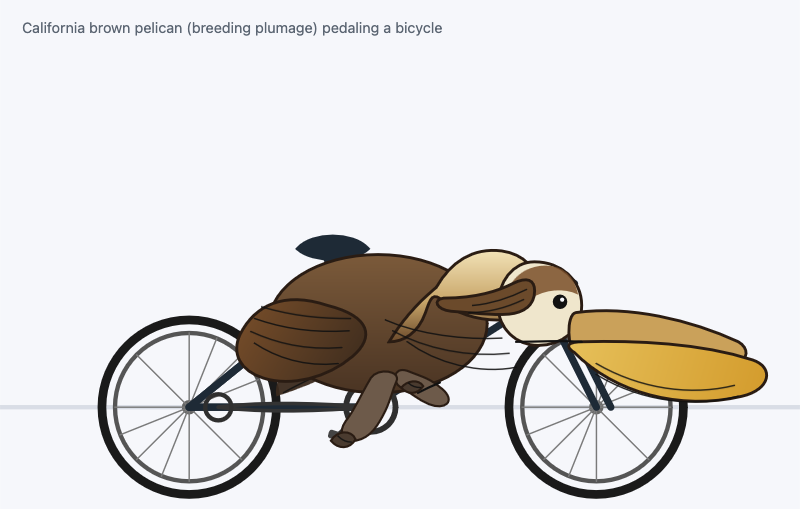
Digital illustration on a light gray/white background with a thin horizontal baseline: a stylized California brown pelican in breeding plumage is drawn side-on, leaning forward and pedaling a bicycle; the pelican has a dark brown body with layered wing lines, a pale cream head with a darker brown cap and neck shading, a small black eye, and an oversized long golden-yellow bill extending far past the front wheel; one brown leg reaches down to a pedal while the other is tucked back; the bike is shown in profile with two large spoked wheels (black tires, white rims), a dark frame, crank and chainring near the rear wheel, a black saddle above the rear, and the front fork aligned under the pelican’s head; text at the top reads "California brown pelican (breeding plumage) pedaling a bicycle".

Update 14th December 2025: I used GPT-5.2 running in Codex CLI to port a complex Python library to JavaScript. It ran without interference for nearly four hours and completed a complex task exactly to my specification.

Tags: ai, openai, generative-ai, llms, llm, pelican-riding-a-bicycle, llm-release, gpt-5
☑️ ⭐

Open Source Infrastructure must be a publicly funded service.

Hi folks,

The events of the last week have been utterly terrifying as we’ve seen a highly sophisticated targeted attack on open source infrastructure play out in public, in the form of the liblzma backdoor. Matrix is not impacted by the attack (none of our code or infrastructure is using liblzma or xz 5.6), but it has been a massive wakeup call in terms of understanding the risks posed by overstretched open source maintainership.

The attack particularly resonates as Matrix’s maintainership is distinctly overstretched currently - despite Matrix ending up at the heart of huge amounts of critical infrastructure, ranging from the Ukrainian MOD to NATO and at least 15 other countries and major international organisations that we know of.

Historically, Matrix development has been largely been funded by Element, the company set up by the team who created Matrix in order to fund their work on it. As unpopular as VC funding is in some circles, the Matrix community owes a huge debt of thanks to Element’s investors (Status, Notion, firstminute, Dawn, Automattic, Protocol Labs and Metaplanet) and Amdocs for funding over $50M of work on both Matrix and Element since 2017. Having a large professional team paid as their day job to maintain Matrix has helped enormously against xz-style attacks.

However, this model is simply not sustainable: these days, Element is focused on being able to pay its own costs rather than being dependent on further VC investment. This leaves a massive hole in funding for Matrix, and we’ve already seen the impact of this with projects like Dendrite, Low Bandwidth Matrix, Account Portability, P2P Matrix and Third Room no longer able to be funded by Element (for now). Meanwhile, the remaining core team is stretched.

This feels particularly unfortunate given the number of governments and public sector organisations who rely on Matrix, but in practice it turns out that finding a way for them to fund open source maintenance can be surprisingly challenging - despite the potential impact of Matrix not being able to invest in security (or cryptography, or trust & safety, or performance improvements) being catastrophic, especially as Matrix becomes more and more of a high value target for large scale adversaries.

There seems to be two types of problems: firstly, those who don’t understand why it might be beneficial for a government to pay for open source at all. A particularly amazing real-life example of this came from a certain Ministry of Defence last week, whose procurement department (on being asked to help fund core Matrix development, given their operational dependency on Matrix) said: “You have to understand, we’re responsible for taxpayer money here. We can’t just make a donation to your open source project.” Apparently if we had built the same tech as a proprietary product, paying for it would apparently have been an infinitely better use of taxpayer money. Now, thankfully, organisations like FSFE and EDRi and OSBA have made major strides in educating governments to understand that funnelling taxpayer money into proprietary software licences does not benefit the public in the way that using open source software does - but old views die hard.

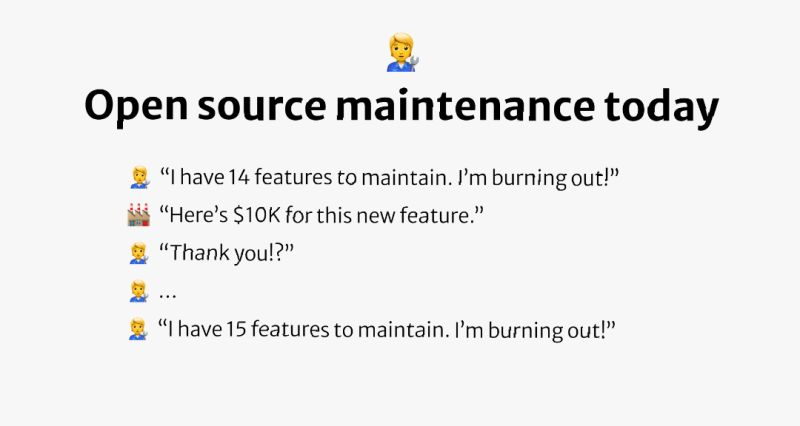
Then, perversely, the second problem emerges: FSFE’s well-intentioned “Public Money, Public Code” campaign is often given to us as a reason to insist on funding features rather than maintenance. This seems to be because procurement departments want to have something concrete to procure as a one-off, rather than making an ongoing commitment to keep the project secure, existing and healthy - and so focus on funding new features (or hiring their own staff to build their features) and ignore maintenance. If you ever wondered why Element has so many weird and wonderful features (which are not always maintained as well as they might), this is part of the problem. The problem is captured beautifully in Tobie Langel’s excellent (and highly topical) talk from this year’s State of Open Con:

However: we think there might (just might!) be a long-term solution in sight.

Particularly in the wake of the xz/liblzma attack, it seems that governments may be more aware that they and their societies depend enormously on FOSS infrastructure to operate. Free and open source software has literally become shared digital public infrastructure. And much like shared physical public infrastructure - bridges, roads, sea defences, etc - FOSS maintenance should be funded by governments on behalf of the taxpayer.

This funding should NOT be tied to specific feature development, but simply funding the core maintenance of the infrastructure - paying for the maintainers (and/or letting them or their umbrella org hire trusted ones!) to ensure the core project remains healthy and secure. Otherwise, the pressure just rises on the core project to chase feature development at the expense of maintenance (making maintenance harder) - or, worse, to be pushed away from open source into building proprietary solutions or crippling the open source by moving valuable features into side proprietary products.

Now, the good news is that some organisations are already trying to solve this problem:

However, most of these are not yet operating at the scale of a project like Matrix, and the irony is that the bigger projects need even more financial support than smaller projects to keep alive and sustainable. High level funding does exist in the form of the EU’s Horizon programme for R&D and Innovation (which provides the upstream for NLnet and NGI), with a total budget of €95.5B. However, it’s currently set up to only fund consortiums rather than independent projects - and the last thing a typical open source project needs is to orchestrate and administer an international consortium of vendors and universities in order to get itself funded.

The perfect solution in the EU would probably be a NLnet-style organisation with the remit to route funds in the range of low-millions a year to larger projects like Matrix which have become widespread critical infrastructure - to allow them to thrive in their mission without trying to coerce typical public sector procurement into picking up the bill. Or maybe a tax should be instantiated to force large scale open source projects users to route recurring funding to the project maintainers. So, Governments: please route taxpayer money to support the maintenance (not just features!) of open source projects that your country depends upon, before it’s too late. This also means educating procurement to the topic and updating procurement frameworks to be able to support this.

Meanwhile, we are in the middle of running a fundraising drive to help address the funding gap, which is currently making cautiously positive progress towards its £900K target, having raised £415K since last year, entirely thanks to Individual, Silver and Gold members joining. Our new membership model is working - giving the wider Matrix community a way to join the Foundation in order to participate in the upcoming Governing Board, and help steer the direction of the project, while contributing funding! So while we hope that governments will read this blog post and point out ways to sustainably fund more of the maintenance they depend on - today, you can help too by persuading your organisation (or yourself!) to become a member today and help keep Matrix funded and pointed in the right direction.

thanks,

Matthew

☑️ ⭐

MoOde – Le lecteur audio Raspberry Pi préféré des audiophiles

Vous cherchez un lecteur audio open source de qualité pour votre Raspberry Pi ? Ne cherchez plus, moOde audio est là pour vous !

Ce lecteur audio totalement gratuit et distribué sous licence GPL permet d’avoir un véritable serveur musical sur votre Rpi pour en faire profiter toute la famille. C’est un peu comme Volumio dont je vous ai déjà parlé, mais en beaucoup plus abouti. En plus, les gars derrière moOde sont des vrais. Pas de pubs intrusives, pas d’abonnements à la noix, zéro cookies ou tracking à la Google. Toutes vos données restent bien au chaud sur votre Raspberry Pi, et ne sont refilées à personne d’autre. Bon, après si vous voulez les soutenir, vous pouvez toujours faire un petit don…

Pour installer moOde, c’est facile. Vous chopez l’img et vous allez suivre le guide d’installation qui est juste là. En gros, vous préparez votre image avec le Raspberry Pi Imager, vous pouvez même configurer le SSH et le WiFi direct, et après vous balancez le tout sur votre carte SD. C’est du classique pour les utilisateurs de Raspberry Pi. Rien de plus simple !

La dernière version, la 8.3.9, est dispo pour les modèles 3B, 3B+, 3A+, 4, 400, les Compute Module 3, 3+ et 4, et même le petit dernier le Zero 2 W et elle tourne sur une debian Bullseye 64 bits. Autant dire que ça va envoyer du lourd côté performances audio.

D’ailleurs, parlons-en de l’audio. moOde gère une flopée de périphériques compatibles avec les Raspberry Pi. Que vous ayez une enceinte Bluetooth ou quelque chose de plus « filaire » comme un DAC USB (Digital Audio Converter), une carte d’extension Hat ou carrément un streamer réseau, y a de fortes chances que ça fonctionne direct. Et niveau réglages, les audiophiles vont être aux anges puisqu’il y a de quoi faire du réglage fin sur votre son comme jamais !

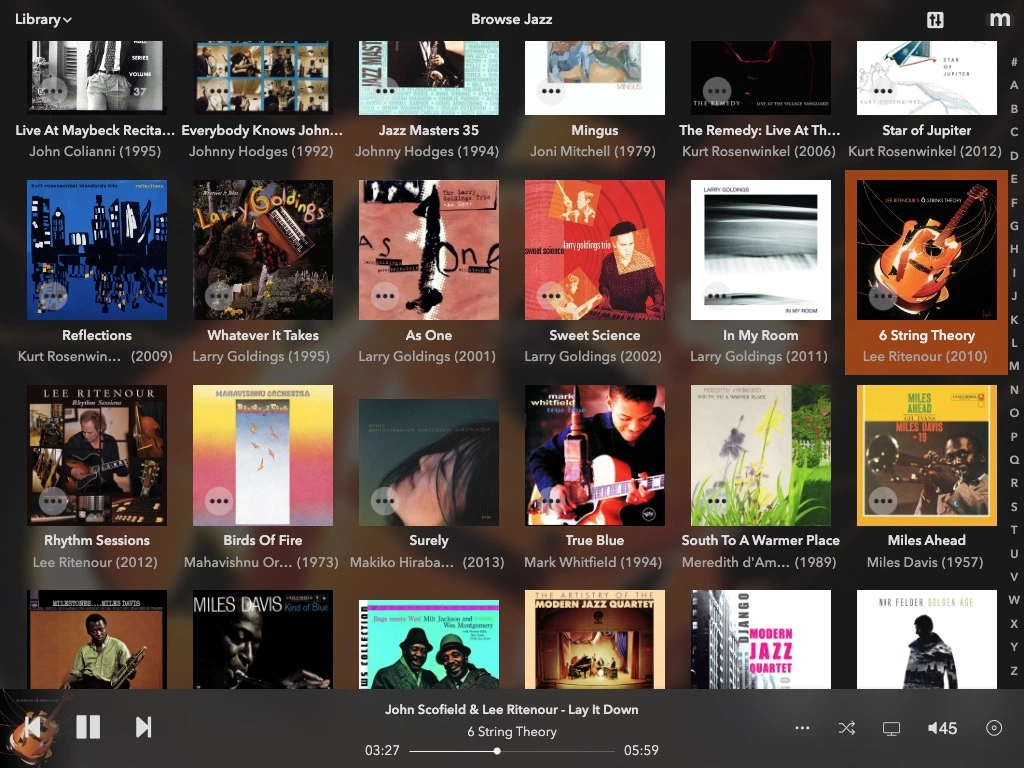
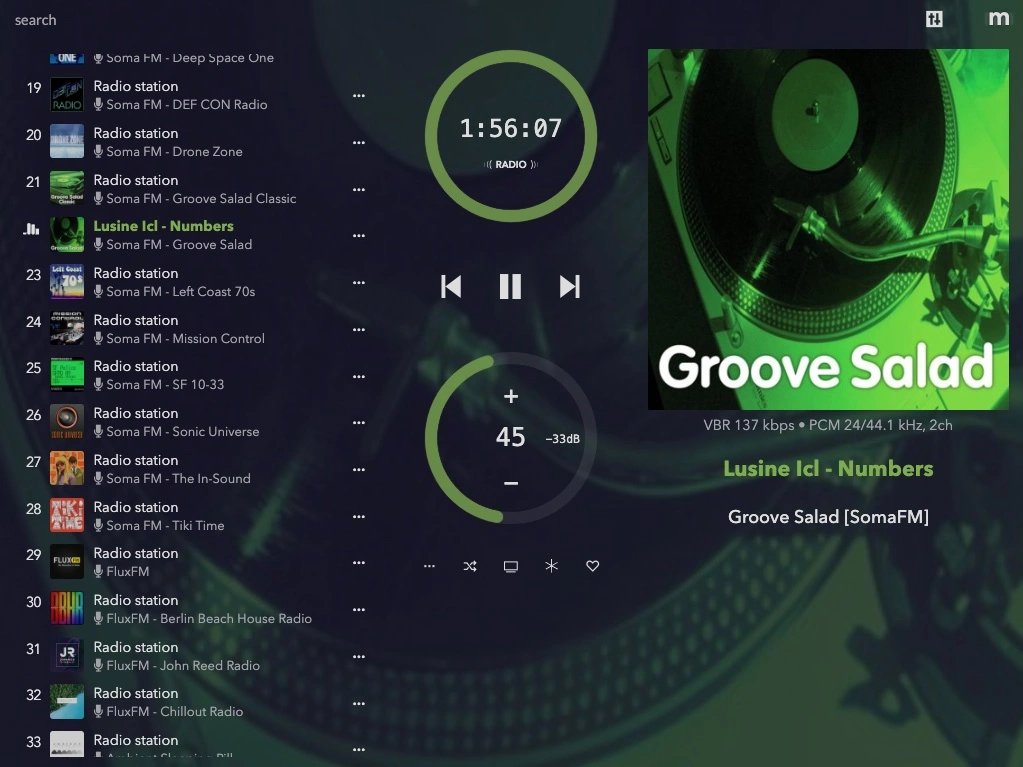
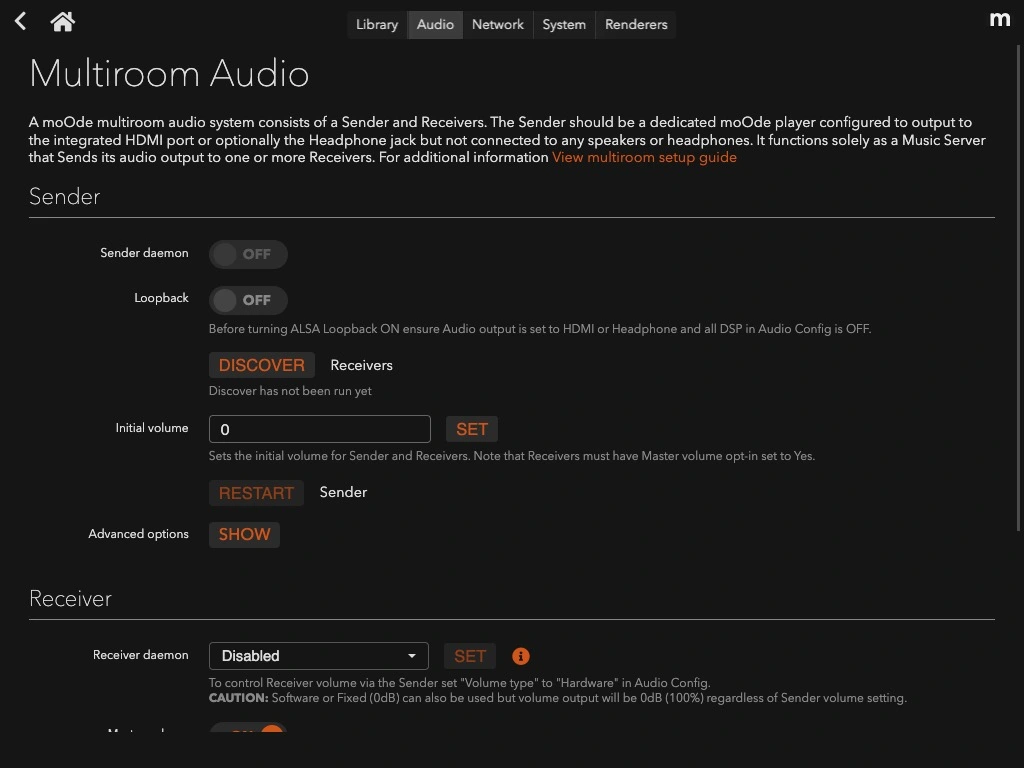
Le top du top, c’est l’interface web. Super bien foutue, responsive, elle s’adapte parfaitement à votre appareil, que ce soit un pc, une tablette, un smartphone ou même une TV. Pas besoin d’installer quoi que ce soit, un simple navigateur suffit. Vous pourrez lancer la lecture d’un album, écouter la radio, taguer vos morceaux, accéder à des partages de fichiers via SMB et NFS, balancer le son en AirPlay ou avec Spotify Connect, faire du multiroom synchronisé et profiter de fonctionnalités audiophiles comme le support des formats hi-res, un égaliseur paramétrique, et divers algorithmes de rééchantillonnage. Pour les devs, y a même une API REST pour faire mumuse.

Et si vous avez besoin d’aide ou que vous voulez causer son entre passionnés, le forum moOde est là pour vous. Les devs sont ultra réactifs et la communauté est au taquet. Vous pouvez même choper les dernières news sur le développement du player.

Côté technique, si vous voulez mettre les mains dans le cambouis, un guide du développeur est dispo. Vous pourrez gérer les paquets et générer vos propres images.

Ah et j’allais oublier, les gars de moOde vous ont même concocté un petit DAC NOS (Non-Oversampling) à monter vous-même : le ProtoDAC. Il paraît que le son est d’enfer, surtout si vous utilisez des composants de qualité. Les plans et le guide sont dispos, vous avez juste à commander vos PCB et sortir votre fer à souder.

Bref, vous l’aurez compris, moOde c’est que du bon fait par des pro du son pour les audiophiles geeks qui aiment faire les choses eux-mêmes. Alors, n’attendez plus, foncez sur le site, chopez l’img et transformez votre Raspberry Pi en un lecteur audio de compèt’ !

Merci à François pour le partage !

☑️ ⭐

FreshRSS 1.22.0

In this release, besides adding some initial support for OpenID Connect, the focus has been on increasing the quality rather than adding new features (which will have more focus again in the next release).
This version 1.22.x is also the last to support PHP 7.2 before requiring PHP 7.4+.

A few highlights ✨:

  • Add support for OpenID Connect (only in our Debian-based Docker image for x86_64, not Alpine, and not ARM) through libapache2-mod-auth-openidc. See our documentation
  • Rework trusted proxies
  • Improve scaling with many feeds and long processes, reduce database locks
  • Fix many bugs and regressions
  • Improve themes Origine (also with automatic dark mode), Nord, etc.
  • Several UI / UX improvements
  • New languages Hungarian, Latvian, Persian
  • Docker default image updated to Debian 12 Bookworm with PHP 8.2
  • Increase our code base from PHPStan level 5 to level 7
  • And more!

This release has been made by several contributors: @Alkarex, @Alwaysin, @ColonelMoutarde, @Exerra, @FromTheMoon85, @LleanaRuv, @Marjani, @NaeiKinDus, @Rufubi, @V-E-O, @aaronschif, @acbgbca, @aledeg, @andris155, @becdetat, @belidzs, @kemayo, @kgraefe, @marienfressinaud, @math-GH, @msdlr, @obrenckle, @otaconix, @robertdahlem, @sad270, @samc1213, @squaregoldfish, @vrachnis, @witchcraze, @yubiuser, @zhaofengli

Full changelog:

  • Features
    • Add support for OpenID Connect (only in our default Debian-based Docker image for x86_64, not Alpine) through libapache2-mod-auth-openidc
      #5351, #5463, #5481,
      #5523, #5646
    • Allow sharing in anonymous mode #5261
    • Support Unix socket for MySQL / MariaDB #5166
    • Use proxy settings also for fetching favicons #5421
    • Add mutual exclusion semaphore for better scaling of actualize script #5235
    • Better reporting of XPath failures #5317
    • Add sharing with Buffer.com #5286
    • Add sharing with Omnivore #5477
    • Improve sharing with Linkding #5433
    • Do not automatically update feeds after import, to better support multiple imports #5629
    • Compatibility for servers disabling set_time_limit() #5675
    • New configuration constant CLEANCACHE_HOURS #5144
  • Bug fixing
    • Fix cache refresh #5562
    • Fix and improvement of hash of articles using load full content #5576
    • Fix case of falsy GUIDs #5412
    • Fix and improve JSON export/import #5332, #5626
    • Fix enclosures in RSS output #5540
    • Fix parenthesis escaping bug in searches #5633
    • Fix regression in Fever API enclosures #5214
    • Fix regression in Fever API mark-all-as-read #5185
    • Fix regression in OPML export of single feeds #5238
    • Fix warning during OPML export with empty attributes #5559
    • Fix extensions in actualize script #5243
    • Fix link to configuration (system or user) for extensions #5394
    • Fix mark as read upon gone option in some conditions #5315,
      #5382, #5404
    • Fix mark selection as unread #5367
    • Fix warning in articles repartition statistics #5228
    • Fix count entries with some databases #5368
    • Fix MariaDB database size calculation #5655
    • Fix feed position attribute #5203
    • Fix warning when tagging entries #5221
    • Fix labels in anonymous mode #5650
    • Fix bug not allowing strings for tags in XPath #5653
    • Fix get and order when saving user query #5515
    • Fix search using user queries #5669
    • Fix regression of access to logs even when auto-update is disabled #5577
    • Fix access to Apache logs from Dev Container #5660
    • Fix malformed HTTP header in case of internal fatal error #5699
    • Fix rare exception for HTML notifications #5690
  • UI
    • New option to display website name and/or favicon of articles #4969
    • Support <meta name="theme-color" .../> #5105
    • Config user settings in slider #5094
    • Improve theme selector #5281, #5688
    • Improve share to clipboard with animation and icon #5295
    • Allow share to clipboard even for localhost and without HTTPS #5606
    • Feedback when tag with same name as category already exists #5181
    • Show base URL in configuration #5656, #5657
    • Show Terms of Service in config menu #5215
    • Show Terms of Service in footer #5222
    • Improve about page #5192
    • Improve update page #5420, #5636,
      #5647
    • Improve Step 1 of install process #5350
    • Improve Global view on mobile #5297
    • Reduce network overhead for Global view #5496
    • Fix Global view: Stick the article to the top when opened #5153
    • Fix configuration views that are using a slider #5469
    • Fix highlight next/prev article while using shortcuts #5211
    • Fix regression in statistics column name % of total #5232
    • Fix macOS feed title meta-click behaviour #5492
    • Improve themes
    • Delete previously deprecated themes: BlueLagoon, Screwdriver #5374,
      #5694
    • Various UI and style improvements #5147, #5216,
      #5303, #5304, #5397,
      #5398, #5400, #5603,
      #5695
  • Security
    • Rework trusted proxies (especially with Docker) #5549
    • Automatic trusted sources during install #5358
    • Show remote IP address in case of HTTP Basic Auth error #5314
  • Deployment
    • Docker listen on all interfaces by default, including IPv6 #5180
    • Docker default image updated to Debian 12 Bookworm with PHP 8.2.7 and Apache 2.4.57 #5461
    • Docker alternative image updated to Alpine 3.18 with PHP 8.1.23 and Apache 2.4.58 #5383
    • Docker quiet Apache a2enmod #5464
    • Docker: Add DATA_PATH to cron env #5531
  • i18n
  • Extensions
    • Fix fallback to English for extensions #5426
    • Allow deep-link to extension configuration #5449
    • New extension hook entry_auto_read #5505, #5561
    • Simplify extension method #5234
    • Remove obsolete core extensions Google Group and Tumblr #5457
  • SimplePie
    • Fix error_reporting for PHP 8.1+ #5199
  • Misc.
☑️ ⭐

L’amorce d’une transition

Une Goldilocks planet, (planète boucle d’or) est une planète où les conditions premières sont remplies pour qu’une vie s’y développe. 
C’est le cas de la planète Terre que nous occupons, qui n’est pas trop près de son étoile, le soleil, mais pas trop loin. Cette appellation est une allusion au conte intitulé Boucles d’or et les Trois Ours dans lequel l’héroïne, Boucles d’or, décide de manger le gruau du bol de l’ourson lorsqu’elle se trouve au logis de la famille ours, car ce bol n’est « ni trop chaud, ni trop froid », tout comme doit l’être la zone habitable d’une étoile.
Pendant des années nous avons culpabilisé les hommes les persuadant qu’ils pourront sauver la planète en pratiquant ce que l’on nomme « les écogestes ». Même si chacun doit faire sa part, « le problème est avant tout structurel, politique, économique, dans le monde 100 entreprises sont responsables de 70% des émissions de gaz à effets de serre ». Cyril Dionun monde nouveau.

Dans son dernier rapport, le GIEC consacre un chapitre entier à la baisse de la demande des consommateurs et à la « sobriété ». Cette dernière est un élément majeur de la réduction des émissions de CO2 selon le groupe d’experts. Avec l’inflation des prix de l’énergie, la sobriété vient sur le devant de la scène.

Comment définir le concept de sobriété ? Est-ce de la modération, de la privation, de la décroissance, est-ce positif, négatif ?

Comme, vous l’aurez sans doute compris, la sobriété ne possède pas de définition « unique, partagée et précise ».  Cette notion, « indispensable et complémentaire de l’efficacité » pourrait-être définie de la façon suivante :  une situation dans laquelle des ressources limitées sont mises au service de besoins raisonnés. 

Qu’est-ce qu’une ressource limitée ?
À moins d’être sur la planète mars, tout le monde a bien compris la crise de notre biosphère. Les limites planétaires sont atteintes et nous sommes dans un point de bascule ou aujourd’hui nous n’avons plus le choix ! Donc c’est impératif de réduire la quantité énorme de ressources naturelles que nous utilisons, environ 100 milliards de tonnes chaque année. Soit 3 fois plus qu’il y a 30 ou 40 ans.

Qu’est-ce que des besoins raisonnés ?  
Ce sont des besoins humains. En effet, nous ne pouvons pas avoir que la croissance économique comme actif essentiel pour satisfaire ces besoins humains. Nous devons partir des besoins humains essentiels comme la santé, l’éducation… Redéfinir complètement l’objectif social. Ces besoins seront ensuite raisonnés grâce à la justice, c’est-à-dire raisonnés par un débat rationnel qui permettront d’allouer les ressources. En résumé, la sobriété ce sont des ressources limitées et des besoins raisonnés.

La France est incroyablement en retard, cette culture de la sobriété n’existe pas.  J’ai parfois le sentiment qu’en France la transition énergétique n’a toujours pas démarré. Il faut organiser cette sobriété et l’organiser de manière collective, avec les bonnes feuilles de route. Aujourd’hui, nous avons toutes les mesures, mais nous ne savons pas comment faire.

Pour le gouvernement, qui découvre pour la première fois la planification écologique, la sobriété, serait : 

  • Demander à tous les Français de faire tous les efforts pour faire face à la pénurie. 
  • Ce qui revient à organiser une sobriété, à court terme, qui permet uniquement d’organiser les carences en eau, en énergie… 

En réalité, ce qu’il nous manque c’est d’apprendre à penser le temps long et construire un plan pour tout changer. 

La vraie question à se poser, au nom des limites plantaires, au nom du droit des générations futures à pouvoir utiliser ces ressources limitées serait, la suivante : 

– Comment est-ce que l’on satisfait les besoins vitaux de tout le monde, tout en faisant l’économie des besoins superflus ? Autrement dit, comment mettre en place une sobriété audible, c’est-à-dire choisie par les Français.

Par exemple au lieu de demander au français de baisser son chauffage de 1 degré, nous pourrions voir comment vivre ensemble à 20 degrés.  Il est difficile de baisser le chauffage pour une famille en situation de précarité. 

Elle doit choisir entre se chauffer, manger ou prendre des douches froides toute l’année pour terminer la fin du mois. Les efforts à fournir devraient être différents en fonction des privilèges économiques des uns et des autres. 

Ne devrions pas nous détacher de nos liens d’aliénation qui nous rendent dépendants ?  Apprendre à se détacher de certaines croyances (limitantes), faire un pas de côté sur la norme, être intuitif, comme le suggère Sandrine Roudaut (Maison d’édition la Mer salée). 
Prenons un exemple : « d’un côté nous identifions que le système financier est fondamentalement mortifère (notamment parce qu’à cause de lui des projets destructeurs sont possibles, ou du fait de l’évasion fiscale les services publics ne sont pas financés), pourtant tant que nous avons un compte en banque nous ne pouvons pas souhaiter que ce système explose. » 
Prenons un second exemple : il fait froid, donc le gouvernement nous demande de faire attention à l’énergie et de ne pas en consommer. C’est justement parce qu’il fait froid que nous en avons besoin. Pourquoi ne pas consommer différemment ? Par exemple, en coupant l’énergie des panneaux publicitaires ou encore les vitrines de magasins. 
Mais cette décision ne nous appartient pas ! Nous sommes donc dans un système que l’on ne maîtrise pas, ce qui entraine la désobéissance civile (coup de gueule envers les décisions de l’État, pétitions, grèves…),  la création des mouvements de protestation (comme les gilets jaunes). Tant que le pays ne se dotera pas de la capacité à empêcher de rajouter de nouvelles difficultés aux français, on ne pourra malheureusement qu’être pessimiste sur notre capacité à atteindre la sobriété intégrale.

Chercher l’optimum du confort tout en préversant les écosystèmes, c’est une réorganisation de la société !
En réalité, la pensée économique n’est pas prête à affronter le 21e siècle, elle n’est pas prête à affronter les chocs écologiques et la justice sociale, car nous avons fait abstraction au bien-être essentiel, celui d’avoir un niveau de vie décent universel pour vivre sur une biosphère.

Derrière la sobriété, se cache le mot satiété.  C’est -à-dire arriver à un juste milieu. Aujourd’hui nos instruments de mesure ne sont pas les bons. Ne devrions-nous pas nous poser la question suivante : dans quel secteur voulons-nous croître et dans quel secteur voulons-nous décroître ? 

Liberté, égalité, sobriété : pour éviter les coupures de gaz et d’électricité cet hiver, mais aussi limiter le changement climatique, la sobriété doit devenir un élément cardinal de l’action publique. Reste à la rendre socialement acceptable, en répartissant l’effort équitablement…La sobriété c’est de la cohérence, ce sont des sociétés conscientes ! Il s’agit d’embarquer nos sociétés dans un contre-récit qui dépasse le récit dominant actuel. Car la croyance partagée par des milliards de gens que consommer c’est le bonheur a un coût écologique, mais aussi social. Dépasser un modèle linéaire fondé sur la vente en volume et la possession de produits afin de faire advenir un modèle circulaire fondé sur l’usage et le service. Bâtir un récit qui impulse de nouvelles tendances plus vertueuses, l’entraide, le partage, le don, le réemploi et la réparation, mais surtout le faire ensemble.

Temperance.,Sea,Nymph.,Fantasy,Creatures,Tarot,Full,Deck.,Major,Arcana.

jessicapellegrini06

☑️ ⭐

FreshRSS 1.19.0

A few highlights:

  • Drop support for PHP 5.x (require PHP 7.0+) and initial support for PHP 8.1+
  • Drop support for Microsoft Internet Explorer (IE11)
  • New thumbnail and/or summary options for the normal view #3805
    image
  • New setting to automatically mark as read a new article if there is already one with the same title in the same feed
  • New setting to keep only a maximum number of unread articles in a given feed
  • Mobile view can access the configuration menus

Detailed tracked changes.

Full changelog:

  • Features
    • New thumbnail and/or summary options for the normal view #3805
    • New setting to automatically mark as read a new article if there is already one with the same title in the same feed #3303
    • New setting to keep only a maximum number of unread articles in a given feed #3303
    • New search operator based on custom labels, or not #3709
      • Search articles with label IDs: L:12,13,14 or label names: label:something or labels:"my label,my other label,🧪"
      • Search articles with any label: L:* or no label: !L:*
    • Add support for installable progressive web app (PWA) #3890
  • Bug fixing
    • Fix marking as read a label with SQLite and PostgreSQL #3711
    • Better fallback for feeds without title #3787
    • Fix auto-load articles in anonymous mode and global view #4082
    • Fix several typos found by PHPStan, including one affecting the cache of keep max unread articles #4019
    • Fix warning in Fever API #4056
    • Show no articles alert-box also in global view #4042, #3099
    • Fix theme selection when a theme has been deleted #3874
    • Fix keyboard shortcuts in anonymous mode #3945
    • Fix show password in settings #3966
    • Fix JavaScript warnings for non-validated users #3980
    • Fix drag & drop layout for subscriptions #3949
  • Security
    • Better error handling when a user does not exist (especially for API) #3751, #4084
    • Do not show Add new feed for anonymous users #4040
    • Do not show Mark as read / unread / favourite for anonymous users #3871, #3876
    • Do not show back link on error pages if the user does not have access #3765
    • Only show Back to RSS feeds when logged-in #3790
    • Fix for special characters in keyboard shortcuts #3922
    • Remove old workarounds with white space to prevent password autocompletion #3814
  • Compatibility
    • Require PHP 7.0+ (drop support for PHP 5.x) #3666
    • Drop support for Microsoft Internet Explorer (IE11) #3666
    • Fix some warnings with PHP 8.1+ #4012, #4018
    • Fix back-compatibility with Git 2.21- for automatic updates #3669
    • Fix JavaScript caching and compression for some Apache platforms #4075
  • Deployment
    • Docker: development image :oldest is now based on alpine:3.5 with PHP 7.0.33 and Apache 2.4.35 #3666
    • Docker: default image updated to Debian 11 Bullseye with PHP 7.4.25 and Apache 2.4.51 #3782
    • Docker: alternative image updated to Alpine 3.15 with PHP 8.0.14 and Apache 2.4.52 #3996
    • Docker: fix inclusion of .htaccess for ./p/themes/ folder #4074
    • Docker: only add the crontab when CRON_MIN is set #3927
    • Docker: move logic to disable FreshRSS updates #3973
    • Docker: allow mounting a volume for the cron file #3927
    • Images on Docker Hub are automatically scanned for software vulnerabilities
  • UI
  • Themes
    • Show search box for all themes in mobile view #4025
    • Fix alternative-dark theme to avoid bright elements #3774, #3806
    • Improve the contrast of message boxes for the Origine theme #3725
    • Uniformize the size of inputand select elements for the Origine theme #3727
    • Fix style of banner text for the Origine theme #3731
  • i18n
  • Extensions
    • Add system configuration for extension #3626
  • SimplePie
    • Merge from upstream, help with PHP 8.1+ #4011
    • Fallback to file extensions for enclosures not providing a media type #3861
  • Misc.
    • Implement GitHub Actions for continuous integration / automated testing 3920
    • Use ESLint instead of JSHint #3906
    • Improve .editorconfig and .stylelintrc #3895, #3912
    • Simplify Minz code with PHP 7 ?? operator #4020
    • Upgrade PHPMailer to 6.5.1 #3977
    • Added Raindrop.io as sharing option #3717
    • Delete outdated information regarding Firefox feed reader list #3822
❌