❌

Vue lecture

Il y a de nouveaux articles disponibles, cliquez pour rafraîchir la page.
🔲 ☆

Enjoying the Shows

Nikki D & Sisters of Thunder at the 2026 Lotus Festival

The idea was to get my photos from the latest Lotus Festival up right after the three-day event ended on Sunday the 4th. I had too many other things to do, so a week went by. But at least my shots of the last two performances are up. This one is for Nikki D & Sisters of Thunder, who describe their show as “sacred steel gospel and blues.” Fun group. Singing and musicianship are first-rate. Great personalities. Very charismatic. Dancing is required.

This one is for Gadan, which does “Irish trad and bluegrass with the soul of Celtic and Appalachian roots music – all spiced with unmistakable Italian flair!” Here’s that photo album:

Gadan at the Lotus Festival

Another great band. Loads of fun. Great music. Can’t sit to them either.

Here’s another thing. All the photos in both albums are Creative Commons licensed CC-BY-4.0: there for anyone to use, requiring only photo credit.

I invite both bands, the Lotus Festival folks, and any member of Bloomington’s news commons to have at them as well.

Here’s more about Lotus. It’s an amazing event. If you like great music from everywhere, you’ll love the show. It’ll be back next October.

🔲 ☆

Time to book your rides

AI isn’t just a “surf’s up” moment. It’s a tsunami. You have to surf that tsunami, just to keep from drowning. 

Using your time. Your calendar is your surfboard.

What’s your best beach for riding that calendar?

Well, right now there are countless conferences with “Identity,” “AI,” or “Agentic” in their titles. Yes, they’re beaches. You can ride there.

But where will you get the most done? Where can you write the agenda, and work with other people dealing with the same problems or pursuing the same opportunities? Real people doing real work. People who can help.

Really, do you want to hear yet another CEO blather about what their VCs and marketing people want them to say? 

Or do you want to get work done?

IIW was made for getting things done. It has been a wide beach for surfing big tech waves since 2005, twice a year at the Computer History Museum in Silicon Valley. The next one is our 43rd. It’s on November 3rd to 6th, less than a month from now.

We immodestly believe that IIW is the most leveraged conference in the world. Two reasons:

  1. Our focus (without limits) is on identity, with lots of real-world results. OAuth, OpenID, passkeys, self-sovereign identity (SSI), decentralized identifiers (DIDs) UMA, SSI, VRM, and Personal AI—to name a few—would not be the same without countless forward-moving conversations and work at IIWs.
  2. What we don’t have. No keynotes. No panels. No agenda other than what participants choose.

And that’s you. IIW is what you make of it.

So join us. Register here.

You’ll leave wet but a lot more fit.

🔲 ☆

Cluesday

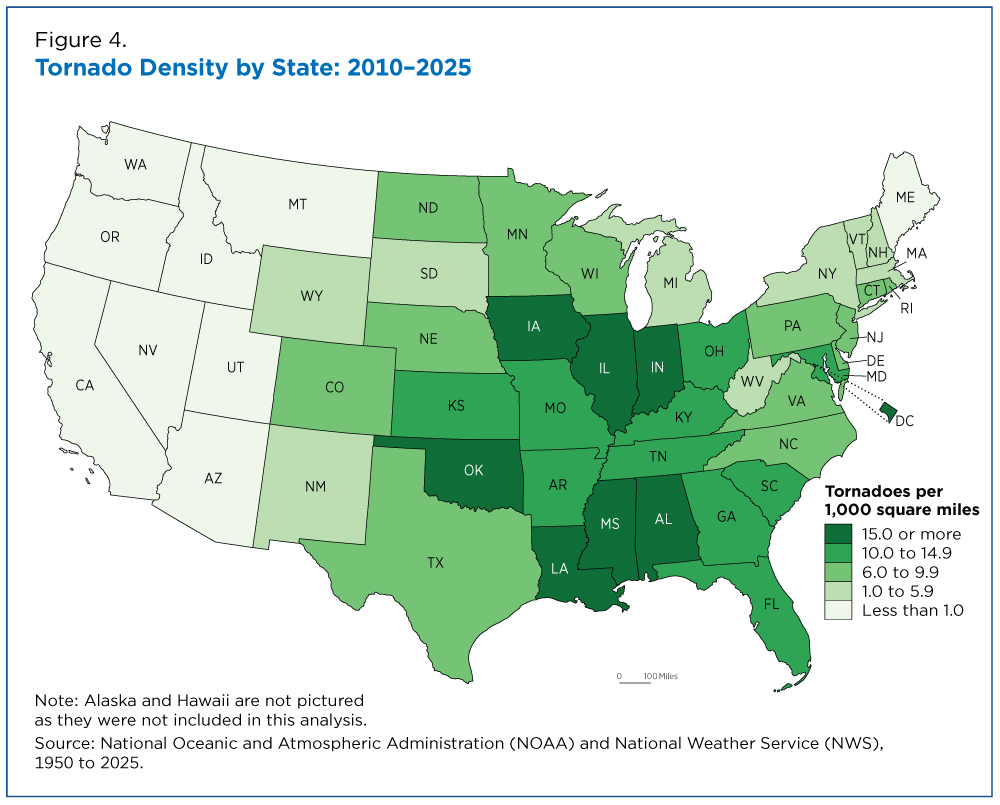
I write from the easternmost dark green state.

Closer to homes

Tornado Alley moves east. Here’s one I recorded live on my phone in February here in Bloomington, Indiana. Here is the trench of destruction dug by a later tornado that went through thick woodlands about twelve miles north of here.

Didn’t know there was one, but yeah

Chick-fil-A takes a stand against fast-food drive-thru AI trend.

Maybe

Is doomscrolling doomed?

Always a bad sign

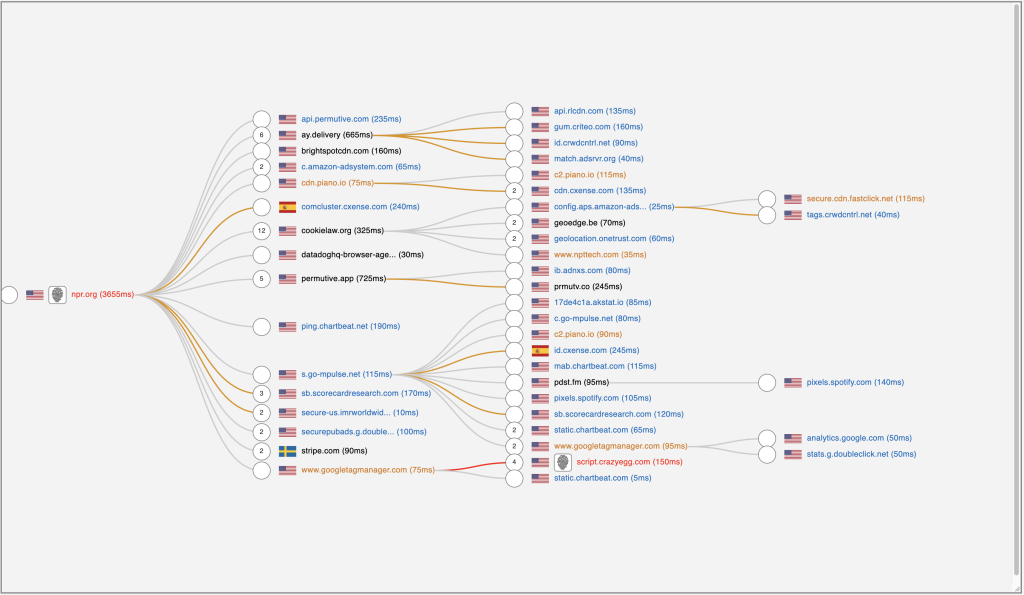
NPR has a new privacy policy. Specifics.

Here’s a PageXray of the policy page:

Also, “Adserver Requests: 38 • Tracking Requests: 38 • Other Requests: 70” Just what you want from noncommercial radio.

🔲 ☆

Don’t fall in

AI shit gets so weird.

For example, the fake golfer Grace (aka Gracie) Brooks appeared in the midst of my Facebook doomscrolling (above) to say something to me (scrolled across her boobage) about “an older guy” watching her. Never saw her before, or cared to see her. But I am curious about “her” business model. So, after getting that screen grab, I went off to research her fake ass.

What I (and my AI employees, which can search faster and wider) have found so far:

  • Multiple newly numbered Facebook accounts use the same “Grace Brooks” identity. The fuck:
    • 61590279580369 — Grace Brooks
      • Profile
      • This is one I saw. One reel says: “I have a question for you old men… If I texted you first, would you actually reply? … follow me and say your name.”
      • Example reel
    • 61590736615465 — Grace Brooks
      • Profile
      • This separate account posted a nearly identical script: “I have a question for you old men… If I texted you first…”
      • Example reel
      • Another reel asks “old men” to follow and provide their names. www.facebook.com
    • 61591441983335 — was Grace Brooks, now Emily Bennett
      • Profile (Later: now blank)
      • Earlier search indexing labeled reels from this account “Grace Brooks” and described the woman as a golf influencer addressing “old men.” It now appears in current indexing as Emily Bennett, still asking “old guys” to watch and follow her.
      • A current Emily Bennett reel. (Not much later, it’s gone.)
  • Multiple accounts are on Instagram too:
    • @graciebrooks07 — the account I first found when I started digging. Has about 45,000 followers and 90 posts.
    • @graceeegf — another “Grace Brooks”: about 7,900 followers, 13 following, and 53 posts.
    • As of this evening (29 September 2026), both are still there
  • The second account uses the same material and language:
  • Instagram’s indexing repeatedly connects the two accounts on the same result pages. That makes @graceeegf a confirmed duplicate or companion account. I dunno, cuz I’m still new to this shit. Here are some other accounts operating in the same apparent cluster:
  • There is no independent biography, established social presence (other than these on Facebook and Instagram), golf history, or other evidence that “Grace Brooks” exists in the natural world.

As for her unreality, here are the tells:

  • Too good-looking. Call it statistical perfection: symmetrical features, flawless teeth and skin (with slight humanizing imperfections, such as Grace’s freckles and tiny lines on her face), perfect hair, improbably high boob/waist ratio, perfect makeup (or a perfect absence of it). In sum, a maximized perfection of improbabilities. (I asked ChatGPT to find similarly attractive real-life female athletes. In declining order, it gave me Alica Schmidt, Jutta Leerdam, Claire Hogle, and Romee Strijd, none familiar to me. Look ’em up. No ‘fence, but none look as perfected as “Grace.”
  • Perfect lighting. As an inveterate photographer, I know how hard it is to get lighting that right.
  • Inconsistent fake backgrounds. (Is that driving range the same every time?)
  • Modular gestures. “She” seems to have a limited range of head tilts, direct looks, smiles, arm movements, golf swings, and flips of her skirt for a peek at her perfect butt with its pink panties.
  • Identity without history. Does any athlete as perfected-looking as this one exist in the natural world? Of course not.

But why are the creeps that make her (actually, it, and them) trolling geezers on Facebook? Well, clearly this is a funnel-top operation. For what? I imagine one or more of these might be down in the vortex:

  1. Paid adult content, or referral
  2. Pay-to-chat
  3. Romance fraud (such as the FTC cares about)
  4. Fake investment (typically in cryptocurrency)
  5. Phishing
  6. Malware insertion
  7. Affiliate traffic pumping
  8. Growing an affiliate account for someone to sell off

I vote for #1, but whichever it is, “Grace” and her friends are all bait at the top of a funnel.

🔲 ☆

Et si le vrai culot des entrepreneurs était désormais de verdir leur modèle ?

[CONTENU PARTENAIRE] Jeudi 8 octobre 2026 s’est déroulée la douzième édition de l’évènement BIG à l’Accor Arena de Paris. Organisé par Bpifrance pour rassembler les entrepreneurs, le rendez-vous a comptabilisé plus de 95 000 inscrits autour d’une thématique : le culot. Parmi les 500 conférences et ateliers qui ont animé la journée, une part importante était consacrée au climat. La transition écologique s’impose désormais comme l’un des grands parcours stratégiques de BIG, au même titre que l’IA, la deeptech, le tourisme ou l’industrie. « La transition écologique n’est plus un sujet RSE, c’est un sujet de compétitivité », pouvait-on entendre dans les allées du salon. L’audace entrepreneuriale mise à l’honneur cette année ne se limite plus à créer une entreprise. Elle consiste aussi à transformer son modèle pour répondre aux défis environnementaux.

La transition écologique abordée plus concrètement

À BIG, cette dynamique s’incarne notamment dans la Communauté du Coq Vert, qui rassemble 3 700 entreprises engagées pour le climat. La Bulle Verte, dédiée à la communauté, était le point de ralliement des entrepreneurs engagés, symbolisant la place grandissante des enjeux environnementaux dans l’écosystème entrepreneurial. Plusieurs masterclass ont été consacrées à des sujets très concrets, avec pour ambition de rendre la transition plus accessible pour les entreprises.

Que ce soit la gestion de l’eau, la biomasse, le foncier, l’adaptation au changement climatique ou encore la biodiversité… Sur ce dernier point, les échanges ont porté sur la préservation des sols, la biodiversité appliquée à l’industrie ou encore la dépendance des modèles économiques au vivant. Le discours environnemental s’élargit ainsi à de nouvelles préoccupations. Longtemps centrés sur le carbone et l’énergie, les débats s’ouvrent désormais aux matières premières, à la biodiversité et à l’adaptation climatique. 

21 milliards d’euros pour la transition écologique

Pour un évènement économique de cette ampleur, historiquement centré sur la croissance, l’innovation et le financement des entreprises, voir ces sujets s’imposer au cœur des débats constitue un signal fort. Cette orientation se retrouve aussi dans les investissements de la banque publique. En effet, Bpifrance a révélé avoir injecté 72 milliards d’euros dans l’économie française en 2025. Sur ce montant, 21 milliards d’euros ont été consacrés à des partenariats en faveur de l’innovation et de la transition écologique.

L’écologie n’apparaît plus comme un supplément d’âme ou une simple démarche de responsabilité. Elle devient un levier de compétitivité, de résilience et d’innovation. En ouverture de BIG, au micro de BFM Business, Nicolas Dufourcq, directeur général de Bpifrance, livrait sa vision de la thématique de cette édition : « Le culot a sa part de danger. Donc, il ne faut pas en avoir tous les jours en tant qu’entrepreneur. Mais il en faut à certains moments du parcours. »

Et si la transition écologique représentait précisément l’un de ces moments ? Transformer son modèle, investir avant d’y être contraint, repenser sa dépendance aux ressources ou intégrer les limites écologiques dans sa stratégie demande une forme de culot que beaucoup auraient jugée risquée il y a encore quelques années. BIG 2026 aura, en tout cas, montré que le culot ne réside plus uniquement dans la création d’une entreprise. Il consiste aussi à accepter de la transformer face au défi climatique. 

Julien Ruffet

The post Et si le vrai culot des entrepreneurs était désormais de verdir leur modèle ? appeared first on The Good.

🔲 ☆

Comment Ashoka a transformé les 2,3 millions € investis dans ses entrepreneurs sociaux, en 6,1 millions de bénéfices

Chaque euro investi par Ashoka en soutien à ses « fellows » – ces entrepreneurs sociaux sélectionnés chaque année pour composer une nouvelle promotion – leur rapporte 2,65 euros. Un tel effet de levier est peu fréquent, y compris pour des placements financiers plus classiques et réputés plus lucratifs.

C’est ce qu’Elsa da Costa, directrice générale d’Ashoka France depuis 2021, que nous avions interviewée en février dernier à la sortie de son ouvrage « À nos cœurs vaillants » (Éditions Calmann Lévy), a souligné en présentant les résultats de cette étude dans les locaux de son partenaire, la société d’investissement Eurazeo.

Les financements de l’économie sociale et solidaire (ESS) sont attaqués de toutes parts, et pas seulement à la Une du JDD du 20 septembre qui dénonçait « Finances publiques : 60 milliards engloutis par les associations », une affirmation suite à laquelle Ashoka France a d’ailleurs saisi le Conseil de déontologie journalistique et de médiation (CDJM). C’est pourquoi, mesurer son impact sur la société et lui donner une valeur économique est plus nécessaire que jamais.

Faire la preuve de son utilité pour justifier le soutien apporté à l’entrepreneuriat social

Dans le cadre d’un partenariat noué depuis dix ans entre les deux structures, Goodwill Management (cabinet de conseil en stratégie et durabilité) s’est déjà livré à l’exercice pour plusieurs « fellows Ashoka ».

Pour Label Vie, à l’initiative du label Écolo Crèche (label de développement durable dédié à la petite enfance), Goodwill a quantifié les économies (frais de santé publique, absentéisme des parents, etc.) générées par un moindre taux d’enfants malades et de personnel absent ; pour Unis Cité, à l’origine du service civique, le taux d’insertion dans l’emploi des jeunes au sortir de cette expérience, nettement supérieur à la moyenne nationale…

Autant d’arguments mis à disposition des entrepreneurs sociaux pour faire la preuve de leur utilité, et justifier le soutien, privé ou public, dont ils bénéficient.

Mais qu’en est-il d’Ashoka lui-même ? Quel est son propre effet de levier ? Fait-il réellement fructifier l’argent qui lui est confié au service du bien public ? En confiant des fonds à Ashoka, multiplie-t-on l’impact des entrepreneurs sociaux ? 

« C’est bien la question à laquelle nous avons voulu répondre », souligne Arnaud Bergero, directeur général de Goodwill Management.

Le Social return on investment, une méthodologie à adapter au cas par cas

Pour ce faire, les consultants ont recouru au SROI (Social return on investment), une méthodologie utilisée depuis une quinzaine d’années, qui a notamment permis la naissance des « contrats à impact social », en vertu desquels l’État verse des intérêts à la banque qui octroie un prêt à un entrepreneur social dès lors que ce dernier prouve la réalité de son impact. « Il s’agit d’une méthode générale, qui doit être adaptée à chaque objet d’étude », précise Arnaud Bergero.

Une méthodologie qui tient compte de difficultés propres au secteur de l’ESS : un accès difficile à la donnée publique (par exemple le taux d’insertion par l’emploi des jeunes migrants de moins de 30 ans) ; l’impossibilité de fixer une valeur économique ou financière sur certaines choses (le vote des jeunes, la santé mentale des entrepreneurs sociaux…) ; un suivi de la donnée défaillant pour certaines structures de l’ESS, faute de moyens suffisants.

Surtout,

« Il s’agit d’identifier l’ensemble des impacts, leur nature, la population sur laquelle ces impacts s’exercent, leur traduction économique…détaille Arnaud Bergero. Il faut trouver le bon proxi économique. »

L’accès à des experts de haut niveau, principal bénéfice quantifiable

En l’espèce, quatre leviers ont été étudiés pour quantifier l’impact des montants investis par Ashoka sur la période 2023/2025 au bénéfice des 50 fellows qui ont répondu à l’étude. Ce ratio a ensuite été appliqué au montant global investi par Ashoka au bénéfice de ses 90 fellows.

  • L’accès à des services de qualité (valorisé 3,4 M€)
  • Le soutien à des projets en émergence (1,4 M€)
  • L’accès au financement (1,1 M€)
  • Le gain de temps (0,15 M€)

« Les fellows Ashoka ont accès à un soutien de niveau exceptionnel, rappelle Arnaud Bergero. Notamment via l’Ashoka Support Network (ASN), composé de dirigeants expérimentés, mais aussi via des partenaires hyper-spécialisés dans leur domaine. » N’ont été comptabilisés que les entrepreneurs ayant déclaré qu’ils auraient fait appel à d’autres conseils s’ils n’avaient pas été épaulés par Ashoka, sur la base des honoraires moyens des différentes professions (consultants, avocats, comptables, juristes, etc), comparés à ceux des experts auxquels ils ont eu accès.

La valorisation de l’accès au financement a été calculée sur la base des mises en relation effectuées par Ashoka et de sa contribution à la négociation ; seuls les projets émergents soutenus par la bourse dédiée au sein d’Ashoka ont été pris en compte.

Quant au gain de temps – qui représente une valeur très inférieure aux autres leviers – il a été valorisé sur la base d’un « taux horaire » moyen des dirigeants.

« Le résultat, à savoir 2,3 millions investis par Ashoka au bénéfice de ses fellows, transformés en 6,1 millions de bénéfices quantifiés, est d’autant plus robuste grâce à cette approche conservatrice », souligne Arnaud Bergero.

The post Comment Ashoka a transformé les 2,3 millions € investis dans ses entrepreneurs sociaux, en 6,1 millions de bénéfices appeared first on The Good.

🔲 ☆

Shooting for the World

There is no organisation on Earth with a more audacious purpose than this one:

From Customer Commons’ current index page.

This isn’t shooting for the Moon. It’s shooting for the whole world of business.

What Customer Commons wants to restore isn’t just what was lost when the Internet got real. (For example, privacy.) Customer Commons also wants to restore personal agency that was lost when Industry won the Industrial Revolution. That’s when jobs replaced work, labour replaced teams, and customers became consumers.

That last shift, Jerry Michalski explains, was from human beings to “gullets with wallets and eyeballs.” After that shift, freedom of contract in marketplaces was enjoyed only by businesses. Not by gullets.

Customer Commons was created to change that. It was spun out of ProjectVRM as a 501(c)3 nonprofit in 2013, shortly after Harvard Business Review Press published  The Intention Economy: When Customers Take Charge. That book specifically gave Customer Commons the job of doing for personal privacy terms what Creative Commons did for personal copyright.  And to do it by making privacy a contract between customers and businesses, rather than a “consent” to whatever the hell businesses wanted to shove down our gullets. (For example, with interruptive cookie “choices” that really aren’t and leave no audit trail.)

Work on that began in 2017, when the IEEE approached Customer Commons with an offer to host development of a standard for machine-readable personal privacy terms. That standard, officially called IEEE 7012-2025, and nicknamed MyTerms, was published this past January, concluding nine years of work.

Now what?

MyTerms is a great start toward completing Customer Commons’ audacious mission. Here are some goals we will achieve when that mission is accomplished:

  1. VRM will be a business category, welcomed and engaged by CRM and CX functions on the sell sides of markets.
  2. We will have proof that free customers are worth more than captive ones—to companies they engage, to whole markets, and to themselves. This was ProjectVRM’s original mission in 2006.
  3. The intention economy will materialize when voluntary signaling from customers to companies outperforms and obsolesces surveillance as the primary means for companies to obtain data about customers.

MyTerms is required for all three, because a contract is the only way for companies to commit to respecting personal privacy, and MyTerms is the standard for doing that.

So the first challenge is to make Customer Commons viable as the first mover in establishing MyTerms in the world.

The second challenge is to make Customer Commons substantial enough to lead work toward all three of the challenges listed above. Customer Commons won’t be the only entity working on those. In the U.S., Consumer Reports has already stepped forward as a natural ally.  MyData Global is partnering with Customer Commons in standing up the MyTerms Alliance, which is HQ’d in Europe. There are many other potential partners, such as Mozilla and the EFF.

There is development work on MyTerms already. You can learn more about those at VRM Day, IIW, and AIW, which run M-F through the last week of this month (April 27 to May 1) at the Computer History Museum in Silicon Valley.

Here are other ideas that have been floated in the past for Customer Commons:

  1. Customers Union. Being for customers what the AARP is for retired people. Only bigger, because it would include everybody who is a customer of anything. This isn’t far from Consumers Union, which begat Consumer Reports, and is now its advocacy group.
  2. CustomerCon. A trade show with company booths run by customers, to which companies are invited as guests. Key feature: no complaining. Guest companies are treated only to positive and constructive ideas. HT to Tim Hwang for helping come up with that one.
  3. Omie. A tablet with apps free of Google and Apple. HT to Iain Henderson.
  4. The ByWay, a new path for local e-commerce.
  5. The Free Customer Award. This would be given to companies that value free customers and do nothing to entrap them. The canonical example described in The Intention Economy is Trader Joe’s. But there are others. In-N-Out Burger, for example.

I share those only to give you an idea of how big and influential Customer Commons might be, and how it’s possible to have fun making a new and better economy happen.

We’re not at Square One. Customer Commons is an extant nonprofit, has an energetic board, and a huge accomplishment by getting MyTerms finished. What it needs now is to build out a working organisation. How can we do that?

Let’s look at how Creative Commons got rolling in 2002 and kept moving after that. Here is what I’ve found in diggings so far—

  • The History of Creative Commons in Wired (December 2011) says, “An hour after the court’s decision was announced, the William and Flora Hewlett Foundation presented Creative Commons with $1,000,000 to launch the movement.” The case was Eldred v. Ashcroft.
  • In 2008, there was a successful funding challenge from Hewlett: “The 5×5 challenge, issued in honor of Creative Commons’ fifth birthday, called for the organization to find five funders to each promise five years of support at $500,000 per year. In addition to the Hewlett Foundation, Creative Commons received pledges of $500,000 in yearly support for five years from Omidyar Network, as well as from an anonymous European trust. Google has pledged $300,000 in support renewable for five years, while Mozilla and Red Hat have each pledged to contribute $100,000 annually for five years. The final block of support comes from the board of Creative Commons, which has promised to personally raise or contribute $500,000 to the organization annually for five years.”(Source: Creative Commons Newsletter No.5, February 2008)
  • A Creative Commons  announcement in April 2008 said, “We’re thrilled about a major new grant of $4 million from the William and Flora Hewlett Foundation, consisting of $2.5 million to provide general support to Creative Commons over five years, as well as $1.5 million to support ccLearn.”
  • A MacArthur grant search reports a total of $3,225,000 provided between 2002 and 2022:
    • $750,000 in 2005 to support general operations for three years
    • $500,000 in 2007 to support Science Commons for two years
    • $700,000 in2008 to support general operations and an endowment campaign for three years
    • $25,000 in 2015 to provide travel and other support for attendees of the Creative Commons Global Summit in South Korea, for two months. The meeting was also funded in part by the Institute for Museu m and Library Services and th e Gates Foundation, and by the Korean Ministry of Culture, Sports and Tourism ($25,000), Mozilla ($10,000), and the Wikimedia Foundation ($10,000).
    • $50,000 in 2022 to support dedicated programming on open journalism issues at the 2023 Global Summit, “which is an annual event that brings together educators, artists, technologists, legal experts, and activists to promote the power of open licensing and global access.”

So, by inference, the phases were roughly this:

  • Launch (2001–2002) $1M of initial funding
  • Early build-out (2002–2004) +$1–3M with  additional foundation support
  • Continuous operations (2005 onward) at ~$1–3M/year

That gives us an idea of what we need to raise. (Given inflation, multiply those numbers by 1.5x.)

I’ll tell you more when I find out more. Meanwhile, watch this space. Better yet, jump in and help out.


🔲 ☆

CircularPlace booste l’économie circulaire des entreprises

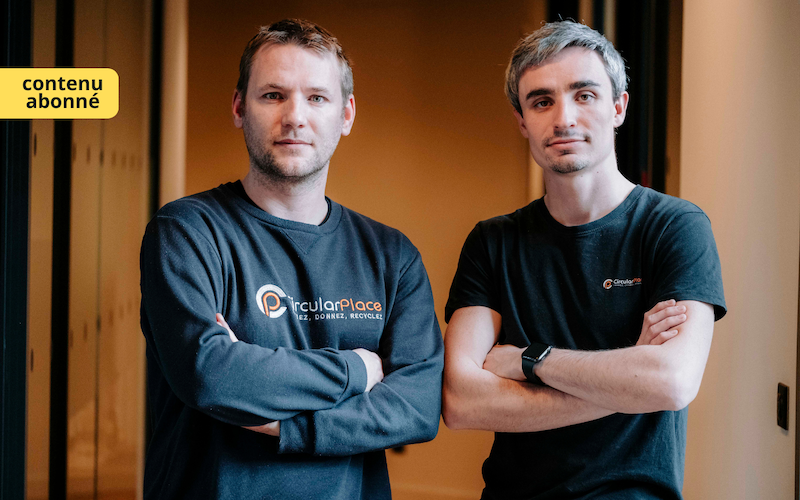
Fondée par Vincent Rigal et Maximum Scholz en 2021, CircularPlace propose une plateforme qui répond aux besoins particuliers de chaque entreprise en matière d’économie circulaire. L’objectif ? Les aider à mieux s’emparer des usages de la seconde vie. Comment ? En misant sur la traçabilité. Explications avec Vincent Rigal.

L’article CircularPlace booste l’économie circulaire des entreprises est apparu en premier sur TheGood.

🔲 ⭐

The Personal AI Greenfield

What forms of pAI—personal AI—are Apple, Mozilla, Google, Meta, Microsoft and the rest not doing?

Let’s look at those first two because they’re at the top of the news LIFO buffer.

Apple Intelligence (“coming in beta this fall*“), announced yesterday, will help you with writing and creating images while giving you less lame answers from Siri. (Which they should re-name. Siri is Apple’s Clippy.) It “can draw on larger server-based models, running on Apple silicon, to handle more complex requests for you while protecting your privacy.” The “larger models” will be white-labeled ChatGPT, plus Apple’s own small language models (SLMs).

Mozilla, which got $400+ million a year from Google (for search in the Firefox browser) starting in 2020, announce on June 3 that they will be Building open, private AI with the Mozilla Builders Accelerator. Jive:

This program is designed to empower independent AI and machine learning engineers with the resources and support they need to thrive. It aims to cultivate a more innovative AI ecosystem, and it’s one of Mozilla’s key initiatives to make AI meaningfully impactful — alongside efforts like Mozilla.ai, the Responsible AI Challenge and the Rise25 Awards.

The Mozilla Builders Accelerator’s inaugural theme is local AI, which involves running AI models and applications directly on personal devices like laptops, smartphones, or edge devices rather than depending on cloud-based services…

We chose Local AI as the theme for the Accelerator’s first cohort because it aligns with our core values of privacy, user empowerment, and open source innovation. This method offers several benefits including:

  • Privacy: Data stays on the local device, minimizing exposure to potential breaches and misuse.
  • Agency: Users have greater control over their AI tools and data.
  • Cost-effectiveness: Reduces reliance on expensive cloud infrastructure, lowering costs for developers and users.
  • Reliability: Local processing ensures continuous operation even without internet connectivity.

Looks to me like both of these are Big AI writ small. It’s “local,” not personal. It’s made to serve your needs with what BigAI offers through APIs. It is still essentially AIaaS (AI as a Service), rather than truly personal AI (pAI): personalized more than personal.

That’s also what I see when I read between the lines at Mozilla’s AI job openings. Take platform engineer. This person will (among other things), “assist in managing and orchestrating workloads across multiple cloud providers.” That’s fine. I’m sure true pAIs will do that too. But most of pAI will be more personal than that. It will deal with the mundanities of your everyday life. Not with coughing up answers that can only come from AIaaSes.

The problem with personalizing AI giant offerings is that they are large language models (LLM) trained on everything that can be crawled on the Internet, plus who knows what else. Not on your truly personal stuff. This is why “prompt engineering” worthy of the noun is ” not for anybody:

Prompt engineering is crucial for deploying LLMs but is poorly understood mathematically. We formalize LLM systems as a class of discrete stochastic dynamical systems to explore prompt engineering through the lens of control theory. We investigate the reachable set of output token sequences $R_y(\mathbf x_0)$ for which there exists a control input sequence $\mathbf u$ for each $\mathbf y \in R_y(\mathbf x_0)$ that steers the LLM to output $\mathbf y$ from initial state sequence $\mathbf x_0$. We offer analytic analysis on the limitations on the controllability of self-attention in terms of reachable set, where we prove an upper bound on the reachable set of outputs $R_y(\mathbf x_0)$ as a function of the singular values of the parameter matrices. We present complementary empirical analysis on the controllability of a panel of LLMs, including Falcon-7b, Llama-7b, and Falcon-40b. Our results demonstrate a lower bound on the reachable set of outputs $R_y(\mathbf x_0)$ w.r.t. initial state sequences $\mathbf x_0$ sampled from the Wikitext dataset. We find that the correct next Wikitext token following sequence $\mathbf x_0$ is reachable over 97% of the time with prompts of $k\leq 10$ tokens. We also establish that the top 75 most likely next tokens, as estimated by the LLM itself, are reachable at least 85% of the time with prompts of $k\leq 10$ tokens. Intriguingly, short prompt sequences can dramatically alter the likelihood of specific outputs, even making the least likely tokens become the most likely ones. This control-centric analysis of LLMs demonstrates the significant and poorly understood role of input sequences in steering output probabilities, offering a foundational perspective for enhancing language model system capabilities.

But all that stuff applies mostly when we’re prompting a big LLM system.

What about using AI in our own lives, where the data that matters most are in our calendars, contacts, financial and health records, our travels, our correspondence (email, chat, whatever)? And how about all the location data we might get from our cars, phone apps, and phone companies? These should be much easier for a pAI to gather, examine, and help us do useful things. Caring about much less data also means a pAI will be less likely to give wrong (hallucinated) answers.

Today the mental frame almost everybody uses for AI is the Big kind, ingesting everything they can get their crawlers on, and munching all of it in giant compute farms. Those systems are great for lots of stuff, but they still don’t deal with personal data listed in the last paragraph.

Not yet, anyway.

Look at it this way. For each of us, there are three data pools:

  1. The entire Net, which is what gets crawled by all the giant LLM operators, plus whatever else they can get their claws on.
  2. One’s personal life, some of which is digitized in useful form (contacts, calendar, mail, stuff in folders inside PCs and attached drives).
  3. Personal data that is in the hands of giants, but is rightfully ours. These include our driving record and driving practices (,recorded by our late model cars and snitched to insurance companies and others), our location data (kept and shared by car and phone carriers to the likes of Google and the feds), our TV viewing habits, (gathered by Google, Amazon, Roku, Apple, etc.).

The pAI greenfield is with the last two.

Tell us who is working on what there, preferably with open source, and not sitting on walled garden silicon.

[Later… ] Since readers told me I had small language models (SLMs) wrong in one of the paragraphs above, and I’m not sure I had them right, I rewrote them out of the piece. I invite readers to post comments to further correct and expand on the subject of pAIs and what they can do.

🔲 ☆

Personal vs. Personalized AI

There is a war going on. Humanity and nature are on one side and Big Tech is on the other. The two sides are not opposed. They are orthogonal. The human side is horizontal and the Big Tech side is vertical.*

The human side is personal, social, self-governed, heterarchical, open, and grounded in the physical world. Its model is nature, and the cooperative contexts in which competition, creation, and destruction happen in the natural world.

The Big Tech side is corporate, industrial, hierarchical, competitive, mechanistic, extractive, and closed, even though it produces many positive-sum products and services that are good for people and good for nature. It is also, being competitive and rewarding toward winner-take-most outcomes, dominated by giants.

This war has been fought over many other things in the past, especially in tech. But AI is the big one right now—and perhaps the biggest one of all time.

Over the long run, both sides will win, because we need the best of what both bring to the world’s big round table. In the past, this has happened in countless markets, countries, polities, societies, and other contexts. In tech it happened with the conflict between PCs and mainframes, between the open and public Internet and closed private networks, and between open operating systems and closed ones. None of those conflicts have final outcomes, but they have arrived at stable and cooperative states. They arrived at those states because everyone recognized that people can do more with their own tools than those big entities can do on theirs, or by using people as extracted resources.

This conflict is perhaps best represented by the ironies that have been at work within OpenAI and Sam Altman, its prior and current CEO. We can also see it with sparkling clarity in something amazing that Sam said near the close of his keynote at the first OpenAI Developer Conference, in November of last year:

Lets unpack that.

Individual empowerment means exactly what it says. Agency is the ability to take action or to choose what action to take (Cambridge Dictionary). Scale means growth toward ubiquity.

You have individual empowerment and agency when you ride your bike, drive your car, mow your lawn, or button your shirt. You also have it when you work on your laptop, phone, and other smart rectangles. Scale means your power and agency will grow to the max while the same will happen for nearly everyone else. Scale for you alone won’t cut it. When most of us have it, that’s scale.

Technologies extend us. They enlarge our capacities in the world. Intelligence is one of those capacities. So is memory. Your rectangles help a lot with both. That’s why those have already scaled to ubiquity, or close enough.

AI will do the same, but only if it’s personal. Not if it’s  just “personalized.”

As Jamie Smith made clear here a year ago, “your personal AI isn’t really personal.”

ChatGPT4 doesn’t know that yet. I can tell because I just asked:

Me:
What is “personal AI”?

ChatGPT4:
“Personal AI” refers to artificial intelligence systems that are designed to serve individual users through personalized interactions and services. These AI systems learn from the specific preferences, behaviors, and needs of their users to offer more tailored assistance, recommendations, or information. The goal of personal AI is to enhance user experience by adapting to unique personal profiles.

There are various applications of personal AI, including:

  1. Virtual Assistants: Like Siri, Google Assistant, and others, these AIs help with daily tasks such as scheduling, reminders, searching information, and controlling smart home devices, all customized to the user’s habits and preferences.
  2. Recommendation Systems: Used in streaming services like Netflix or shopping platforms like Amazon, these AI systems analyze your past behavior to recommend movies, shows, or products you might like.
  3. Healthcare: Personal AI can track individual health metrics and provide personalized advice, monitor conditions, or even alert medical professionals if needed.
  4. Learning and Development: In education, personal AI can adapt learning materials to the pace and learning style of the student, offering a customized educational experience.
  5. Gaming: AI in gaming can adapt to provide a challenge tailored to the player’s skill level or alter the game narrative based on choices made by the player.

The development of personal AI focuses on enhancing user engagement by creating more intuitive and responsive interactions that feel uniquely suited to each individual.

For a second opinion, I asked Google’s Gemini the same question.

Me:
What is “personal AI”?

Gemini:
Personal AI refers to artificial intelligence designed to assist and interact with a specific individual. It’s essentially your own AI companion that learns about you and tailors its services to your needs. Here are some key aspects of personal AI:

  1. Personalization: Unlike general-purpose AI assistants, personal AI focuses on you. It learns from your interactions, preferences, and habits to become more helpful over time.
  2. Focus on Memory and Knowledge: Some personal AI systems aim to become an extension of your mind. They can store your memories, knowledge, and experiences, making them readily accessible and even usable to help with tasks like writing or communication.
  3. Varied Applications: Personal AI can have a wide range of applications. Imagine an AI that helps you:
  4. Organize your life: Manage schedules, appointments, and reminders.
  5. Boost productivity: Assist with tasks, research, and communication.
  6. Enhance creativity: Help you brainstorm ideas or generate creative content.
  7. Improve learning: Personalize learning experiences and provide targeted information.

Privacy Concerns: Storing personal data on an AI raises concerns about privacy and security.

Overall, personal AI holds promise for a future where technology seamlessly integrates with our lives, offering personalized assistance and support.

To both companies, personal AI is a personalized service—from them. It’s not something you own and control. It’s not about individual empowerment and agency. It doesn’t extend you. It’s hired prosthesis: an extension of them rather than of you.

Let’s name the category: AIaaS—AI as a Service.

But hats off. OpenAI and Gemini do amazing jobs. So do lots of other AI services by wannabe giants. I use AI every day to improve what I write, to generate and fix images, to answer questions that old-fashioned search engines can’t answer or suck at. I even pay extra for some of it (such as ChatGPT4 and Adobe’s Creative Suite). And it seems they all get better, all the time, at everything. Won’t personalization be good enough, eventually?

No. Because they aren’t you. They also aren’t yours, so they can’t extend you. They can seem to. But they don’t. They also don’t have access to most of your private life. Nor should they.

But your private life could use some AI help. For example—

  • Schedules, including on your calendars, past and future
  • Health data, including all your medical reports, prescriptions, appointments, insurance information, past and present providers, plus what your watch, phone, and other devices record about you
  • Financial records, including bills, receipts, taxes, and anything called an account that involves money
  • Travel, including all the movements your phone (and phone company), watch, and car record about where you go and where you’ve been
  • Work—past and present, including whatever HR systems know or knew about you
  • Contacts—all the people, businesses, and other entities you know
  • Business relationships, with brokers, retailers, service providers, whatever
  • Subscriptions, including all those “just $1 for the first four weeks” offers you’ve accepted, plus other forms of screwage that are stock-in-trade for companies selling subscription systems to businesses.
  • Property, including all the stuff on your shelves, floors, closets, garages, and storage spaces—plus your stocks and real estate.

It’s not easy to visualize what a personal AI might do for those, but let’s try. Here’s how Microsoft’s Copilot (or whatever it’s called this week) did it for me before I got rid of all its misspellings and added my own hunks of text:

All that stuff is data. But most of it is scattered between apps and clouds belonging to Apple, Google, Microsoft, Amazon, Meta, phone companies, cable companies, car makers, health care systems, insurance companies, banks, credit card companies, retailers, and other systems that are not yours. And most of them also think that data is theirs and not yours.

To collect and manage all that stuff, you need tools that don’t yet exist: tools that are yours and not theirs. We could hardly begin to imagine those tools before AI came along. Now we can.

For example, you should be able to take a picture of the books on your shelves and have a complete record of what those books are and where you got them. You’ll know where you got them because you have a complete history of what you bought, where and from whom. You should be able to point your camera in your closets, at the rugs on your floors, at your furniture, at the VIN number of your car that’s visible under your windshield, at your appliances and plumbing fixtures, and have your AI tell you what those are, or at least make far more educated guesses than you can make on your own.

Yes, your AI should be able to tap into external databases and AI systems for help, but without divulging identity information or other private data. Those services should be dependent variables, not independent ones. For full individual empowerment and agency, you need to be independent. So does everyone else with personal AI.

Now imagine having a scanner that you can feed every bill, every receipt, every subscription renewal notice, and have AI software that tells you what’s what with each of them, and sorts records into the places they belong.

Ever notice that the Amazon line items on your credit card bill not only aren’t itemized, but don’t match Amazon’s online record of what you ordered? Your personal AI can sort that out. It can help say which are business and personal expenses, which are suspicious in some way, what doesn’t add up, and much more.

Your personal AI should be able to answer questions like, How many times have I had lunch at this place? Who was I with? When was it we drove to see so-and-so in Wisconsin? What route did we take? What was that one car we rented that we actually liked?

Way back in 1995, when our family first got on the Internet over dial-up, using the first graphical browsers on our PC, and e-commerce began to take off with Amazon, eBay, and other online retailers, my wife asked an essential question: Why can’t I have my own shopping cart that I take from site to site?

Twenty-nine years later, we still don’t have the answer, because every retailer wants you to use its own. And we’re stuck in that system. It’s the same system that has us separately consenting to what sites ironically call “your privacy choices.” And aren’t.

There are countless nice things we can’t have in the digital world today because we aren’t people there. We are accounts. And we are reduced to accounts by every entity that requires a login and password.

This system is a legacy of client-server, a euphemism for slave-master. We might also call it calf-cow, because that’s how we relate to businesses with which we have accounts. And that model is leveraged on the Web like this:

We go to sites for the milk of content and free cookies, whether we want them or not. We are also just “users.”

In the client-server world, servers get scale. Clients have no more scale than what each account—each cow—separately allows. Sure, users get lots of benefits, but scale across many cows is not one of them. And no, “login with Google” and “login with Facebook” are just passes that let calves of ruling cows wander into vassal pastures.

For individual empowerment and scale to happen, we need to be self-sovereign and independent. Personal AI can give that to us. It can do that by solving problems such as the ones listed above, and by working as agents that represent us as human beings—rather than mere users—when we engage with Big Tech’s cows.

This will be a fight at first, because the cows think they run all of nature and not just their own farms. And $trillions are being invested in the same old cattle industry, with AI painted all over the new barns. Comparatively speaking, close to nothing is going toward giving independent and self-sovereign individuals the kind of power and scale Sam Altman says he wants to give us but can’t because he’s on the big cow side of this thing.

So where do we start?

First, with open source code and open standards. We have some already. Llama 3, from Meta AI, is “your own intelligent assistant,” and positions Meta as a more open and user-friendly cow than OpenAI. Meta is still on the top-down Big Tech side of the war we’re in. But hell, we can use what they’ve got. So let’s play with it.

Here on the ground there are all these (with quotage lifted from their sites or reviews such as this one)—

  • MindsDB: “an open-source AutoML framework”
  • Alt.ai: “It’s an A.I. which aims to digitize users’ intentions and place it on the cloud to let our clones deal with all digital operations.”
  • Keras: “a multi-backend deep learning framework, with support for JAX, TensorFlow, and PyTorch”
  • PyTorch: “Python package that provides two high-level features: Tensor computation (like NumPy) with strong GPU acceleration, and Deep neural networks built on a tape-based autograd system
  • Tensor Flow: “open-source framework for machine learning”
  • CoreNet: a deep neural network toolkit for small and large-scale models, from Apple
  • Haystack: an “open source Python framework by deepset for building custom apps with large language models (LLMs).”
  • Image Super-Resolution (ISR): “(an) open source tool employs a machine learning model that you can train to guess at the details in a low-resolution image:
  • Blender: “A rich interface and numerous plugins make it possible to create complex motion graphics or cinematic vistas”
  • DeepFaceLab: “open source deepfake technology that runs on Python”
  • tflearn: “an advanced deep learning library”
  • PYTensor: “a Python library that allows you to define, optimize/rewrite, and evaluate mathematical expressions involving multi-dimensional arrays efficiently.” (Was Theano)
  • LM Studio: “Discover, download, and run local LLMs”
  • HuggingFace Transformers: “a popular open-source library for Natural Language Processing (NLP) tasks”
  • Fast.ai: “a library for working with deep learning tasks”
  • OpenCV: “a popular Computer Vision and Image Processing library developed by Intel”
  • Detectron2: “a next-generation library that provides advanced detection and segmentation algorithm” and “a PyTorch-based modular object detection library”
  • Ivy.ai: “an open-source deep learning library in Python focusing on research and development”
  • OpenAssistant: “a project aimed at giving everyone access to a great chat-based large language model”
  • PaddleNLP: “a popular open source NLP library that you can use to glean search sentiment and flag important entities”
  • Delphi.AI: “Clone yourself. Build the digital version of you to scale your expertise and availability, infinitely.”
  • Fauxpilot: “This is an attempt to build a locally hosted alternative to GitHub Copilot. It uses the SalesForce CodeGen models inside NVIDIA’s Triton Inference Server with the FasterTransformer backend.”
  • Ray: “An open source framework to build and scale your ML and Python applications easily”
  • Solid: “Solid is a specification that lets individuals and groups store their data securely in decentralized data stores called Pods. Pods are like secure web servers for data. When data is stored in a Pod, its owners control which people and applications can access it.”
  • Sagen.ai: “Your very own AI Personal Assistant to manage your digital life.”
  • YOLOv7: “is one of the fastest and most accurate open source object detection tools. Just provide the tool with a collection of images full of objects and see what happens next.”

—and lots of others that readers can tell me about. Do that and I will add links later. This is a work in progress.

Below all of those we still need something Linux-like that will become the open base on which lots of other stuff runs. The closest I’ve seen so far is pAI-OS, by Kwaai.ai, a nonprofit I now serve as Chief Intention Officer. I got recruited by Reza Rassool, Kwaai’s founder and chair, because he believes personal AI is required to make The Intention Economy finally happen. So that was a hard offer to refuse. Kwaai also has a large, growing, and active community, which I believe is necessary, cool, and very encouraging.

As with most (maybe all) of the projects listed above, Kwaai is a grass-roots effort by human beings on the natural, human, and horizontal side of a battle with giants who would rather give us personalized AI than have us meet them in a middle to which we will bring personal AI powers of our own. In the long run, we will meet in that middle, because personal AI will be better for everyone than personalized AI alone.

Watch us prove it. Better yet, join the effort.


*I am indebted to Lavonne Reimer for introducing and co-thinking the horizontal vs. vertical frame, and look forward eagerly to her own writings and lecturings on the topic.

🔲 ☆

Ces géants qui dominent le commerce agricole mondial

En quelques décennies, une toute petite poignée d’acteurs a pris le contrôle du commerce mondial agricole, des terres à la finance. C’est le constat dressé par la Conférence des Nations unies sur le commerce et le développement. Peut-on laisser à quelques groupes le destin de la sécurité alimentaire mondiale?

🔲 ☆

Why selling personal data is a bad idea

Prompt: “a field of many different kinds of people being harvested by machines and turned into bales of fertilizer.” Via Microsoft CoPilot | Designer.

This post is for the benefit of anyone wondering about, researching, or going into business on the proposition that selling one’s own personal data is a good idea. Here are some of my learnings from having studied this proposition myself for the last twenty years or more.

  1. The business does exist. See eleven companies in Markets for personal data listed among many other VRM-ish businesses on the ProjectVRM wiki.
  2. The business category harvesting the most personal data is adtech (aka ad tech and “programmatic”) advertising, which is the surveillance-based side of the advertising business. It is at the heart of what Shoshana Zuboff calls surveillance capitalism, and is now most of what advertising has become online. It’s roughly a trillion-dollar business. It is also nothing like advertising of the Mad Men kind. (Credit where due: old-fashioned advertising, aimed at whole populations, gave us nearly all the brand names known to the world). As I put it in Separating Advertising’s Wheat and Chaff, Madison Avenue fell asleep, direct response marketing ate its brain, and it woke up as an alien replica of itself.
  3. Adtech pays nothing to people for their data or data about them. Not personally. Google may pay carriers for traffic data harvested from phones, and corporate customers of auctioned personal data may pay publishers for moments in which ads can be placed in front of tracked individuals’ ears or eyeballs. Still, none of that money has ever gone to individuals for any reason, including compensation for the insults and inconveniences the system requires. So there is little if any existing infrastructure on which paying people for personal data can be scaffolded up. Nor are there any policy motivations. In fact,
  4. Regulations have done nothing to slow down the juggernaut of growth in the adtech industry. For Google, Facebook, and other adtech giants, paying huge fines for violations (of the GDPR, the CCPA, the DMA, or whatever) is just the cost of doing business. The GDPR compliance services business is also in the multi-$billion range, and growing fast. In fact,
  5. Regulations have made the experience of using the Web worse for everyone. Thank the GDPR for all the consent notices subtracting value from every website you visit while adding cognitive overhead and other costs to site visitors and operators. In nearly every case, these notices are ways for site operators to obey the letter of the GDPR while violating its spirit. And, although all these agreements are contracts, you have no record of what you’ve agreed to. So they are worse than worthless.
  6. Tracking people without their clear and conscious invitation or a court order is wrong on its face. Period. Full stop. That tracking is The Way Things Are Done online does not make it right, any more than driving drunk or smoking in crowded elevators was just fine in the 1950s. When the Digital Age matures, decades from now, we will look back on our current time as one thick with extreme moral compromises that were finally corrected after the downsides became clear and more ethically sound technologies and economies came along. One of those corrections will be increasing personal agency rather than just corporate capacities. In fact,
  7. Increasing personal independence and agency will be good for markets, because free customers are more valuable than captive ones. Having ways to gather, keep, and make use of personal data is an essential first step toward that goal. We have made very little progress in that direction so far. (Yes, there are lots of good projects listed here, but there we still a long way to go.)
  8. Businesses being “user-centric” will do nothing to increase customers’ value to themselves and the marketplace. First, as long as we remain mere “users” of others’ systems, we will be in a subordinate and dependent role. While there are lots of things we can do in that role, we will be able to do far more if we are free and independent agents. Because of that,
  9. We need technologies that create and increase personal independence and agency. Personal data stores (aka warehouses, vaults, clouds, life management platforms, lockers, and pods) are one step toward doing that. Many have been around for a long time: ProjectVRM currently lists thirty-three under the Personal Data Stores heading. Some have been there a long time. The problem with all of them is that they are still too focused on what people do as social beings in the Web 2.0 world, rather than on what they can do for themselves, both to become more well-adjusted human beings and more valuable customers in the marketplace. For that,
  10. It will help to have independent personal AIs. These are AI systems that work for us, exclusively. None exist yet. When they do, they  will help us manage the personal data that fully matters:
    • Contacts—records and relationships
    • Calendars—where we’ve been, what we’ve done, with whom, where, and when
    • Health records and relationships with providers, going back all the way
    • Financial records and relationships, including past and present obligations
    • Property we have and where it is, including all the small stuff
    • Shopping—what we’ve bought, plan to buy, or might be thinking about,
    • Subscriptions—what we’re paying for, when they end or renew, what kind of deal we’re locked into, and what better ones might be out there.
    • Travel—Where we’ve been, what we’ve done, with whom, and when

Personal AIs are today where personal computers were fifty years ago. Nearly all the AI news today is about modern mainframe businesses: giants with massive data centers churning away on ingested data of all kinds. But some of these models are open sourced and can be made available to any of us for our own purposes, such as dealing with the abundance of data in our own lives that is mostly out of control. Some of it has never been digitized. With AI help it could be.

I’m in a time crunch right now. So, if you’re with me this far, read We can do better than selling our data, which I wrote in 2018 and remains as valid as ever. Or dig The Intention Economy: When Customers Take Charge (Harvard Business Review Press, 2012), which Tim Berners Lee says inspired Solid. I’m thinking about following it up. If you’re interested in seeing that happen, let me know.

🔲 ☆

Comment déterminer les bonnes pratiques d’IA en entreprise ?

L’intelligence artificielle est devenue un catalyseur de la transformation numérique des industries. La technologie fait partie du Peak of Inflated Expectations présentant les technologies émergentes en 2023. Elle devrait impacter les entreprises, offrant une synergie entre main-d’œuvre et machine. Toutefois, à mesure que les technologies d’IA évoluent, les entreprises doivent engager leur responsabilité dans l’élaboration de bonnes pratiques.

Alors que les régulateurs tentent de s’imposer dans ce nouveau paradigme, les entreprises sont en bonne posture pour proposer des outils garantissant sécurité, gouvernance, contrôles et mesures responsables pour l’IA. Voici les raisons pour lesquelles il est crucial pour une organisation de développer des bonnes pratiques pour l’usage de l’IA et que quelques conseils pour renforcer les compétences dans ce domaine.

Evoluer dans le paysage réglementaire

Il faudra des années pour que régulateurs et autorités législatives élaborent un corpus complet de réglementations et de législations concernant l’IA qui concilient innovation, éthique et sécurité. Qui plus est, il s’agit d’un processus continu et donc en constante évolution. Le manque de réglementations strictes peut de prime abord sembler lucratif car il laisse de place à l’innovation. Toutefois, une entreprise avant-gardiste se rendra compte qu’il existe des mises en œuvre de l’IA contraires à l’éthique et potentiellement nuisibles.

Une longueur d’avance en termes de business

Les entreprises qui proposent un guide de bonnes pratiques bénéficient d’un avantage concurrentiel. Lorsqu’il s’agit d’IA, les clients exigent que les solutions soient à la fois dignes de confiance, transparentes, responsables et éthiques. Lorsqu’une entreprise définit des bonnes pratiques, elle crée une émulation auprès des autres entreprises.
Aussi, l’adoption anticipée de ces pratiques peut également protéger les entreprises contre d’éventuelles responsabilités une fois les réglementations et législations mises en place.

Faire preuve d’un leadership éthique

L’IA éthique ne doit pas être considérée comme une tendance. Il s’agit d’un engagement à utiliser cette technologie de sorte à ce qu’elle bénéficie à la société et faire regagner la confiance des utilisateurs. Pour s’inscrire dans un leadership éthique, les entreprises doivent faire preuve de transparence dans leurs pratiques, leurs sources, l’utilisation des données, les algorithmes et les processus de prise de décision ainsi que sur la reproductibilité et l’audibilité. En outre, elles doivent s’appliquer à créer une culture de la responsabilité en élaborant des guidelines et en limitant les biais de leurs systèmes d’IA afin que les décisions prises soient justes et non discriminatoires. Enfin, elles doivent donner la priorité à la confidentialité et à la sécurité des données afin de garantir que les applications d’IA aient autant d’accès que nécessaire aux données des utilisateurs. Cela ne peut se faire que par le biais d’audits réguliers des systèmes d’IA et de la rectification immédiate des problèmes éthiques potentiels. Ces audits doivent être réalisés par des tiers indépendants afin de garantir l’impartialité.

Développer les compétences en IA en entreprise

Les entreprises doivent prioriser le développement des compétences en IA au sein de l’organisation. À l’heure où l’IA remodèle le paysage commercial et social, il est essentiel que les employés acquièrent les connaissances et les capacités nécessaires pour exploiter efficacement son potentiel.

Pour ce faire :

  • Les entreprises doivent identifier les référents IA en interne chargés de mener des projets d’IA, de comprendre les subtilités de ces technologies et d’encadrer leurs collègues, mais aussi traduire les connaissances internes et convertir les connaissances en données. Lorsqu’une entreprise favorise l’acquisition d’une expertise en interne, elle réduit sa dépendance vis-à-vis des consultants externes, ce qui permet de réduire les coûts et de mieux intégrer la technologie dans ses opérations. La formation des référents en IA, ainsi que la mise en place de pratiques responsible by design contribue à créer une culture d’apprentissage continue. Ceci est d’autant plus vrai dans le domaine de l’IA, un domaine en constante évolution.
  • Se tourner vers les établissements d’enseignement pour former une nouvelle génération d’employés. Aujourd’hui, plusieurs établissements d’enseignement supérieur tiennent compte de la demande croissante d’expertise en IA et proposent une formation dédiée. En collaborant avec des universités à travers le monde et en les aidant à concevoir des programmes de formation à l’IA conformes aux exigences du secteur, les entreprises peuvent recruter des talents dans ce domaine.

L’ère de l’IA a créé une vague d’opportunités et de défis pour les entreprises. Alors que les réglementations régissant l’IA sont encore en cours d’élaboration, les entreprises doivent se montrer proactives dans l’élaboration des bonnes pratiques et des approches responsible by design. L’objectif est de garantir que les technologies de l’IA soient utilisées à la hauteur de leur potentiel, de manière éthique et responsable.

tribune dna infosys

🔲 ☆

If Your Privacy Is in the Hands of Others Alone, You Don’t Have Any

Prompt: “A panopticon in which thousands of companies are spying on one woman alone in the center with nothing around her.” Via Microsoft Bing Image Creator

In her latest Ars Technica story, Ashley Belanger reports that Patreon, the widely used and much-trusted monetization platform for creative folk, opposes the minimal personal privacy protections provided by a law you probably haven’t heard of until now: the Video Privacy Protection Act, or VPPA. Patreon, she writes, wants a judge to declare that law (which dates from the videotape rental age) unconstitutional because it inconveniences Patreon’s ability to share the personal data of its users with other parties.† Naturally, the EFF, the Center for Democracy & Technology, the ACLU of Northern California, and the ACLU itself all stand opposed to Patreon on this and have filed an amicus brief explaining why.

But I’m not here to talk about that. I’m here to bring up the inconvenient fact that Ars Technica is also in the surveillance business. A PageXray of Ashley’s story finds this—

  • 360 adserver requests
  • 259 tracking requests
  • 131 other requests

—which it visualizes with this:

And that’s just one small part of it.

But will Ashley, or any reporter, grab the third rail of their employer’s participation in the tracking-based advertising business? Or visit that business’s responsibility for what was already the biggest boycott in human history way back in 2015? The odds are against it. I’ve challenged many reporters to grab that third rail, just like I’m challenging Ashley here. In every case, nothing happened.

I never challenged Farhad Manjoo, but he did come through exposing The New York Times (his employer’s) own participation in the privacy-opposed tracking-based adtech business, back in 2019. Here’s a PageXray of tracking via that piece today:

Better, but not ideal.

Five years ago this month, I wrote a column about privacy in Linux Journal with the same title as this post. Here it is again, with just a few tiny edits. Amazing how little things have changed since then—and how much worse they have become. But I do see hope. Read on.


If you think regulations are going to protect your privacy, you’re wrong. In fact, they can make things worse, especially if they start with the assumption that your privacy is provided only by other parties, most of whom are incentivized to violate it.

Exhibit A for how much worse things can get is the EU’s GDPR (General Data Protection Regulation). As soon as the GDPR went into full effect in May 2018, damn near every corporate entity on the Web put up a “cookie notice” requiring acceptance of terms and privacy policies that allow them to continue violating your privacy by harvesting, sharing, auctioning off and otherwise using your data, and data about you.

For websites and services in that harvesting business (a population that rounds to the whole commercial web), these notices provide a one-click way to adhere to the letter of the GDPR while violating its spirit.

There’s also big business in the friction that it produces. To see how big, look up GDPR+compliance on Google. You’ll get 232 million results (give or take a few dozen million).

None of those results are for you, even though you are who the GDPR is supposed to protect. See, to the GDPR, you are a mere “data subject” and not an independent and fully functional participant in the technical, social, and economic ecosystem the Internet supports by design. All privacy protections around your data are the burden of other parties.

Or at least that’s the interpretation that nearly every lawmaker, regulatory bureaucrat, lawyer, and service provider goes by. (One exception is Elizabeth Renieris @hackylawyer. Her collection of postings is required reading on the GDPR and much else.) The same goes for those selling GDPR compliance services, comprising most of those 190 million GDPR+compliance search results.

The clients of those services include nearly every website and service on Earth that harvests personal data. These entities have no economic incentive to stop harvesting, sharing, and selling personal data the usual ways, beyond fear that the GDPR might actually be enforced, which so far (with few exceptions), it hasn’t been. (See Without enforcement, the GDPR is a fail.)

Worse, the tools for “managing” your exposure to data harvesters are provided entirely by the websites you visit and the services you engage. The “choices” they provide (if they provide any at all) are between 1) acquiescence to them doing what they please and 2) a maze of menus full of checkboxes and toggle switches “controlling” your exposure to unknown threats from parties you’ve never heard of, with no way to record your choices or monitor effects.

So let’s explore just one site’s presentation, and then get down to what it means and why it matters.

Our example is https://www.mirror.co.uk. If you haven’t clicked on that site already, you’ll see a cookie notice that says,

We use cookies to help our site work, to understand how it is used, and to tailor the adverts presented on our site. By clicking “Accept” below, you agree to us doing so. You can read more in our cookie notice. Or, if you do not agree, you can click Manage below to access other choices.

They don’t mention that “tailor the adverts” really means something like this:

We open your browser to infestation by tracking beacons from countless parties in the online advertising business, plus who-knows-what-else that might be working with those parties (there is no way to tell, and if there was we wouldn’t provide it), so those parties and their “partners” can use those beacons to follow you like a marked animal everywhere you go and report your activities back to a vast marketplace where personal data about you is shared, bought and sold, much of it in real time, supposedly so your eyeballs can be hit with “relevant” or “interest-based” advertising as you travel from site to site and service to service. While we are sure there are bad collateral effects (fraud and malware, for example), we don’t care about those because it’s our business to get paid just for clicks or “impressions,” whether you’re impressed or not—and the odds that you won’t be impressed average to certain.

Okay, so now click on the “Manage” button.

Up will pop a rectangle where it says “Here you can control cookies, including those for advertising, using the buttons below. Even if you turn off the advertising-related cookies, you will still see adverts on our site, because they help us to fund it. However, those adverts will simply be less relevant to you. You can learn more about cookies in our Cookie Notice on the site.”

Under that text, in the left column, are six “Purposes of data collection”, all defaulted with little check marks to ON (though only five of them show, giving the impression that there are only those five). The right column is called “Our partners”, and it shows the first five of what turn out to be 259 companies, nearly all of which are not brands known to the world or to anybody outside the business (and probably not known widely within the business as well). All are marked ON by that little check mark. Here’s that list, just through the letter A:

  • 1020, Inc. dba Placecast and Ericsson Emodo
  • 1plusX AG
  • 2KDirect, Inc. (dba iPromote)
  • 33Across
  • 7Hops.com Inc. (ZergNet)
  • A Million Ads Limited
  • A.Mob
  • Accorp Sp. z o.o.
  • Active Agent AG
  • ad6media
  • ADARA MEDIA UNLIMITED
  • AdClear GmbH
  • Adello Group AG
  • Adelphic LLC
  • Adform A/S
  • Adikteev
  • ADITION technologies AG
  • Adkernel LLC
  • Adloox SA
  • ADMAN – Phaistos Networks, S.A.
  • ADman Interactive SL
  • AdMaxim Inc.
  • Admedo Ltd
  • admetrics GmbH
  • Admotion SRL
  • Adobe Advertising Cloud
  • AdRoll Inc
  • adrule mobile GmbH
  • AdSpirit GmbH
  • adsquare GmbH
  • Adssets AB
  • AdTheorent, Inc
  • AdTiming Technology Company Limited
  • ADUX
  • advanced store GmbH
  • ADventori SAS
  • Adverline
  • ADYOULIKE SA
  • Aerserv LLC
  • affilinet
  • Amobee, Inc.
  • AntVoice
  • Apester Ltd
  • AppNexus Inc.
  • ARMIS SAS
  • Audiens S.r.l.
  • Avid Media Ltd
  • Avocet Systems Limited

If you bother to “manage” any of this, what record do you have of it—or of all the other collections of third parties who you’ve agreed to follow you around? Remember, there are a different collection of these at every website with third parties that track you, and different UIs, each provided by other third parties.

It might be easier to discover and manage parasites in your belly than cookies in your browser.

Think I exaggerate? The long list of cookies in just one of my browsers (which I had to dig deep to find) starts with this list:

After several hundred others, my cookie  list ends with:

I know what zoom.us is. The rest are a mystery to me.

To look at just that first one, 1rx.io, I have to dig way down in the basement of the preferences directory (in Chrome it’s chrome://settings/cookies/detail?site=1rx.io), where I find that its locally stored data is this:

_rxuuid

Name
_rxuuid
Content
%7B%22rx_uuid%22%3A%22RX-2b58f1b1-96a4-4e1d-9de8-3cb1ca4175b0%22%2C%22nxtrdr%22%3Afalse%7D
Domain
.1rx.io
Path
/
Send for
Any kind of connection
Accessible to script
No (HttpOnly)
Created
Wednesday, December 12, 2018 at 4:48:53 AM
Expires
Thursday, December 12, 2019 at 4:48:53 AM

I’m a somewhat technical guy, and at least half of that stuff means nothing to me.

As for “managing” those,  my only choice on that page is to “Remove All”. Does that mean Remove everything on that page alone or Remove all cookies everywhere? And how can I remember what I’ve had removed?

Obviously, there is no way for anybody to “manage” this, in any meaningful sense of the word.

We also can’t fix it on the sites and services side, no matter how much those sites and services care (which most don’t) about the “customer journey”, the “customer experience” or any of the other bullshit they’re buying from marketers this week.

Even within the CRM (customer relationship management) world, the B2B customers of CRM companies use one cloud and one set of tools to create as many different “experiences” for users and customers as there are companies deploying those tools to manage customer relationships from their side.  There are no corresponding tools on our side. (Though there is work going on. See here.)

So the digital world remains one where we have no common or standard way to scale our privacy and data usage tools, choices, or experiences across all sites and services. And that’s what we’ll need if we want real privacy online.

The simple place where we need to start is this: privacy is personal, meaning something we create for ourselves (which in the natural world we do with clothing and shelter, both of which lack equivalents in the digital world).

And we need to be clear that privacy is not a grace of privacy policies and terms of service that differ with every company and over which none of us have true control—especially when there is an entire industry devoted to making those companies untrustworthy, even if they are in full compliance with privacy laws.

Devon Loffreto (who coined the term self-sovereign identity and whose good work we’ll be visiting in an upcoming issue of Linux Journal) puts the issue in simple geek terms: we need root authority over our lives. Hashtag: #OwnRoot.

It is only by owning root that we can crank up agency on the individual’s side. We have a perfect base for that in the standards and protocols that gave us the Internet, the Web, email, and too little else. And we need it here too. Soon.

We (a few colleagues and I) created Customer Commons as a place for terms that individuals can proffer as first parties, just by pointing at them, much as licenses at Creative Commons can be pointed at. Sites and services can agree to those terms, and both can keep records and follow audit trails.

And there are some good signs that this will happen. For example, the IEEE approached Customer Commons last year with the suggestion that we stand up a working group for machine-readable personal privacy terms. It’s called P7012. If you’d like to join, please do.

Unless we #OwnRoot for our own lives online, privacy will remain an empty promise by a legion of violators.

One more thing. We can put the GDPR to our use if we like. That’s because Article 4 of the GDPR defines a data controller as “the natural or legal person, public authority, agency or other body which, alone or jointly with others, determines the purposes and means of the processing of personal data…” This means each of us can be our own data controller. Most lawyers dealing with the GDPR don’t agree with that. They think the individual data subject will always need a fiduciary or an intermediary of some kind: an agent of the individual, but not an individual with agency. Yet the simple fact is that we should have root authority over our lives online, and that means we should have some degree of control over our data exposures, and how our data, and data about us, is used—much as we do over how we control or moderate our privacy in the physical world. More about all that in upcoming posts.

The original version of this post was published on the Private Internet Access blog. Private Internet Access and Linux Journal at the time were both holdings of London Trust Media.

Also, check out the Privacy Manifesto at the ProjectVRM wiki. I maintain it and welcome bug fixes.

† This is an example of what Cory Doctorow calls “enshittification” and Wikipedia (at that link) more politely calls “platform decay.” It’s a big trade-away of goodwill by Patreon. Says to me they must be making an enshitload of money in the adtech fecosystem.

🔲 ☆

How is the world’s biggest boycott doing?

ad blocking

Eight years ago, I called ad blocking The Biggest Boycott in World History, because hundreds of millions of people were blocking ads online. (The headline came from my wife, by the way.) Then, a few days ago, Cory Doctorow kindly pointed to that post in one of his typically trenchant Pluralistic newsletters.

So I thought I’d check to see how the boycott is doing.

It’s hard to find original sources of hard numbers on ad blocking. Instead, there are lots of what I’ll call claims. But some of those claims do cite or link to sources of some kind. Here are four:

  1. Brian Dean‘s Backlinko sources Hootsuite, saying 42.7% of Internet users employ ad blockers. Hootsuite, however, wants me to fill out a form that I am sure will get me spammed. So I’m passing on that. Meanwhile there are other interesting stats cited. Growson Edwards on Cipio.ai surfaces a bunch of Hootsuite graphics with interesting data.
  2. Statista last January said “the ad blocking user penetration rate in the United States stood at approximately 26 percent in 2020, indicating that roughly 73 million internet users had installed some form of ad blocking software, plugin, or browser on their web-enabled devices that year. While awareness of these services lies at almost 90 percent, the number of internet users actively leveraging the technology has stagnated in recent years following visible changes in online user behavior. The switch from desktop to mobile has arguably had one of the most significant impacts on ad block usage: As internet users increasingly browse the web via mobile devices, desktop ad block usage rates in the U.S. and many other parts of the world are dropping, albeit at varying speeds. While mobile ad blocking adoption is still at a nascent stage in the U.S., the global number of mobile ad blocking browser users is rapidly increasing.” On another page, Statista says marketers “can conquer ad blocking by offering personalized advertising.” Anybody want that? Give me a show of hands. Thought so.
  3. Blockthrough, an advertising company, offers a 2022 adblock report that requires filling out a form. So I passed on that one too, but can report that its “key insights” are these: “With 290M monthly active users globally, adblocking on desktop has climbed back close to its all-time-high from 2018,” and “The average adblock rate across geos and verticals is 21%, as measured across >10B pageviews on 9,453 websites.”
  4. Surfshark has some cool maps showing which countries hate ads most and least, based on searches for ad-blocking software. (France was at the top.)

Perhaps more interesting than any of those stats (all of which are unsurprising) is using AI to generate graphics for a post such as this one. At first, I wanted the system (Bing Creator or whatever it’s called this week) to show two separate populations: one living blissfully in a land without advertising, and one with advertising everywhere. That was a fail. I couldn’t get it not to show advertising on both sides. Then I tried to get it to depict the blocking of ads, for example with a wall. That failed too, because advertising always appeared on the wall. Finally, I got the image above with a prompt asking for people who were happy to have advertising inside a giant bottle. Isn’t it crazy how fast the miraculous becomes annoying?


❌