Vue lecture

Il y a de nouveaux articles disponibles, cliquez pour rafraîchir la page.
🔲 ☆

Personal vs. Personalized AI

There is a war going on. Humanity and nature are on one side and Big Tech is on the other. The two sides are not opposed. They are orthogonal. The human side is horizontal and the Big Tech side is vertical.*

The human side is personal, social, self-governed, heterarchical, open, and grounded in the physical world. Its model is nature, and the cooperative contexts in which competition, creation, and destruction happen in the natural world.

The Big Tech side is corporate, industrial, hierarchical, competitive, mechanistic, extractive, and closed, even though it produces many positive-sum products and services that are good for people and good for nature. It is also, being competitive and rewarding toward winner-take-most outcomes, dominated by giants.

This war has been fought over many other things in the past, especially in tech. But AI is the big one right now—and perhaps the biggest one of all time.

Over the long run, both sides will win, because we need the best of what both bring to the world’s big round table. In the past, this has happened in countless markets, countries, polities, societies, and other contexts. In tech it happened with the conflict between PCs and mainframes, between the open and public Internet and closed private networks, and between open operating systems and closed ones. None of those conflicts have final outcomes, but they have arrived at stable and cooperative states. They arrived at those states because everyone recognized that people can do more with their own tools than those big entities can do on theirs, or by using people as extracted resources.

This conflict is perhaps best represented by the ironies that have been at work within OpenAI and Sam Altman, its prior and current CEO. We can also see it with sparkling clarity in something amazing that Sam said near the close of his keynote at the first OpenAI Developer Conference, in November of last year:

Lets unpack that.

Individual empowerment means exactly what it says. Agency is the ability to take action or to choose what action to take (Cambridge Dictionary). Scale means growth toward ubiquity.

You have individual empowerment and agency when you ride your bike, drive your car, mow your lawn, or button your shirt. You also have it when you work on your laptop, phone, and other smart rectangles. Scale means your power and agency will grow to the max while the same will happen for nearly everyone else. Scale for you alone won’t cut it. When most of us have it, that’s scale.

Technologies extend us. They enlarge our capacities in the world. Intelligence is one of those capacities. So is memory. Your rectangles help a lot with both. That’s why those have already scaled to ubiquity, or close enough.

AI will do the same, but only if it’s personal. Not if it’s  just “personalized.”

As Jamie Smith made clear here a year ago, “your personal AI isn’t really personal.”

ChatGPT4 doesn’t know that yet. I can tell because I just asked:

Me:
What is “personal AI”?

ChatGPT4:
“Personal AI” refers to artificial intelligence systems that are designed to serve individual users through personalized interactions and services. These AI systems learn from the specific preferences, behaviors, and needs of their users to offer more tailored assistance, recommendations, or information. The goal of personal AI is to enhance user experience by adapting to unique personal profiles.

There are various applications of personal AI, including:

  1. Virtual Assistants: Like Siri, Google Assistant, and others, these AIs help with daily tasks such as scheduling, reminders, searching information, and controlling smart home devices, all customized to the user’s habits and preferences.
  2. Recommendation Systems: Used in streaming services like Netflix or shopping platforms like Amazon, these AI systems analyze your past behavior to recommend movies, shows, or products you might like.
  3. Healthcare: Personal AI can track individual health metrics and provide personalized advice, monitor conditions, or even alert medical professionals if needed.
  4. Learning and Development: In education, personal AI can adapt learning materials to the pace and learning style of the student, offering a customized educational experience.
  5. Gaming: AI in gaming can adapt to provide a challenge tailored to the player’s skill level or alter the game narrative based on choices made by the player.

The development of personal AI focuses on enhancing user engagement by creating more intuitive and responsive interactions that feel uniquely suited to each individual.

For a second opinion, I asked Google’s Gemini the same question.

Me:
What is “personal AI”?

Gemini:
Personal AI refers to artificial intelligence designed to assist and interact with a specific individual. It’s essentially your own AI companion that learns about you and tailors its services to your needs. Here are some key aspects of personal AI:

  1. Personalization: Unlike general-purpose AI assistants, personal AI focuses on you. It learns from your interactions, preferences, and habits to become more helpful over time.
  2. Focus on Memory and Knowledge: Some personal AI systems aim to become an extension of your mind. They can store your memories, knowledge, and experiences, making them readily accessible and even usable to help with tasks like writing or communication.
  3. Varied Applications: Personal AI can have a wide range of applications. Imagine an AI that helps you:
  4. Organize your life: Manage schedules, appointments, and reminders.
  5. Boost productivity: Assist with tasks, research, and communication.
  6. Enhance creativity: Help you brainstorm ideas or generate creative content.
  7. Improve learning: Personalize learning experiences and provide targeted information.

Privacy Concerns: Storing personal data on an AI raises concerns about privacy and security.

Overall, personal AI holds promise for a future where technology seamlessly integrates with our lives, offering personalized assistance and support.

To both companies, personal AI is a personalized service—from them. It’s not something you own and control. It’s not about individual empowerment and agency. It doesn’t extend you. It’s hired prosthesis: an extension of them rather than of you.

Let’s name the category: AIaaS—AI as a Service.

But hats off. OpenAI and Gemini do amazing jobs. So do lots of other AI services by wannabe giants. I use AI every day to improve what I write, to generate and fix images, to answer questions that old-fashioned search engines can’t answer or suck at. I even pay extra for some of it (such as ChatGPT4 and Adobe’s Creative Suite). And it seems they all get better, all the time, at everything. Won’t personalization be good enough, eventually?

No. Because they aren’t you. They also aren’t yours, so they can’t extend you. They can seem to. But they don’t. They also don’t have access to most of your private life. Nor should they.

But your private life could use some AI help. For example—

  • Schedules, including on your calendars, past and future
  • Health data, including all your medical reports, prescriptions, appointments, insurance information, past and present providers, plus what your watch, phone, and other devices record about you
  • Financial records, including bills, receipts, taxes, and anything called an account that involves money
  • Travel, including all the movements your phone (and phone company), watch, and car record about where you go and where you’ve been
  • Work—past and present, including whatever HR systems know or knew about you
  • Contacts—all the people, businesses, and other entities you know
  • Business relationships, with brokers, retailers, service providers, whatever
  • Subscriptions, including all those “just $1 for the first four weeks” offers you’ve accepted, plus other forms of screwage that are stock-in-trade for companies selling subscription systems to businesses.
  • Property, including all the stuff on your shelves, floors, closets, garages, and storage spaces—plus your stocks and real estate.

It’s not easy to visualize what a personal AI might do for those, but let’s try. Here’s how Microsoft’s Copilot (or whatever it’s called this week) did it for me before I got rid of all its misspellings and added my own hunks of text:

All that stuff is data. But most of it is scattered between apps and clouds belonging to Apple, Google, Microsoft, Amazon, Meta, phone companies, cable companies, car makers, health care systems, insurance companies, banks, credit card companies, retailers, and other systems that are not yours. And most of them also think that data is theirs and not yours.

To collect and manage all that stuff, you need tools that don’t yet exist: tools that are yours and not theirs. We could hardly begin to imagine those tools before AI came along. Now we can.

For example, you should be able to take a picture of the books on your shelves and have a complete record of what those books are and where you got them. You’ll know where you got them because you have a complete history of what you bought, where and from whom. You should be able to point your camera in your closets, at the rugs on your floors, at your furniture, at the VIN number of your car that’s visible under your windshield, at your appliances and plumbing fixtures, and have your AI tell you what those are, or at least make far more educated guesses than you can make on your own.

Yes, your AI should be able to tap into external databases and AI systems for help, but without divulging identity information or other private data. Those services should be dependent variables, not independent ones. For full individual empowerment and agency, you need to be independent. So does everyone else with personal AI.

Now imagine having a scanner that you can feed every bill, every receipt, every subscription renewal notice, and have AI software that tells you what’s what with each of them, and sorts records into the places they belong.

Ever notice that the Amazon line items on your credit card bill not only aren’t itemized, but don’t match Amazon’s online record of what you ordered? Your personal AI can sort that out. It can help say which are business and personal expenses, which are suspicious in some way, what doesn’t add up, and much more.

Your personal AI should be able to answer questions like, How many times have I had lunch at this place? Who was I with? When was it we drove to see so-and-so in Wisconsin? What route did we take? What was that one car we rented that we actually liked?

Way back in 1995, when our family first got on the Internet over dial-up, using the first graphical browsers on our PC, and e-commerce began to take off with Amazon, eBay, and other online retailers, my wife asked an essential question: Why can’t I have my own shopping cart that I take from site to site?

Twenty-nine years later, we still don’t have the answer, because every retailer wants you to use its own. And we’re stuck in that system. It’s the same system that has us separately consenting to what sites ironically call “your privacy choices.” And aren’t.

There are countless nice things we can’t have in the digital world today because we aren’t people there. We are accounts. And we are reduced to accounts by every entity that requires a login and password.

This system is a legacy of client-server, a euphemism for slave-master. We might also call it calf-cow, because that’s how we relate to businesses with which we have accounts. And that model is leveraged on the Web like this:

We go to sites for the milk of content and free cookies, whether we want them or not. We are also just “users.”

In the client-server world, servers get scale. Clients have no more scale than what each account—each cow—separately allows. Sure, users get lots of benefits, but scale across many cows is not one of them. And no, “login with Google” and “login with Facebook” are just passes that let calves of ruling cows wander into vassal pastures.

For individual empowerment and scale to happen, we need to be self-sovereign and independent. Personal AI can give that to us. It can do that by solving problems such as the ones listed above, and by working as agents that represent us as human beings—rather than mere users—when we engage with Big Tech’s cows.

This will be a fight at first, because the cows think they run all of nature and not just their own farms. And $trillions are being invested in the same old cattle industry, with AI painted all over the new barns. Comparatively speaking, close to nothing is going toward giving independent and self-sovereign individuals the kind of power and scale Sam Altman says he wants to give us but can’t because he’s on the big cow side of this thing.

So where do we start?

First, with open source code and open standards. We have some already. Llama 3, from Meta AI, is “your own intelligent assistant,” and positions Meta as a more open and user-friendly cow than OpenAI. Meta is still on the top-down Big Tech side of the war we’re in. But hell, we can use what they’ve got. So let’s play with it.

Here on the ground there are all these (with quotage lifted from their sites or reviews such as this one)—

  • MindsDB: “an open-source AutoML framework”
  • Alt.ai: “It’s an A.I. which aims to digitize users’ intentions and place it on the cloud to let our clones deal with all digital operations.”
  • Keras: “a multi-backend deep learning framework, with support for JAX, TensorFlow, and PyTorch”
  • PyTorch: “Python package that provides two high-level features: Tensor computation (like NumPy) with strong GPU acceleration, and Deep neural networks built on a tape-based autograd system
  • Tensor Flow: “open-source framework for machine learning”
  • CoreNet: a deep neural network toolkit for small and large-scale models, from Apple
  • Haystack: an “open source Python framework by deepset for building custom apps with large language models (LLMs).”
  • Image Super-Resolution (ISR): “(an) open source tool employs a machine learning model that you can train to guess at the details in a low-resolution image:
  • Blender: “A rich interface and numerous plugins make it possible to create complex motion graphics or cinematic vistas”
  • DeepFaceLab: “open source deepfake technology that runs on Python”
  • tflearn: “an advanced deep learning library”
  • PYTensor: “a Python library that allows you to define, optimize/rewrite, and evaluate mathematical expressions involving multi-dimensional arrays efficiently.” (Was Theano)
  • LM Studio: “Discover, download, and run local LLMs”
  • HuggingFace Transformers: “a popular open-source library for Natural Language Processing (NLP) tasks”
  • Fast.ai: “a library for working with deep learning tasks”
  • OpenCV: “a popular Computer Vision and Image Processing library developed by Intel”
  • Detectron2: “a next-generation library that provides advanced detection and segmentation algorithm” and “a PyTorch-based modular object detection library”
  • Ivy.ai: “an open-source deep learning library in Python focusing on research and development”
  • OpenAssistant: “a project aimed at giving everyone access to a great chat-based large language model”
  • PaddleNLP: “a popular open source NLP library that you can use to glean search sentiment and flag important entities”
  • Delphi.AI: “Clone yourself. Build the digital version of you to scale your expertise and availability, infinitely.”
  • Fauxpilot: “This is an attempt to build a locally hosted alternative to GitHub Copilot. It uses the SalesForce CodeGen models inside NVIDIA’s Triton Inference Server with the FasterTransformer backend.”
  • Ray: “An open source framework to build and scale your ML and Python applications easily”
  • Solid: “Solid is a specification that lets individuals and groups store their data securely in decentralized data stores called Pods. Pods are like secure web servers for data. When data is stored in a Pod, its owners control which people and applications can access it.”
  • Sagen.ai: “Your very own AI Personal Assistant to manage your digital life.”
  • YOLOv7: “is one of the fastest and most accurate open source object detection tools. Just provide the tool with a collection of images full of objects and see what happens next.”

—and lots of others that readers can tell me about. Do that and I will add links later. This is a work in progress.

Below all of those we still need something Linux-like that will become the open base on which lots of other stuff runs. The closest I’ve seen so far is pAI-OS, by Kwaai.ai, a nonprofit I now serve as Chief Intention Officer. I got recruited by Reza Rassool, Kwaai’s founder and chair, because he believes personal AI is required to make The Intention Economy finally happen. So that was a hard offer to refuse. Kwaai also has a large, growing, and active community, which I believe is necessary, cool, and very encouraging.

As with most (maybe all) of the projects listed above, Kwaai is a grass-roots effort by human beings on the natural, human, and horizontal side of a battle with giants who would rather give us personalized AI than have us meet them in a middle to which we will bring personal AI powers of our own. In the long run, we will meet in that middle, because personal AI will be better for everyone than personalized AI alone.

Watch us prove it. Better yet, join the effort.


*I am indebted to Lavonne Reimer for introducing and co-thinking the horizontal vs. vertical frame, and look forward eagerly to her own writings and lecturings on the topic.


🔲 ☆

What if we never live on Mars?

What if we never live on Mars?

How we think about the future is all too often shaped by science fiction stories set many years or centuries from now — and it certainly helps when some of the most powerful people in our society feel it’s their duty to try to bring those visions to life. They don’t question what the future should be — in their view, that’s already been laid out — the only real question is how to achieve it.

Some of the most influential visions we’re presented are Elon Musk and Jeff Bezos’ sci-fi-inspired plans to bring humanity into space, either by colonizing Mars or sticking us in vast space colonies in Earth’s orbit. While both billionaires have a wide range of space-age stories driving them forward, Musk is more a devotee of Douglas Adams’ Hitchhiker’s Guide to the Galaxy, seemingly unable to see how its themes run counter to his entire project, while Bezos has long been enamored by Star Trek, even though he has a much more capitalistic space future as his ultimate goal.

The tech founders claiming to make science fiction a reality go far beyond them though. Mark Zuckerberg claimed a few years ago he was going to built the metaverse from Neal Stephenson’s Snow Crash and Ernest Cline’s Ready Player One, while OpenAI’s Sam Altman has called artificial general intelligence — the idea that computers will one day match or surpass the capabilities of the human brain — his “sci-fi AI dream.” And there are plenty of other companies seeking to make humanoid robots, holographic interfaces, self-driving cars, life-extending technologies, and ugly vehicles like the Cybertruck because of things their creators saw or read in some science fiction property in decades past.

But what if tech billionaires are using those stories to lead us astray? If those futures can never be achieved — or shouldn’t because they were pulled out of dystopian tales — what does it mean for our societies to be putting so much energy and resources behind projects that try to bring them to life? It’s a decision that could have serious consequences for the vast majority of people on the planet who are not billionaires.

Sign up for Disconnect

Tech critic Paris Marx provides the critical take on Silicon Valley you’ve been missing

Email sent! Check your inbox to complete your signup.

No spam. Unsubscribe anytime.

The business behind the fantasy

I don’t think there’s any doubt that the Musks and Zuckerbergs of the world have a passion for science fiction. But under capitalism, pointing to those stories allows them to tap into investors’ excitement to help get backing for a business venture and set a narrative that their companies are bringing the future into being. In other words, that what the tech founder is trying to achieve is inevitable and no one should bother trying to stand in their way. That’s become quite a common narrative in Silicon Valley.

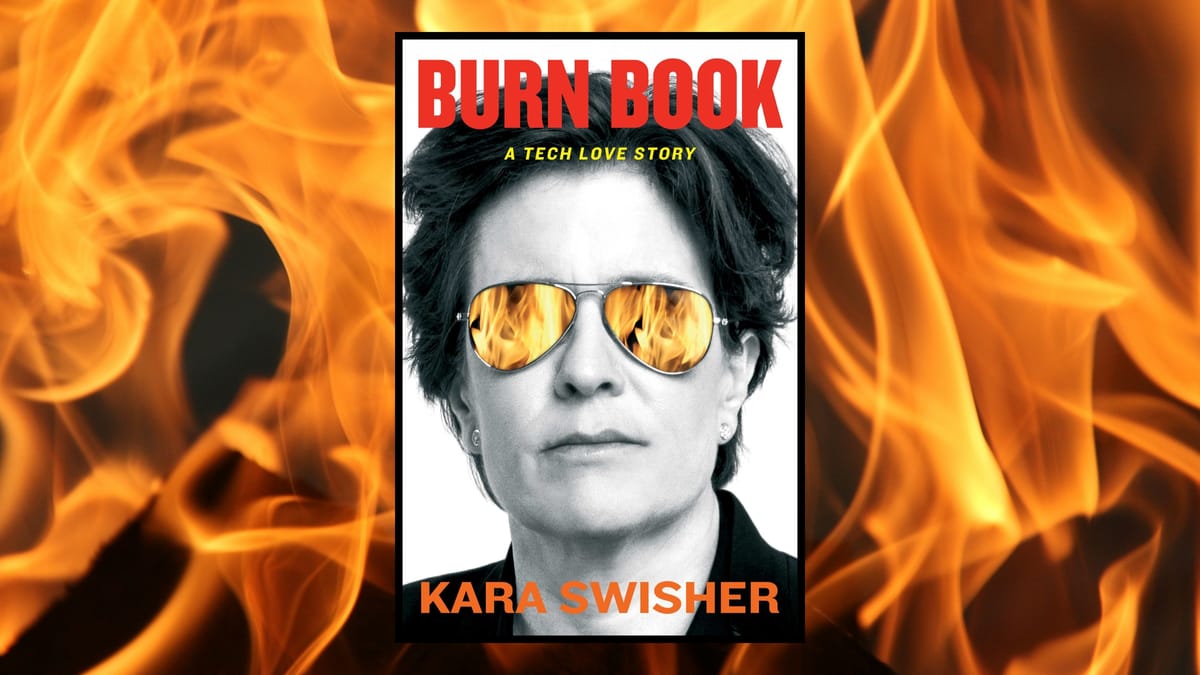
The excitement about the future also helps distract the media and the public from more immediate concerns and harms. As journalist Kara Swisher explained in her recent memoir, she was willing to let tech billionaires off with unethical behavior as long as she thought they were helping move the world forward. She called it her “prick to productivity ratio.” Even today, after publicly breaking with Musk (because he broke with her first), she will still say she wishes he’d stop sharing fascist conspiracy theories (my words) because he’s done such amazing things with electric cars and rocket ships.

Kara Swisher’s Reality Distortion Field
In “Burn Book,” the longtime tech journalist tries to rewrite her story for the post-techlash era
What if we never live on Mars?DisconnectParis Marx
What if we never live on Mars?

Swisher isn’t alone in this. For years, SpaceX has received breathless coverage for reducing the cost of rocket launches and helping to weave a narrative that got the public reengaged on space exploration. More importantly for the company, it also got the government to open its coffers and provide it with very lucrative contracts to fund its operations. But along the way the enthusiasm that narrative created enabled Musk to get away with subjecting workers to long hours and immense pressure, as described by Walter Isaacson in his recent biography and which Reuters found contributed to hundreds of workplace injuries. That’s on top of the growing environmental damage the company is causing in protected wildlife areas in southern Texas, along with the lawsuits alleging of sexism and ageism at SpaceX, the firing of employees critical of Musk, and the accusations of sexual harassment by Musk toward a SpaceX airline attendant.

Even as Musk was found to be cutting off Ukraine’s access to SpaceX’s Starlink satellite internet service because he was taking calls from Russian officials, the US military was unable to do much about it because they’ve become so dependent on SpaceX’s rocket launch capabilities. Instead of being punished for any of that, the military negotiated a contract to pay SpaceX more money for the Starlink service it was providing in Ukraine and a US intelligence agency gave it a contract to build a spy satellite network. And that’s just the tip of the iceberg.

The deceptive story Musk told was key to getting his companies past initial hurdles and himself to the position he’s in today. With SpaceX specifically, it was the idea that the thrust of the business was to achieve the sci-fi vision of setting the foundation for Mars colonization in the short term as a stepping stone to turning humanity into a multiplanetary civilization in the long term. In reality, the company’s real business model was to use that story (paired with some key lawsuits) to get the US government and NASA to provide it with public contracts that would eventually allow it to dominate US rocket launch capabilities and crowd other companies out of low-earth orbit with its Starlink satellites — the space activities that can actually turn a profit.

Meanwhile, just like with his deadlines for self-driving cars, the grand vision continues to recede farther into the future. In 2011, Musk said he’d likely have a man on the moon in ten years. That deadline came and went, only for him to tell Lex Fridman in 2021 that it would take five more years to put a person on Mars, or ten years in the worst case scenario. In 2023, he issued the ten-year timeline all over again — but you can be certain he won’t achieve it. Even the Artemis 3 moon mission that relies on a NASA-contracted vehicle from SpaceX has had to be pushed because the company hasn’t been able to deliver on time.

Science fiction isn’t prediction

If you listen to the libertarians pushing the notion of space settlement, you could be tricked into believing that Mars is some kind of distant paradise-in-the-making that we need only seize and remake for our species. As the crises escalate here on planet Earth, the solution isn’t to do all we can to make a world that works for all, but to find a new frontier that will magically cure all of our ills. Except there isn’t an ounce of truth in those stories.

Mars is no backup planet. It’s a hostile world where humans can’t breathe without technological assistance, can’t walk freely on the surface without a space suit, and would have to live far underground to avoid developing cancer from the radiation on the surface since the world has no magnetosphere. As Zach and Kelly Weinersmith explain in A City on Mars, the soil on Mars is toxic and not as easy to clean as boosters of space settlement like to suggest. There’s also very little research on the social and biological considerations of long-term habitation in space, particularly reproduction and child rearing in a hostile environment that lacks the gravity we’ve evolved to live with. And that’s before considering the legal questions that people like Musk pretend don’t exist.

There’s no future for humanity in space — or at least not for such a long time that it’s pointless to make sacrifices to try to realize it in the present. Intergalactic travel and adaptation to different planets seems easy in science fiction because the challenges can be ignored or explained away so as not to get in the way of the story — and there’s nothing wrong with that. Science fiction’s job isn’t to predict the future, but to use an imagined universe as a setting to probe the problems of the present. Renowned science fiction author Ursula K. Le Guin put this well in a 1985 essay called “Science Fiction and the Future.”

When we look at what we can’t see, what we do see is the stuff inside our heads. Our thoughts and our dreams, the good ones and the bad ones. And it seems to me that when science fiction is really doing its job that’s exactly what it’s dealing with. Not “the future.” It’s when we confuse our dreams and ideas with the non-dream world that we’re in trouble, when we think the future is a place we own. Then we succumb to wishful thinking and escapism, and our science fiction gets megalomania and thinks that instead of being fiction it’s prediction.

Le Guin explicitly rejects many of the stories that inspire our modern-day space billionaires, where “space and the future are synonymous: they are a place we are going to get to, invade, colonize, exploit, and suburbanize.” Rereading that essay, I couldn’t help but think about the concept of longtermism: a worldview that justifies the mass accumulation of wealth by people like Musk and Bezos so they can invest in realizing their childhood dreams of space colonization, while giving themselves a framework to try to sell it as a moral act to safeguard humanity’s future even as homelessness, poverty, hunger, and war continue to be serious crises plaguing far too many of our fellow humans — in part because so few have hoarded so much and seek to preserve their wealth and power at all costs.

Why Silicon Valley is bringing eugenics back
Elon Musk is the most prominent face of the effort to protect tech’s privilege
What if we never live on Mars?DisconnectParis Marx
What if we never live on Mars?

The billionaires’ ability to sell such an unethical project depends on getting people to buy into the fantasy that humanity’s future is in space — a project often pushed by popular culture, industry, and government. But just because there are powerful interests behind the idea doesn’t mean it’s technically or scientifically feasible, no matter how attractive it can be made to sound if you ignore the mountain of barriers to realizing it.

Our future is not in space

I’m skeptical that humans will ever establish thriving communities on another planet, moon, or any other celestial body beyond Earth. We’ve evolved over hundreds of thousands of years to be adapted to the conditions of this one world, and I don’t believe we could easily adjust ourselves to the hostile conditions presented by literally anywhere else we could reasonably hope to go. There may one day be small outposts on the Moon or even Mars, similar to the International Space Station, but I have a hard time believing they’ll be anything more than that. Space exploration will continue to be done by probes, rovers, and other technology we send into the cosmos to transmit data back to us — not by humans making long journeys to faraway celestial bodies.

As Elon Musk sells us the idea that our future is in space and gets the government to believe it so his company can get billion-dollar contracts, the dream distracts us from the conversation we really should be having: what it would mean to address the serious problems we face in the here and now, and to set the foundations of a better society on Earth regardless of what happens beyond our atmosphere. Instead, Musk has effectively captured our imaginations to serve his own personal and business interests, and in the process not only diverted resources toward himself, but used a false future to trample over workers, communities, and the environment.

What would it look like to build a future on Earth that addresses the climate crisis, heals the harm humanity has caused to the planet, and ensures a good life for all where no one has to struggle for food, spend a night without a roof over their head, or hide in terror from bombs and occupying soldiers? For Musk, this is less “exciting and interesting” than being a multiplanetary species, and it’s essentially an acceptance of “stasis and rationing” in Bezos’ mind. But just because the sci-fi-loving billionaires say that doesn’t mean it’s true.

Over the past few decades, our collective ability to conceive of a political movement that would radically alter the current state of affairs feels to have waned, giving people like Musk and Bezos the room to move in with fantastic visions that benefit themselves. Fredric Jameson wrote that it was easier to imagine the end of the world than the end of capitalism, and until that changes we’ll be left chasing the childhood dreams of billionaires at the expense of a better life for everyone else.

Sign up for Disconnect

Tech critic Paris Marx provides the critical take on Silicon Valley you’ve been missing

Email sent! Check your inbox to complete your signup.

No spam. Unsubscribe anytime.

🔲 ☆

The Long View

This blog has been looking like my personal obituary section, and I suppose it is. While I promise to change that, for this post I’ll stick with the theme, and surface some correspondence with an old friend who recommended that I read The Five People You’ll Meet in Heaven, by Mitch Albom. In the correspondence that followed, I shared some of my own views across life’s horizons. Thinking those perhaps blogworthy, here’s what I said:

Just ordered the book.

Odd that I’m a lifelong Christian (technically, Catholic) who (thanks to my wife, who is observant) attends mass every Sunday. Yet I believe the most useful teachings of all the major religions at their best are about kindness and mercy toward other people and the world, and that our sum purpose as conscious and responsible beings is to leave the place better than we found it. In this sense, eternal life is gravy, not meat and potatoes.

So I will be surprised and pleased if there really is an afterlife of some kind. And I would dearly love to hang again with those five people, plus my parents and other loved ones who are, as we say in this world of time and space, departed.

However, absent proof here in time/space world, the way to bet is pure absence: an afterlife like the beforelife.

Did you know I was working for the Psychical Research Foundation, which studied the possibility of life after death, at (but not of) Duke University when I met David Hodskins and Ray Simone? This was an occasion without which I would likely never have met Gil Templeton, Kim Cameron, Craig Burton and others I’ve memorialized online. It see now for the first time that the poetry in that, with those guys—all younger than me—while I’m still here. Wherever this is.

Our favorite priest, Father Sean Olaoire, calls people “spirits in space suits.” This is consistent with Bill Hicks‘ take: “It’s just a ride.” Sean and Bill’s case: we are timeless beings who catch a ride in time and get off when it’s over. We need Wise Ones like Jesus to tell us that our world view is insufficient, and the real myth is mortality.

So, we’ll find out. Or not. Either way, it’s best to clean up first. I’m at that stage now, even though I still have work to do. Back to it.

So I’m back. See you soon.

🔲 ☆

Markets vs. Marketing in the Age of AI

Maybe history will defeat itself.

Remember FreePC? It was a thing, briefly, at the end of the last millennium, right before Y2K pooped the biggest excuse for a party in a thousand years. This may help. The idea was to put ads in the corner of your PC’s screen. The market gave it zero stars, and it failed.

And now comes Telly, hawking free TVs with ads in a corner, and a promise to “optimize your ad experience.” As if anybody wants an ad experience other than no advertising at all.

Negative demand for advertising has been well advertised by both ad blocking (the biggest boycott in human history) and ad-free “prestige” TV, (or SVOD, for subscription video on demand). With those we gladly pay—a lot— not to see advertising. (See numbers here.)

But the advertising business (in the mines of which I toiled for too much of my adult life) has always smoked its own exhaust and excels best at getting high with generous funders. (Yeah, some advertising works, but on the whole people still hate it on the receiving end.)

The fun will come when our own personal AI bots, working for our own asses, do battle with the robot Nazgûls of marketing — and win, because we’re on the Demand side of the marketplace, and we’ll do a better job of knowing what we want and don’t want to buy than marketing’s surveillant AI robots can guess at. Supply will survive, of course. But markets will defeat marketing by taking out the middle creep.

The end state will be one Cluetrain forecast in 1999, Linux Journal named in 2006, the VRM community started working on that same year, and The Intention Economy detailed in 2012. The only thing all of them missed was how customer intentions might be helped by personal AI.

Personal.* Not personalized.

Markets will become new and better dances between Demand and Supply, simply because Demand will have better ways to take the lead, and not just follow all the time. Simple as that.


*For more on how this will work, see Individual Empowerment and Agency on a Scale We’ve Never Seen Before.

❌