Vue lecture

Il y a de nouveaux articles disponibles, cliquez pour rafraîchir la page.
🔲 ☆

Kara Swisher's story about Sam Altman is falling apart

Kara Swisher's story about Sam Altman is falling apart

When Sam Altman was ousted as CEO of OpenAI on November 17, 2023, Kara Swisher started tweeting up a storm of “scoopage,” as she referred to her calls with high-ranking tech figures. Over the days Altman was on the outside, Swisher helped to craft a narrative that a board stacked with his internal rivals had pulled off a coup without a legitimate reason. The face of the AI boom had been betrayed and deserved to retake his position at the helm.

Swisher has been open about the fact she personally likes Altman. In her memoir Burn Book, she wrote, “I have come to know and like the young entrepreneur since I met him in 2005.” He also joined Swisher for an event in San Francisco to promote the book earlier this year. During his ouster, Swisher’s narrative was the story Altman wanted told. It cast him as the victim and helped to set the foundation for his triumphant return — one that would increase his power over the company and serve key investors like Microsoft.

In Swisher’s framing, which she repeats in her book, OpenAI was riven by divisions between AI optimists like Altman and doomers like cofounder and chief scientist Ilya Sutskever who believed artificial general intelligence (AGI) was on the horizon, presented a threat to humanity, and that the company wasn’t doing enough to mitigate that threat. The doomer camp took its opportunity to oust Altman, but misjudged its power and Altman was restored days later.

Kara Swisher’s Reality Distortion Field
In “Burn Book,” the longtime tech journalist tries to rewrite her story for the post-techlash era
Kara Swisher's story about Sam Altman is falling apartDisconnectParis Marx
Kara Swisher's story about Sam Altman is falling apart

In her commentary, Swisher often focused on a statement that Altman hadn’t been “candid” in his communications with the board, using it to suggest there was no real reason for Altman’s removal beyond factionalism, while claims he was “manipulative and headstrong” were dismissed as “sound[ing] like a typical [Silicon Valley] CEO to me.” She even went on CNN to call OpenAI’s board “incompetent” and to advocate for their resignation to open the way for Altman’s reinstatement.

Internal division was surely one factor in the board’s decision, but Swisher’s narrative and outright advocacy for Altman skillfully downplayed other factors whose details started to become clearer after his swift return as CEO. Those allegations focused more on Altman’s conduct and treatment of employees — things Swisher has a long history of ignoring as part of her “prick-to-productivity ratio.” Altman was another “prick” she cared more about being close to than seeing exposed.

Sign up for Disconnect

Tech critic Paris Marx provides the critical take on Silicon Valley you’ve been missing

Email sent! Check your inbox to complete your signup.

No spam. Unsubscribe anytime.

Why Altman was really ousted

The day after Altman was restored as CEO, the Washington Post published a report into the side of his history that people like Swisher had little time for. Sources told the outlet the board was concerned that Altman was trying to remove checks on his power at OpenAI and had “a pattern of consistent and subtle manipulation that sows division between individuals.” A couple weeks later, journalist Nitasha Tiku built on that earlier reporting with more details suggesting Altman had been “psychologically abusive” and had allegedly been “pitting employees against each other in unhealthy ways.” Those actions had been central considerations for the board when they decided to remove him.

In 2019, Altman had also been removed as head of Y Combinator for putting “his own interests ahead of the organization,” according to the Post. At the time, he was making personal investments in companies he was selecting for inclusion in the accelerator’s fund. Even going back to his first startup Loopt, the management team had reportedly asked the board to remove him as CEO twice for “deceptive and chaotic behavior,” according to former OpenAI board member Helen Toner. Those details are often left out of the glowing profiles Altman receives today, not unlike how figures like Musk had their histories effectively rewritten once they became successful.

Elon Musk wants to relive his start-up days. He’s repeating the same mistakes.
What PayPal’s history teaches us about Elon Musk’s management of Twitter
Kara Swisher's story about Sam Altman is falling apartDisconnectParis Marx
Kara Swisher's story about Sam Altman is falling apart

During the ouster saga, OpenAI employees released a letter saying they’d resign en masse if Altman wasn’t restored as CEO. But the Washington Post found employees reported facing peer pressure to add their names and had a financial incentive to bring him back. If he wasn’t, an investment deal that would allow them to cash out would be put in jeopardy.

More recently, Vox revealed that employees were forced to sign strict non-disclosure and non-disparagement agreements once they left he company, or else they could lose their vested equity. Altman claimed he didn’t know about those clauses, but his response doesn’t line up with documents Vox obtained suggesting he would have been very aware and that company lawyers were aggressive in getting ex-employees to sign away their ability to speak about or criticize the company.

A recent interview Toner gave to the TED AI Show casts further doubt on Swisher’s version of events. Toner elaborated on the reasons Altman was removed from the company, explaining that two executives had spoken to the board about negative experiences with Altman that included lying, manipulation, and creating a toxic atmosphere at the company. Altman also didn’t disclose his ownership of the OpenAI Startup Fund and lied about the company’s safety processes. The board felt it “just couldn’t believe things that Sam was telling us,” explained Toner. She was also personally targeted by Alman when she published a research paper he didn’t like.

Ultimately, Toner explained the quick and stealthy removal of Altman as being necessary because if he knew in advance he’d “pull out all the stops, do everything in his power to undermine the board.” Those are clearly well-founded concerns, given that’s exactly what Altman did after he was ousted. He muddied the waters and ensured his narrative of events was the one that dominated the discussion about the company. Swisher served as a central conduit in that campaign.

Altman is cementing his power

After returning to OpenAI, Altman has cemented his power over the company. He brought in a new board that will be far less likely to challenge to his leadership. Earlier this month, Sutskever left the company, as did safety lead and company executive Jan Leike. OpenAI also dissolved the Superalignment team that Leike headed up. On Twitter, Leike explained that his disagreements with OpenAI leadership had been growing “for quite some time” and he was concerned “safety culture and processes have taken a backseat to shiny products.” Vox reported that five more of the company’s safety-conscious employees had left since Altman’s return as CEO as they lost trust in his leadership.

Scarlett Johansson can’t escape tech exploitation
OpenAI grabbing her voice is just the latest scandal that demands a regulatory response
Kara Swisher's story about Sam Altman is falling apartDisconnectParis Marx
Kara Swisher's story about Sam Altman is falling apart

To replace that team, OpenAI created a safety and security committee earlier this week stacked with company executives, including Altman himself. Meanwhile, the prospect of OpenAI throwing off the shackles of its non-profit status continues to be discussed and the company has reported branched out from its Microsoft dependency to sign a deal with Apple that will give it a greater sense of independence. Even in the face of the blowback from the non-disclosure scandal and the potential legal action from the drama over the use of a voice sounding very similar to Scarlett Johansson’s in GPT-4o, Altman’s power is only growing.

While Swisher might make the occasional jabs at the “man-boys” of Silicon Valley, as she refers to them in her book, she’s desperate to be in their circles and part of the power game. She’s chosen a few CEOs to more regularly criticize now that they don’t give her the access she craves, but there are many more whose narratives she will happily help turn into the official record whenever it will help them. Altman is in that group, and six months after his removal and return as CEO of OpenAI, it’s become very apparent that Swisher was echoing the Altman line and defending his interests. As she says in her book, she’s happy to give “flawed people … a little break,” as long as they have the power to justify it.

Sign up for Disconnect

Tech critic Paris Marx provides the critical take on Silicon Valley you’ve been missing

Email sent! Check your inbox to complete your signup.

No spam. Unsubscribe anytime.

🔲 ☆

World Wide Whiteboard

We thought the Web was a library. Turns out it’s not. (Image via ChatGPT 4o.)

Before there were search engines, there were directories. The biggest and best-known was Yahoo. On the first graphical browser (Mosaic), it looked like this:

The directory idea made sense, because the Web is laid out like the directory in your computer. There is a “domain” with a “location” or a “site,” containing something after the last / in a path of /something/something/something. Geeks call these directories too, and the string of somethings a path. Directories in computing also follow an outline format: heads, subheads, and subheads of subheads.

While this design is boundlessly flexible, it also suggests durability, if not permanence, because it’s good to find stuff where it rightly goes and to find it in the same place over and over again.

That was what Yahoo assumed in the early days of the Web—as did everyone who bought a domain name. I’ve had searls.com since 1995. Dave Winer (father of outlining and progenitor of much else) has had Scripting.com for even longer (and has a lot more in that domain).

But we don’t own domain names. We rent them. And the World Wide Web isn’t a library. It’s a whiteboard with stuff written on it. Some of that stuff is located on directory paths. A lot more is coughed up by database systems on an as-needed basis.

The Yahoo directory failed. In its place search engines appeared. Search engines don’t catalog the Web like a library might. They index it. That means they send crawlers down the Web’s directory paths, recording everything they see into a searchable index. I explain here how that works and where this went:

The Web is a haystack.

This isn’t what Tim Berners-Lee had in mind when he invented the Web. Nor is it what Jerry Yang and David Filo had in mind when they invented Jerry and David’s Guide to the World Wide Web, which later became Yahoo. Jerry and David’s model for the Web was a library, and Yahoo was to be the first catalog for it. This made sense, given the prevailing conceptual frames for the Web at the time: real estate and publishing.

Both of those are still with us today. We frame the Web as real estate when we speak of “sites” with “locations” in “domains” with “addresses” you can “visit” and “browse”—then shift to publishing when we speak of “files” and “pages,” that we “author,” “edit,” “post,” “publish,” “syndicate” and store in “folders” within a “directory.” Both frames suggest durability if not permanence. Again, kind of like a library.

But once we added personal movement (“surf,” “browse”) and a vehicle for it (the browser), the Web became a World Wide Free-for-all. Literally. Anyone could publish, change and remove whatever they pleased, whenever they pleased. The same went for organizations of every kind, all over the world. And everyone with a browser could find their way to and through all of those spaces and places, and enjoy whatever “content” publishers chose to put there. Thus the Web grew into billions of sites, pages, images, databases, videos, and other stuff, with most of it changing constantly.

The result was a heaving heap of fuck-all.*

Back in 2005, I wrote in Linux Journal about a split between the “static” Web that was like a library (with its “locations,” “sites,” and “domains” you could “visit” and “browse”), and the “live” Web of blogs and posts. Then social media came along, and the live branch of the Web outgrew the static Web’s trunk.

Last week came news that a leak revealed lots of interesting poop about how Google actually ranks search results. Here are two things I don’t need those leaked documents to tell me:

  1. Google favors the present over the past, the current over the archival.
  2. Google no longer indexes, or ranks very old Web pages.

I speak from experience here, because I have some old pages that are on the Web but don’t seem to be indexed, meaning searches don’t find them. I also have Easter eggs on a couple of those pages: words that exist in no language but made those pages easy to find when I did keyword searches for them. Now I get “No results found for _____.” (I won’t reveal the word because I want to keep testing Google.)

Countless publications have also come and gone on the Web without leaving a trace. Upside was a gigantic publication from the Nineties through the dotcom boom. Not a trace of it remains. Far as I know, nothing remains of Fast Company‘s early issues.

But hey, God bless the Internet Archive. Here’s a piece I wrote for PC Magazine in December 1982 about a PC application that taught card counting in blackjack:

As the evanescence of “content” increases, so does the importance of archives.

So maybe stop reading here and start reading here. We have a lot of work to do.

🔲 ☆

Musées d'ethnographie et temps présent(s)

Cet ouvrage traite de la question des collections ethnographiques issues d'un passé colonial, et, à ce titre, s'invite dans les débats actuels sur la décolonisation muséale qui animent l'anthropologie, l'histoire de l'art et de la muséologie. Il offre une analyse critique comparée (France, Suisse et Espagne) et met en lumière les enjeux de la restitution des collections ethnographiques à leur pays d'origine, qui est devenue une des réponses que proposent certains musées ou États. 
🔲 ☆

Elon Musk is using Twitter to defend Brazil’s fascists

Elon Musk is using Twitter to defend Brazil’s fascists

On April 7, Elon Musk struck out at a Brazilian Supreme Court justice, branding him “Brazil’s Darth Vader.” For the past several years, Brazilian authorities have been cracking down on the digital platforms where far-right activists organize — an effort that gained steam after an attempted coup in the capital of Brasilia by supporters of former president Jair Bolsonaro on January 8, 2023. Justice Alexandre de Moraes has been leading the charge, and he recently turned his attention to Twitter/X.

The court issued an order to Twitter/X demanding it remove certain accounts related to its investigation, and the platform initially complied without making a big deal of it. That shouldn’t come as a surprise: the company regularly acts on government requests; the percentage it complies with has actually significantly increased since Musk took over, despite his frequent grandstanding about censorship and free speech. But Musk already had ties with the Brazilian far right, and they likely used that connection to get him to declare war on the court and de Moraes specifically. He’d already been meddling in Brazilian politics with the recent release of a Brazilian version of the Twitter Files.

On April 6, Twitter/X’s Global Affairs account posted a longtweet to go public about having to suspend particular accounts and making it very clear that the company’s representatives did not agree with the actions they had to take. “We believe that such orders are not in accordance with the Marco Civil da Internet or the Brazilian Federal Constitution,” the longtweet read. “The people of Brazil, regardless of their political beliefs, are entitled to freedom of speech, due process, and transparency from their own authorities.”

Not long after, Musk posted that all content restrictions in the country would be lifted. The following day he continued, urging Brazilians to download a VPN, saying the demands of the court would be published in full, and calling for de Moraes to be impeached — echoing a longstanding campaign by the Brazilian far right and Bolsonaro himself. Needless to say, Brazilian authorities were not happy to see a foreign billionaire so vigorously refusing to comply with domestic court orders.

Sign up for Disconnect

Tech critic Paris Marx provides the critical take on Silicon Valley you’ve been missing

Email sent! Check your inbox to complete your signup.

No spam. Unsubscribe anytime.

Fighting for digital sovereignty

Musk’s posts prompted a swift response within Brazil. “It is urgent to regulate social networks,” posted Attorney General Jorge Messias to Musk’s platform. “We cannot live in a society in which billionaires domiciled abroad have control of social networks and put themselves in a position to violate the rule of law, failing to comply with court orders and threatening our authorities.” De Moraes acted quickly to launch an inquiry into the legality of Musk’s “disinformation campaign” and added him to a criminal investigation looking into anti-democratic acts by “digital militias.”

The president of the Federal Supreme Court, Luís Roberto Barroso, was even more forceful about the threat Musk’s actions represented by seeking to shield the far right from accountability. “They are trying to use Brazil as a laboratory on how to interfere in local politics and local businesses,” he wrote in a statement. “They are making the case that their decision is more important than the national decision from a state democratic institution.” Political and judicial leaders made it clear they would not stand for any refusal to comply with what many see as reasonable measures. President Lula da Silva even made an account on rival platform Bluesky, building on his existing active presence on Threads.

In declaring war on Brazil’s democratic institutions at the urging of the extreme right, Musk is not only further demonstrating his commitment to using Twitter/X to promote the rise of global fascism; he also calls into question the more widespread and longstanding use of the cudgel of an American conception of free speech by US digital advocates to delegitimize attempts to regulate the internet. Brazil’s fight is not just about taking on Musk’s influence and the power of Bolsonarismo, but also setting a new standard for the regulation of social media platforms that other democratic governments outside the United States can look to for inspiration.

Opening the doors to fascists

Twitter/X has not released the demands of the court, as Musk said it would, and the same day he made that claim the administrator of the company’s Brazilian office, Diego de Lima Gualda, submitted his resignation. Presumably, he didn’t want to face fines or jail time for following Musk’s orders. The company risks being fined $20,000 a day if it doesn’t comply with the court’s orders, and it could even be hit with a complete ban in the country.

Elon Musk is elevating the global extreme right
The billionaire wants to advance his political program while preserving his power and wealth
Elon Musk is using Twitter to defend Brazil’s fascistsDisconnectParis Marx
Elon Musk is using Twitter to defend Brazil’s fascists

Soon after Musk took over Twitter, he fired nearly all the company’s Brazilian staff, including those who moderated the platform for misinformation and incitement to violence, and opened the floodgates to local fascists, just as he did in so many other countries with his amnesty on previously banned far-right accounts. Bolsonaro was a fan of Musk’s plan to buy the platform, calling it a “fresh breath of hope” when Musk visited Brazil in May 2022. According to the Washington Post, Musk’s decisions ensured Twitter was “heavily used by a circle of right-wing influencers” to spread false narratives about election fraud leading up to the attempted coup.

After Musk announced he would stop respecting the court’s orders, Brazilian media listed some of the Bolsonaro supporters and far-right agitators he could restore to the platform. Among them are far-right blogger Allan dos Santos, who fled to the United States in 2020 to avoid arrest, and YouTuber Bruno Aiub (or Monark), who argued for the recognition of a Nazi Party in Brazil. The Brazilian far right is eager to gain an even greater foothold on Musk’s platform, but just because he hears from them doesn’t mean he has a good grasp of wider Brazilian opinion on what he’s been trying to do.

Brazil has more rapidly and successfully gone after its coup plotters than the United States has, and even though the far right demonizes de Moraes, he is “widely considered to have played a role in protecting Brazilian democracy during the 2022 presidential election,” according to the Financial Times. While de Moraes’ actions may occasionally seem extreme, they are also in response to the storming of the highest governing bodies of a country with a much more recent memory of dictatorship. They’re even more justified when you consider that Brazil — like many countries around the world — does not hold the same absolutist conception of free speech as the United States.

The meaning of free speech

Musk loves to claim that his increasingly unhinged and belligerent actions are simply the result of his defense of free speech, yet it’s become very clear that his conception of “free speech” is a political tool to forward the cause of the extreme right, not to defend everyone’s right to say what they want. There are plenty of examples of this since his takeover of Twitter, but it’s easiest to demonstrate with some of his moderation decisions.

In Brazil, Musk acted quickly to allow the Brazilian far right back on the platform after he took over, as he did in many other places. He has frequently said that he would fight attempts at “censorship,” whether from governments or former advertisers. Yet in India, Twitter/X has become an important tool of censorship and information control for the far-right, Hindu-nationalist government of Narendra Modi. Musk has allowed the removal of posts critical of Modi, along with the suspension of journalists and political opponents. That’s quite different from how Musk has been acting in Brazil. In India, the far-right government is free to shape the platform, but when Brazilian authorities try to respond to the threat Musk’s decisions pose to their democratic institutions, he lashes out and calls that the real censorship — because it targets the Bolsonaro supporters and the political program he supports.

As João Brant, digital policy secretary for Brazil’s Secretariat of Social Communication, recently told Wired, “We have a background that is different from the US. It’s more similar to the European concept of freedom of expression.” Since the internet emerged from the United States, there has been an effort to have the US conception of free speech pushed onto the rest of the world because it benefited the US tech companies that rode the internet’s coattails into international markets. But different societies have their own standards of acceptable discourse — and for Brazil, planning to overthrow a democratically elected government is a step too far, regardless of what an American billionaire might think. As Bloomberg columnist Juan Pablo Spinetto explained, “Are calls to overthrow a democratically elected government protected by free speech? It may be the case in the US under the first amendment, but in other developed countries such speech can well be considered sedition.”

The TikTok ban is all about preserving US power
The platform isn’t a national security threat, but a challenge to Silicon Valley’s dominance
Elon Musk is using Twitter to defend Brazil’s fascistsDisconnectParis Marx
Elon Musk is using Twitter to defend Brazil’s fascists

For several decades, US social media platforms were largely free to do as they wanted abroad because of the narrative of all the benefits that were supposed to accompany digital tech, but also because US hegemony protected them from burdensome regulation. As US dominance wanes, so too does the privileged status of its tech companies and the notion that countries just need to accept US dominance of their internet sectors. China aside, Brazil’s campaign against Twitter/X and social media more broadly could mark an important moment in the shift toward a different conception of the internet in a multipolar world.

Challenging the power of social media

In his response to Musk’s tweets refusing to comply with court orders, Justice de Moraes argued that Twitter/X’s actions were “not only abuse of economic power, by trying to ILLEGALLY impact public opinion, but also flagrant induction and instigation to maintain various criminal conducts practiced by the digital militias under investigation.” In short, Brazil would not stand for it, and it seems one of Musk’s yes men dared to talk some sense into him.

On April 15, Reuters reported that Musk’s lawyers contradicted the previous statements of their boss. “As already communicated to the federal police, X Brasil informs that all orders issued by this Supreme Court and the Superior Electoral Court will continue to be fully complied with by X Corp,” they wrote in a letter to de Moraes. This could lead to Musk’s brief Brazil saga fading out of people’s memories as he undoubtedly gets himself embroiled in other scandals in the coming weeks, but it doesn’t change the fundamental point.

The digital revolution has failed
The benefits of the internet are eroding. The AI boom is only accelerating their demise.
Elon Musk is using Twitter to defend Brazil’s fascistsDisconnectParis Marx
Elon Musk is using Twitter to defend Brazil’s fascists

The internet is entering a new era. It may not yet be fully clear what it will look like, but we can be certain that social media platforms are in for more regulation than they’ve seen in the previous two decades as people are no longer falling for the hype and deception they relied on to get away with degrading and capitalizing on our communications for so long. That isn’t inherently a violation of free expression, as understood by many countries, but a necessary correction to align their operations with the laws and values of the countries in which they operate.

Brazil is right to challenge Musk’s policy changes designed to turn Twitter/X into a haven and organizing ground for the global far right — and it shouldn’t stop there. Communications platforms aren’t just profit machines for major corporations or political playthings for US billionaires. If they don’t serve the publics that use them, they should be forced to change. And if they won’t comply, that’s all well and good; they can be replaced with something else that will.

Sign up for Disconnect

Tech critic Paris Marx provides the critical take on Silicon Valley you’ve been missing

Email sent! Check your inbox to complete your signup.

No spam. Unsubscribe anytime.

🔲 ☆

Musées d'ethnographie et temps présent(s)

Cet ouvrage traite de la question des collections ethnographiques issues d'un passé colonial, et, à ce titre, s'invite dans les débats actuels sur la décolonisation muséale qui animent l'anthropologie, l'histoire de l'art et de la muséologie. Il offre une analyse critique comparée (France, Suisse et Espagne) et met en lumière les enjeux de la restitution des collections ethnographiques à leur pays d'origine, qui est devenue une des réponses que proposent certains musées ou États. 
🔲 ☆

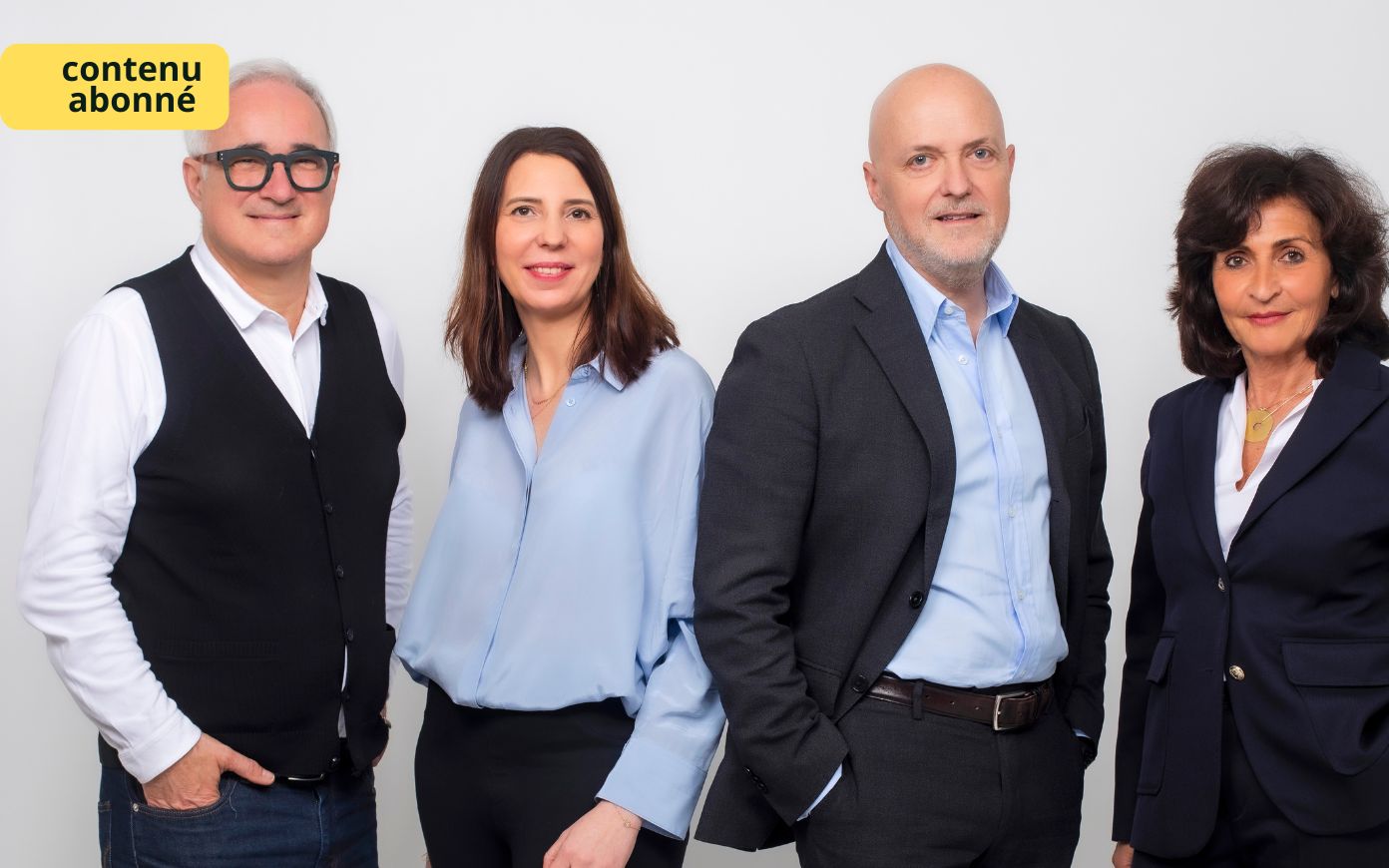
« 2050NOW veut être un catalyseur de connaissances et de solutions », Corinne Mrejen (2050NOW, Les Echos-Le Parisien)

(contenu abonné) Dans le prolongement de sa stratégie RSE, déployée depuis cinq ans, le Groupe Les Echos – Le Parisien vient de lancer 2050NOW le 11 avril. Dotée du statut d’entreprise à mission et d’un modèle hybride, cette nouvelle activité est positionnée à côté des autres marques médias du Groupe.

L’article « 2050NOW veut être un catalyseur de connaissances et de solutions », Corinne Mrejen (2050NOW, Les Echos-Le Parisien) est apparu en premier sur TheGood.

🔲 ☆

FFmpeg vs Microsoft – Le choc

Figurez-vous que le géant Microsoft, oui oui, le monstre de Redmond, se retrouve à genoux devant la communauté open source de FFmpeg.

Et pourquoi donc ? Parce que ces satanés codecs multimédias leur donnent du fil à retordre !

Mais attention, ne croyez pas que Microsoft va gentiment demander de l’aide comme tout le monde. Non non non, eux ils exigent, ils ordonnent, ils veulent que les petites mains de FFmpeg réparent illico presto les bugs de leur précieux produit Teams. Bah oui, faut pas déconner, c’est pour un lancement imminent et les clients râlent !

Sauf que voilà, les gars de FFmpeg ils ont pas trop apprécié le ton. Ils sont là, tranquilles, à développer leur truc open source pour le bien de l’humanité, et là Microsoft débarque en mode « Eho les mecs, faudrait voir à bosser un peu plus vite là, on a besoin de vous là, maintenant, tout de suite ». Super l’ambiance.

Alors ok, Microsoft a daigné proposer quelques milliers de dollars pour les dédommager. Mais bon, les développeurs FFmpeg ont un peu de fierté quand même et souhaitent un vrai contrat de support sur le long terme, pas une aumône ponctuelle balancée comme on jette un os à un chien.

Et là, c’est le choc des cultures mes amis ! D’un côté Microsoft, habitué à régner en maître sur son petit monde propriétaire, à traiter les développeurs comme de la chair à code. De l’autre, la communauté open source, des passionnés qui bouffent du codec matin midi et soir, qui ont la vidéo dans le sang et le streaming dans les veines.

Microsoft fait moins le malin maintenant puisqu’ils réalisent que leur précieux Teams, ça marche pas terrible sans FFmpeg et que leurs armées de développeurs maison, n’y connaissent pas grand chose en codecs multimédia. Et surtout que la communauté open source, bah elle a pas trop envie de se faire exploiter comme ça.

Moralité de l’histoire : faut pas prendre les gars de FFmpeg pour des poires. Ils ont beau être « open », ils ont leur dignité et Microsoft va devoir apprendre à respecter ça, à collaborer d’égal à égal, à lâcher des billets et des contrats de support au lieu de jouer au petit chef.

Parce que sinon, Teams risque de sonner un peu creux sans codecs qui fonctionnent. Et là, ça va être dur d’expliquer aux clients que la visio ça sera en version mime, parce que Microsoft a pas voulu mettre la main au portefeuille pour avoir de l’audio qui marchent.

Et, si vous voulez en savoir plus sur ce choc des titans, foncez sur https://sopuli.xyz/post/11143769 , vous n’allez pas être déçu du voyage !

🔲 ☆

Grand Prix Stratégie de la Communication d’Engagement : de l’argent qui compte pour Econovia.

Actualités – 29 mars 2023

Grand Prix Stratégie de la Communication d’Engagement : de l’argent qui compte pour Econovia.

Chez Econovia, nous sommes convaincus que l’argent n’est pas une fin en soi mais un moyen de créer des emplois durables et de l’impact positif, non seulement pour nos 12 salarié.e.s mais aussi pour les projets qu’on accompagne et qui ont du sens, l’économie en général (encore plus si elle est sociale et solidaire) et la planète.

L’argent n’est pas une fin en soi. Nous le pensions sincèrement jusqu’à aujourd’hui où, force est de constater que nous avons changé d’avis ! Car oui, subitement, nous aimons l’argent (mais pas n’importe lequel) et nous ne l’échangerions contre rien au monde. Pire encore : nous sommes fièr.e.s de le gagner. 

Cet argent, c’est la couleur du Grand Prix Stratégie de la Communication d’Engagement 2023 qui vient de nous être remis ce 29 mars à Paris pour avoir assuré la création de la marque Bachelor ACT et réalisé une campagne 360 pour faire connaître cette formation Bac+3 diplômante, pluridisciplinaire et novatrice. 

Acronyme d’« Apprendre à Conduire les Transitions », le Bachelor ACT est la première formation dédiée à une génération engagée pour Intégrer les enjeux environnementaux, climatiques et sociaux dans leurs futurs métiers. Elle cartonne. Et pour cause : les jeunes ont besoin de donner du sens à leurs vies ! Et c’est une excellente nouvelle. 

Mockup-site-bachelor-act

Cette récompense témoigne du fait que la communication d’engagement est devenue une véritable attente de la société. Nous l’avons compris il y a 14 ans en fondant Econovia, agence pionnière en la matière qui visait justement à professionnaliser la communication des associations, responsabiliser celle des entreprises et inventer celle des nouveaux acteurs à impact positif. 

Cette reconnaissance est l’occasion de rendre la monnaie de leur pièce à toute l’équipe du BachelorAct, qui nous ont fait confiance pour accompagner ce projet élaboré par l’ESSEC et CY Cergy Paris Université.

C’est aussi l’occasion de redistribuer cette richesse singulièrement humaine aux 27 experts et partenaires qui ont participé à l’aventure. 

Aujourd’hui chez Econovia, on est très « argent contents » et on espère que vous l’êtes aussi !

GrandPrix-Stratégies-remise-prix-Econovia-2023
Crédit photo : Stratégies Magazine

L’article Grand Prix Stratégie de la Communication d’Engagement : de l’argent qui compte pour Econovia. est apparu en premier sur Econovia.

❌