
❌

Vue lecture

Il y a de nouveaux articles disponibles, cliquez pour rafraîchir la page.
🔲 ☆

BMW’s in-car Spider-Man ad is a warning sign
BMW’s in-car Spider-Man ad is a warning sign

I don’t know about you, but the one thing I’ve always though was missing from the driving experience was having a car I paid tens of thousands of dollars for start blasting me with ads now that it’s always connected to the internet. It wasn’t enough that there are billboards littered all around the roads we drive on for companies to try to capture our attention. I’ve always wanted them plastered on the increasingly large screen in my center console.

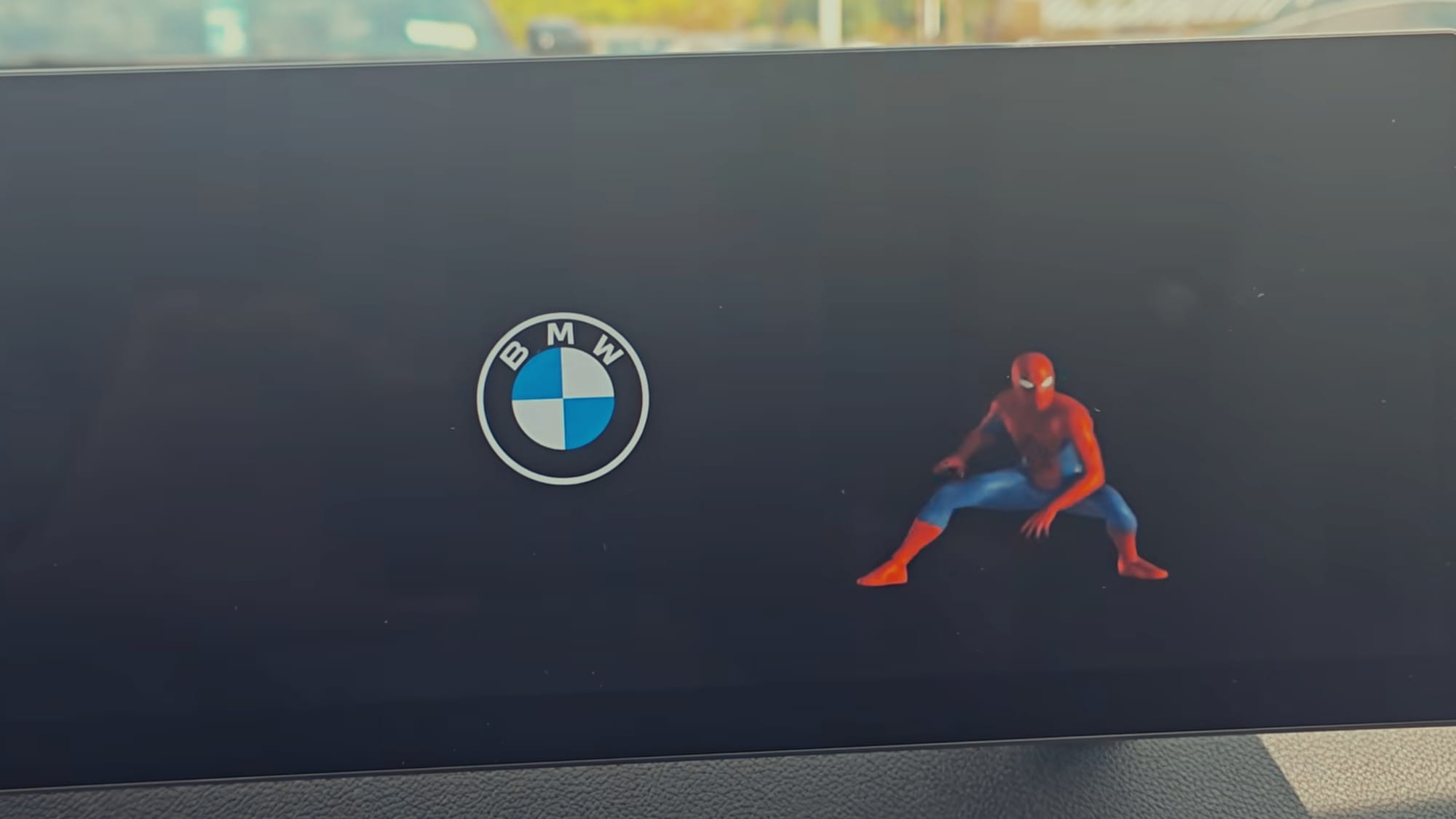
I am, of course, being sarcastic. But we recently saw one of the inevitable developments from the “connected car” that automakers (and tech companies) have been pushing us toward for more than a decade. Starting on July 27, when BMW owners turned on their vehicles they were met with a special surprise: an exclusive ad for the new Spider-Man: Brand New Day movie.

I found it kind of funny when I started seeing these stories. I saw the movie with a friend of mine, and there’s a scene where a BMW billboard is prominently featured for several seconds. When it appeared onscreen, I leaned over to my friend to comment on how the company had clearly paid to stick its ad in the movie. What I didn’t realize was that the movie also got its own ad beamed onto the center screen of every modern BMW vehicle.

BMW owners were rightfully furious about the company’s decision to put an ad in their cars — and not just because they drive luxury vehicles. “BMW should stop with this shit,” wrote one user on the r/BMW subreddit. “I can't wait for the day that when you start the car, you have to watch a minute long advertisement,” said another. I think the drivers of pretty much any vehicles would be annoyed to start seeing ads playing in their cars. Quite frankly, it’s ridiculous.

The first thing it brought to mind to me was when Apple put U2’s Songs of Innocence album in every iTunes user’s library back in 2014. People weren’t thankfully to get free music; many were pissed off that the company had abused its power to force a U2 album on them. Bono subsequently apologized, and Apple released a one-click tool for people to remove the album. It became a scandal, just as this decision has for BMW. I wouldn’t be surprised if the company promises never to do it again.

Sacrifice your job for the glorious AI future
How tech CEOs use the threat of job loss to distract from how AI is really used against workers

But once again, this seemed inevitable. As digital technology started rolling out and finding new data-driven, ad-based revenue models in places where they weren’t previously as common, it was only a matter of time before automakers tried to get in on the party. Modern vehicles collect reams of data on drivers, people in the car, and sometimes even those outside it. Often, that data isn’t just used by the automakers themselves, but sold to third parties so they can make some extra profit beyond selling cars, warranties, and maintenance packages.

Since the generative AI moment, I’ve often brought up the last AI hype cycle: in the 2010s, when companies and supposed experts told us up to half of all jobs could be wiped out by AI and robotics like self-driving cars, only for that narrative to distract us from how companies were really using that new tech to roll out algorithmic management and crack down on workers’ rights. It’s hard for me not to see something similar in the transportation space.

Executives like Elon Musk, Google’s Sergey Brin, and leaders at Uber spent the 2010s talking about how self-driving cars were going to transform everything and how new digital technologies were going to end road deaths, traffic, and transport inequality. I described it in great depth in my first book, Road to Nowhere. Over a decade later, none of those problems have been solved; some even kept getting worse for many years. But as they were distracting us with big promises, they were sticking screens and sensors throughout people’s vehicles, promising unparalleled convenience as they extracted data from their driving habits.

The modern vehicle is infused with digital technology at every point. The features present in vehicles available in the United States pale in comparison to what a driver can buy in China today, and those features are quickly going global. Increasingly, cars are getting compared to smartphones, prompting fears they’ll also be upgraded much more regularly than people currently replace their vehicles. If electric vehicles are supposed to be an environmental savior, such rapid refreshing would further erode any climate benefit.

Self-driving cars still aren’t the future
A Cruise disaster deflates the robotaxi hype once again

This is what all the big promises have amounted to for most people: cars that are more and more expensive, devoid of physical controls which makes vehicles less safe, and constantly monitoring everything you do with the option for manufacturers to change whatever they want in your vehicle, including sticking a Spider-Man ad in front of you and presenting it as a fun “surprise.”

I’m sure Western automakers need to face some competitive pressure from their Chinese competitors, but I’m not sure their even more digitized vehicles are really the goal we should be pursuing. This whole story of BMW’s in-car ad makes me not just desire a day before all this digital tech was crammed into cars, but for better transit and cycling infrastructure so people can more easily ditch their cars altogether. This industry has so many people held captive, and it’s clear they plan to use it enrich themselves at our collective expense.

🔲 ☆

The seductive nature of ride-hailing apps

The seductive nature of ride-hailing apps

This year on Disconnect I’m trying to interrogate how we use technology and what capacities we have to change it. But that work is only possible because of readers like you.

Become a paid subscriber today so I can keep examining the parts of the tech industry the billionaires prefer us to ignore. Thanks for your support!

Subscribe now

Before May of this year, I had never used a ride-hailing app. I had been in an Uber before — precisely two times, when friends had called them after a night out — but never had I actually downloaded the application to my phone to get the full experience.

That changed when I went to South Africa. After having a number of people warn me about my safety and advise me not to use taxis, paired with how the malaria meds I was on were messing with my mental health, I finally gave in. I couldn’t bring myself to download Uber. Having written about its exploitative business model for a decade, that was still a bridge too far. So instead I opted for Bolt, the European alternative.

It didn’t take long for me to see how so many people have been seduced into abandoning taxis for ride-hailing services over the past decade and a half — their attacks on workers’ rights, harms to transportation networks, and exploitation of customers be damned.

The user experience of the ride-hailing app makes you feel like you are in complete control. You are Big Brother for the exploited drivers trying to make a meager living from driving people around.

When you open the app, you can see the cars plying the roads of the digital map on your screen. You choose which kind of driver you want, and can send them specific instructions. You watch them make their way toward you, until you enter the vehicle where very frequently you control the music and might even be offered snacks and amenities — all in the hope you’ll give the driver a good rating at the end. They likely won’t even try to speak with you unless you strike up a conversation. I’ve had some drivers tell me they can drive around for hours with customers not saying a word to them — an incredibly dehumanizing experience.

All of these design decisions and impositions on workers are designed to give drivers the illusion of control, authority, and ultimately of power. It doesn’t matter that Uber has been known to fake the vehicles shown on the screen, has fought being covered by disability legislation, has been sued for failing to address sexual abuse by drivers, has tracked customers, and even used the data it holds to push up fares while driving down driver pay. Once you get used to that feeling of control, it’s hard to quit — something I found myself even after I left South Africa.

Once I arrived in Lisbon, I wanted to stop using Bolt, but I found it hard to give up that sense of control. I downloaded a local taxi app and when I used it I was flooded with worries that weren’t previously there: Would the driver even find me? Would I know how long it would take them to get there? Were there even many taxis in the area? Would I be able to easily pay in the car? They were mostly foolish concerns, but were borne of giving back a certain degree of autonomy to the driver and the anxiety of being in a place I wasn’t familiar with.

Back in Canada, using taxis was no problem. I deleted the Bolt app — it wouldn’t work there anyway — and simply went back to the companies I was used to relying on. I didn’t think twice about it. But a few weeks later in Copenhagen, I needed to get a ride somewhere and my mind immediately went to downloading Bolt again. The sense of security it claimed to provide had worked its way into my psyche. I didn’t give in, but I was fascinated by the staying power it had over me.

The whole experience was an instructive one for me. My writing about the tech industry started with criticism of the gig economy, so I’ve long felt those services were not something I could reasonably use without a degree of hypocrisy. To this day, I still haven’t used a food-delivery app. But actually downloading a ride-hailing app showed me how so many people have gotten hooked on them and resist any pressure to return to using taxis, even as ride-hail prices have risen since the pandemic.

Recently I’ve been thinking a lot about how the digital services and platforms we’ve come to rely on over the past couple decades have affected how we act, how we see ourselves, and how the world around us even functions. I feel like we’re all becoming familiar with that when it comes to things like social media apps, which is part of the reason the efforts to regulate them are getting so much attention. But there are so many smaller, pernicious ways our lives have been transformed by the screens and apps that have been pushed on us in recent years — and in most cases we don’t take the time to consider how they affect us.

I feel like the ride-hailing apps stood out so much to me because they’ve become so normalized for so many. Most people are used to the experience of using them now, and it’s been optimized over time to lock people in and make them overlook the drawbacks of these businesses. Yet, I was coming in after all that work had been done and the rapid way it affected how I saw taxis was startling as someone who’s never felt the need or compulsion to download Uber.

Very quickly, I was finding it hard to imagine doing anything other than using a ride-hailing service. I couldn’t help but think about how many other apps and services have affected us in similar ways that we never stop to question.

🔲 ☆

Tesla is in serious trouble

Tesla is in serious trouble

On April 5, Reuters broke some major Tesla news: the $25,000 car that the company had supposedly been staking its future on has been cancelled. Instead, CEO Elon Musk wants to bet the company on his fantasy of creating a robotaxi, despite there being no end in sight for the problems with its self-driving software.

The news organization cited Tesla employees who said they attended a meeting in late February where Musk made the announcement. In Walter Isaacson’s biography of Musk published last year, he described Musk’s initial opposition to building the more affordable model even though it had been part of his strategy for company since his first “master plan” in 2006. Isaacson described a meeting in August 2022 where Musk declared, “No mirrors, no pedals, no steering wheel. This is me taking responsibility for this decision.” The robotaxi was the focus; the low-cost Tesla wasn’t happening.

However, in September lead designer Franz von Holzhausen and a few others convinced Musk to allow them to work on both projects as long as they could use the same vehicle platform. They told Musk a $25,000 model was essential if they hoped to meet the company’s growth targets. Isaacson describes Musk being in a bad mood after the meeting, but accepting the new direction. That clearly didn’t last.

Tesla is in a tough place. After years where it was considered the shining star of the nascent electric vehicle (EV) industry, if not the wider automotive industry, its prospects have begun to dim. With sales slowing, competition mounting, and investors losing interest in Musk’s fantastical promises that never come true, the Tesla story is poised for a shift and its share price could be in for a significant correction. It remains to be seen whether the board will continue to let Musk’s increasingly erratic reign continue.

🔲 ☆

L’équipementier auto Valeo utilise l’IA générative de Google pour aider ses équipes logicielles

Valeo, équipementier automobile mondial, va développer de nouveaux outils et solutions d’intelligence artificielle générative. Valeo veut gagner en réactivité,  en efficacité et en précision. Ces développements auront lieu dans le cadre de l’extension des contrats avec Google Cloud. Avec cet (suite…)

Cet article L’équipementier auto Valeo utilise l’IA générative de Google pour aider ses équipes logicielles est apparu en premier sur La Revue du Digital.

🔲 ☆

Carte et application mobile chez TotalEnergies pour recharger son véhicule électrique

TotalEnergies lance Charge+, une carte de mobilité destinée aux particuliers pour recharger son véhicule électrique partout en France. Il s’agit de simplifier la recharge de son véhicule. Charge+ est une carte de mobilité qui donne accès à 100 000 points (suite…)

Cet article Carte et application mobile chez TotalEnergies pour recharger son véhicule électrique est apparu en premier sur La Revue du Digital.

❌